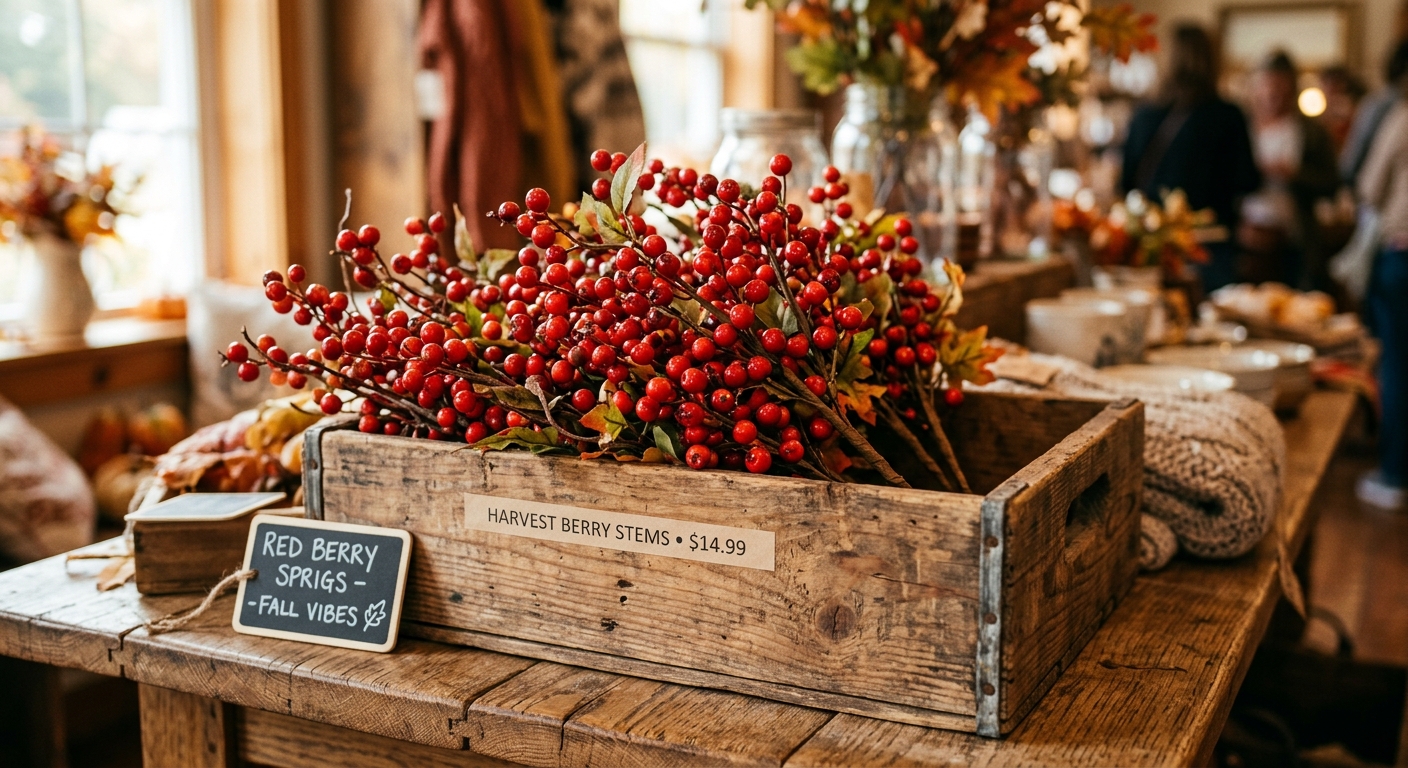
The best artificial fruit and berry stems for seasonal retail displays are the ones made with Real Touch or blended-fabric coatings, weighted wire stems for realistic droop, and UV-stabilized pigments that don't chalk or yellow under store lighting. Skip the shiny, uniform plastic berries — they photograph flat and read as cheap from three feet away. Get the material and stem construction right, and a single berry pick can anchor a fall window display, a holiday endcap, and a spring harvest theme across three separate seasons.
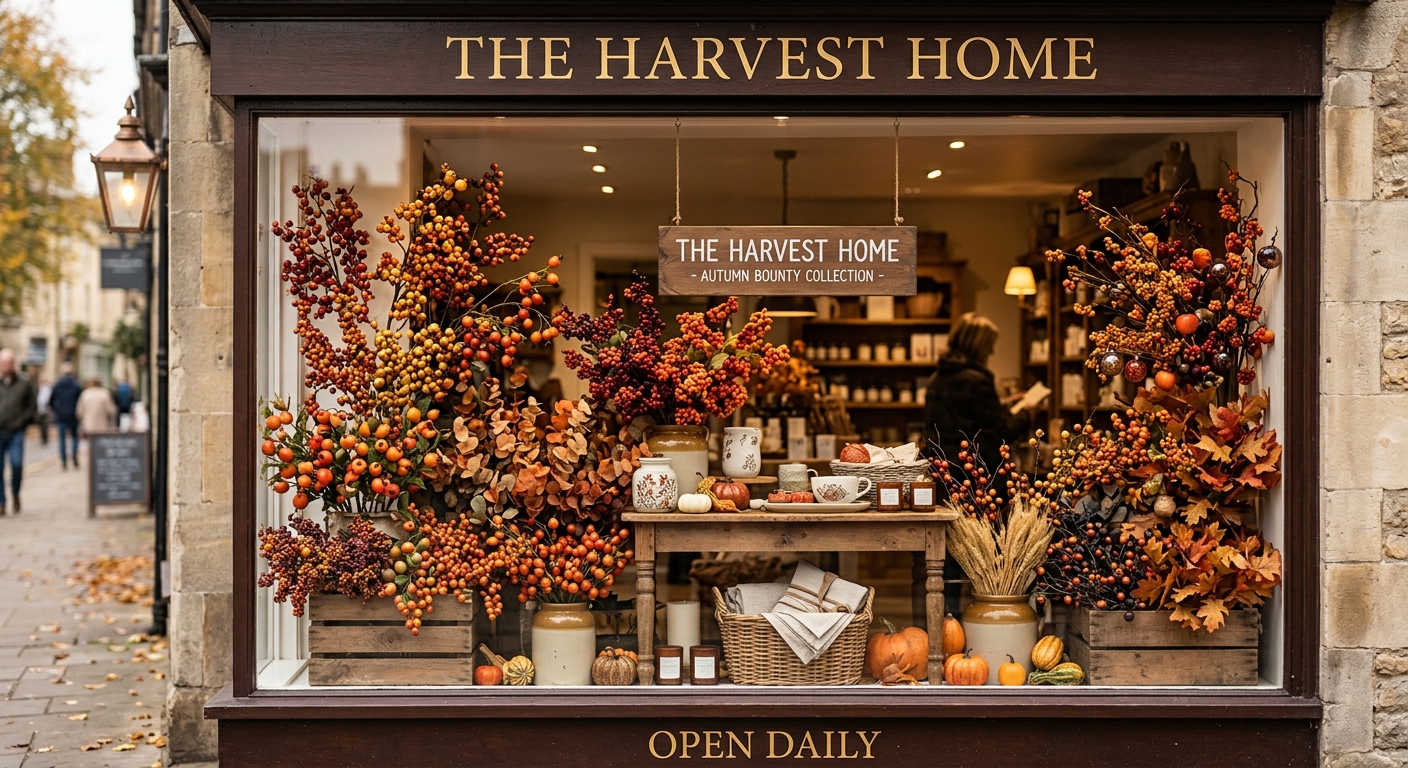
Ask any visual merchandiser what fills a display fastest without breaking budget, and berry stems come up before flowers almost every time. A single stem of faux viburnum or rosehip berries can add texture, color depth, and seasonal signaling to a shelf edge, wreath, or centerpiece in seconds — no arranging skill required.
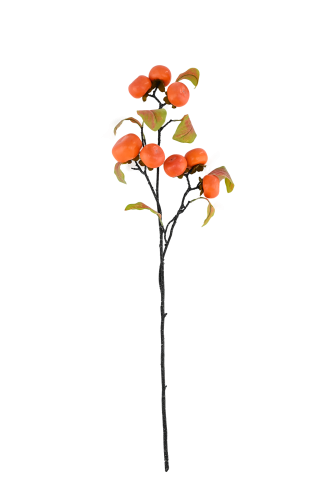
Retail buyers underestimate how much berry stems do the heavy lifting in seasonal transitions. Swap red berries for orange-and-gold ones and a display goes from Christmas to autumn harvest without touching the base greenery. That's a real cost saver for chain stores running the same fixtures year-round with rotating seasonal accents.
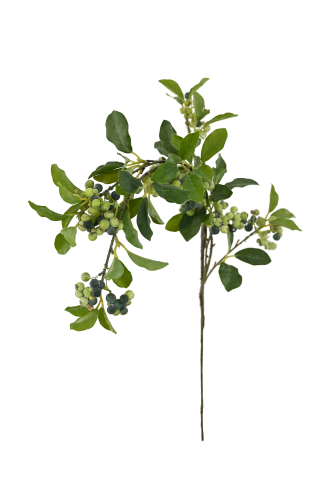
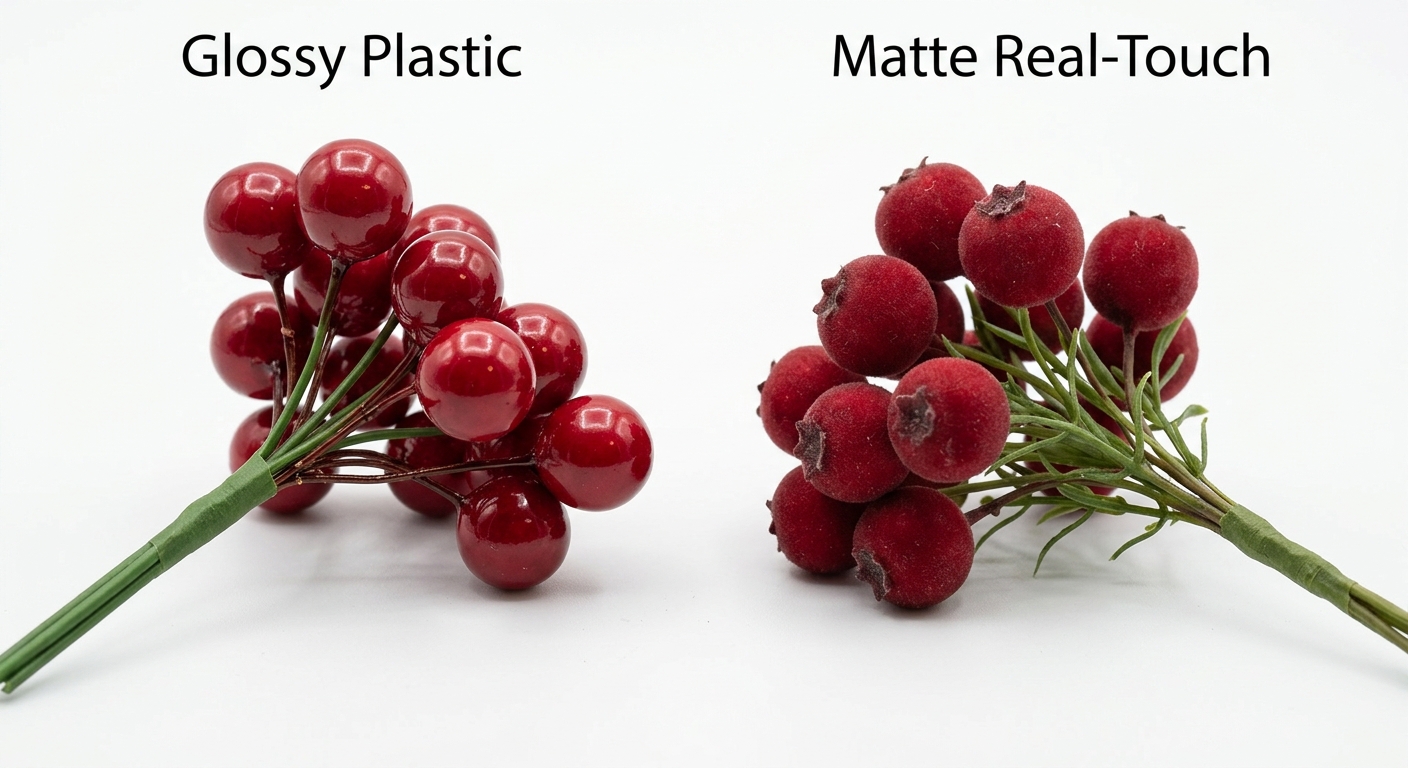
Surface finish is the giveaway most buyers miss. Cheap PVC berries have a uniform glossy shell — every berry the exact same shine, the exact same size. Real berries never look like that. They vary slightly in size, have subtle color gradients (deeper red near the stem, lighter at the tip), and a soft matte-to-semi-gloss finish rather than a hard shine.
Real Touch technology — a soft latex or PU coating over a molded core — replicates that slight give and matte-to-satin finish. Press a Real Touch berry between your fingers and it yields slightly, the way a real cranberry or rosehip would. Press a hard plastic one and it feels like a bead. For displays viewed up close — think boutique window displays or hotel lobby arrangements — that tactile difference matters even if customers never touch the product, because it changes how light bounces off the surface and reads in photos.
If you're sourcing stems specifically for high-visibility placements, it's worth reviewing general guidance on how to choose faux florals that look real up close — the same fingernail and lighting tests apply directly to berries.
Here's a stat that surprises a lot of first-time bulk buyers: standard-grade PVC berries can visibly fade within 200-300 hours of direct or bright indirect sunlight exposure. If you're stocking window displays that get afternoon sun for even 3-4 hours a day, that's a fade problem inside two to three months.
UV-stabilized pigments and coatings push that threshold significantly further — often 3-4x longer before noticeable color shift. For retail chains rotating stock every season anyway, this might not matter much. But for hotels, offices, and commercial spaces installing berry accents as semi-permanent decor, fade resistance is the line item that determines whether you're reordering every quarter or every two years.
Always ask your supplier directly: is the pigment UV-stabilized in the base material, or just surface-sprayed? Surface-sprayed color rubs and fades fast. Pigment blended into the resin or latex during molding lasts.
A berry cluster is only as good as the stem holding it. Thin, flimsy wire stems droop unnaturally or snap during shipping and repeated arranging — a real headache for wedding planners and retail teams reworking displays weekly.
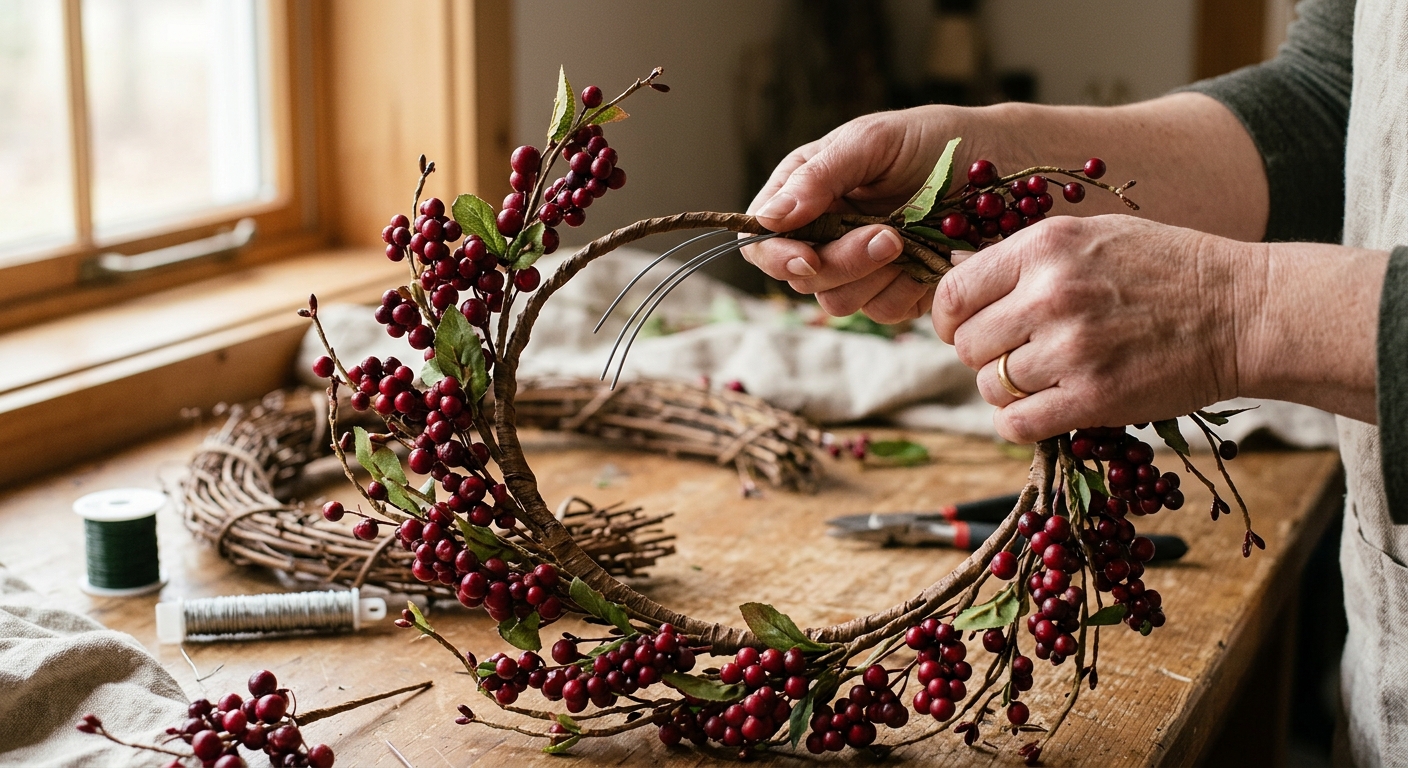
Look for stems built on 18-20 gauge wire wrapped in floral tape or paper, heavy enough to hold a bend but flexible enough to shape into a wreath curve or vase arrangement without tools. Cheaper stems often use bare 22-24 gauge wire that kinks and stays kinked — once bent wrong, it's bent wrong forever.
A mid-size grocery chain resetting produce-adjacent displays for autumn ordered berry stems with reinforced wire cores specifically because staff needed to reshape the same stems for three different endcap layouts over six weeks without replacing product. The heavier-gauge stems held their shape through repeated handling; a cheaper batch tested earlier had snapped at the joints within the first reset.
Not every berry reads the same way in every market. Rosehip and hawthorn berries signal European-style autumn florals. Bittersweet vine and orange pyracantha lean American harvest and Thanksgiving. Bright red holly berries are unmistakably Christmas almost everywhere, while dusty blue privet or juniper berries suit a more understated winter or Scandinavian-inspired look.
Retail brands expanding into new regions should factor in local floral associations — a color that reads as festive in one market can feel off-season or unfamiliar in another. This is exactly the kind of regional customization question worth raising early with an OEM/ODM supplier.
Color inconsistency across a bulk order is the single most common complaint from wholesale buyers reordering berry stems. Dye lots vary, and a batch of 5,000 stems ordered in two production runs can show a visible shift between reds — one batch leaning orange-red, the next leaning true crimson.
Ask for a pre-production sample from the actual dye lot going into your order, not a generic catalog sample. Factories with flexible MOQ and fast sampling cycles can usually turn around a matched sample within 7-10 days, which is critical when you're working a tight seasonal launch window. Wedding and event planners run into this exact issue at larger scale — the sourcing playbook covered in sourcing 1,000+ stems without color inconsistency headaches applies almost line for line to berry stem bulk orders.
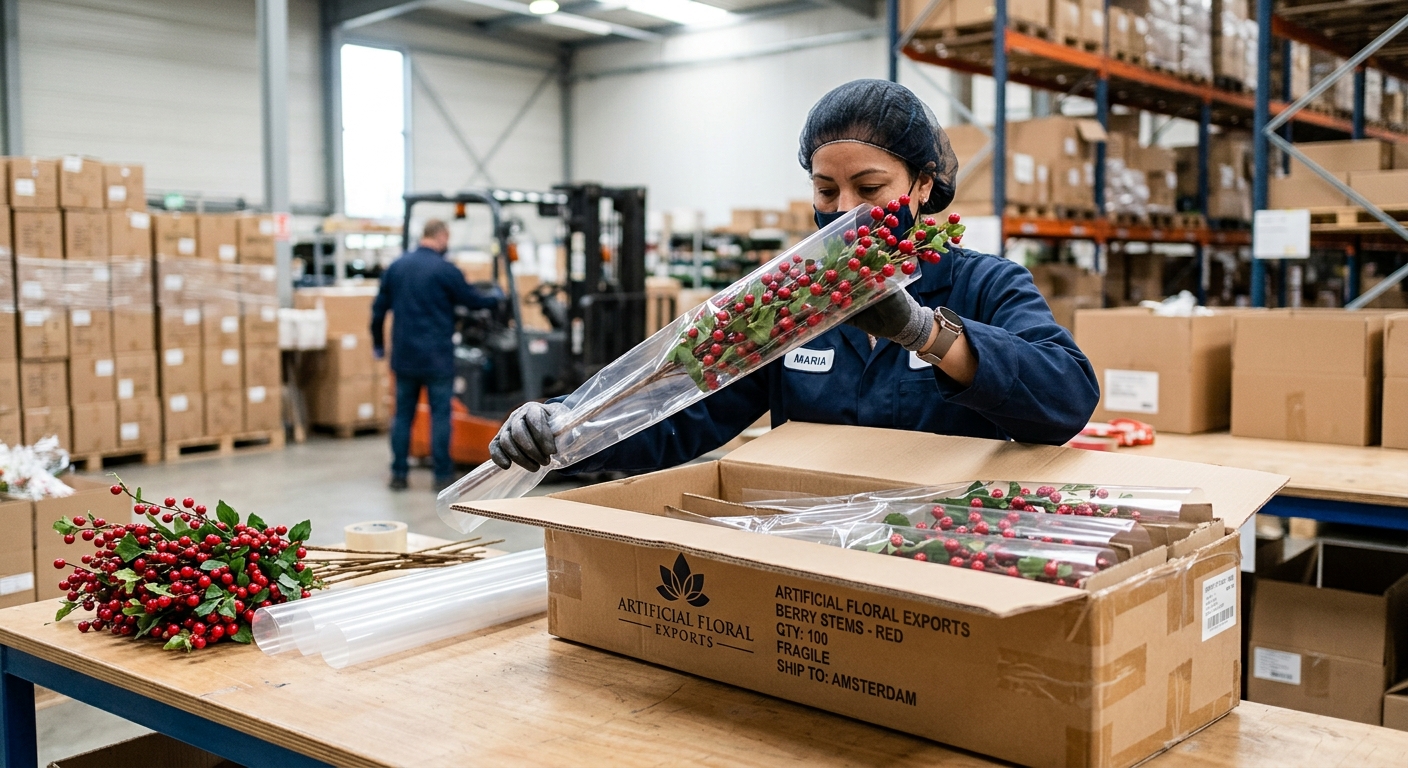
Berry clusters are more fragile in transit than solid foliage — the small berry units can crush or pop off the stem under compression. Confirm your supplier uses individual stem sleeving or divided carton inserts, not loose bulk bagging, for anything shipping internationally.
Berry stems get pigeonholed as wreath filler, but they earn their keep in a lot of other retail contexts. Tuck a few sprigs into a permanent greenery installation for a seasonal refresh without swapping the whole piece — a tactic office design firms already use with broader greenery, as discussed in the piece on artificial greenery for biophilic design.
Hotels use berry accents in lobby centerpieces and room décor to mark seasonal transitions without full redecoration — similar cost logic to the maintenance savings outlined in how hotels cut maintenance costs with plant installations. Retail chains layer berry picks into shelf-edge displays, cash-wrap arrangements, and window props where real fruit would spoil or attract pests within days.
Private-label retail brands frequently customize flower colors but forget berries can be customized too — matching a store's exact seasonal palette or brand colors rather than settling for stock red or orange. A factory offering full OEM/ODM customization can match berry hue to a Pantone reference, adjust cluster density per stem, and even vary stem length for specific fixture heights.
This matters most for chain retailers running consistent branding across hundreds of store locations — a slightly-off berry color in 20% of shipments becomes a visible inconsistency problem at the corporate merchandising level.
 Knowledges
 Knowledges
 Knowledges
 Knowledges
 Knowledges
 Knowledges