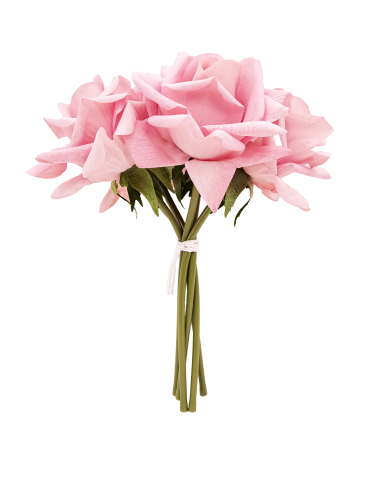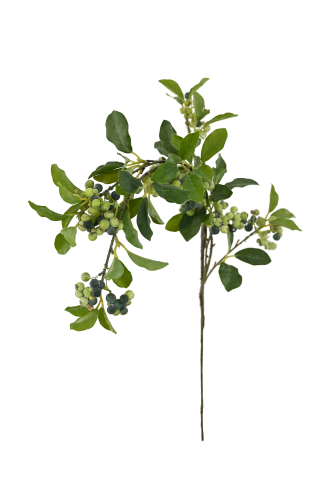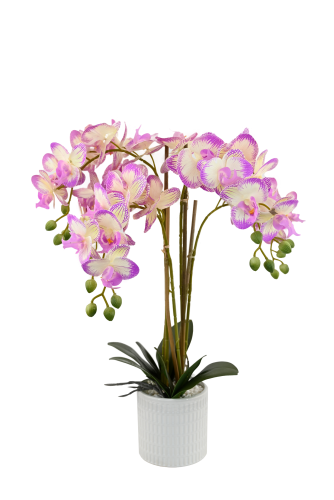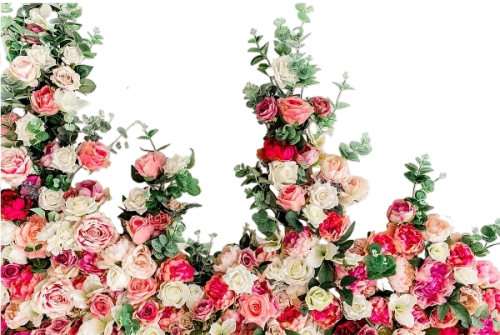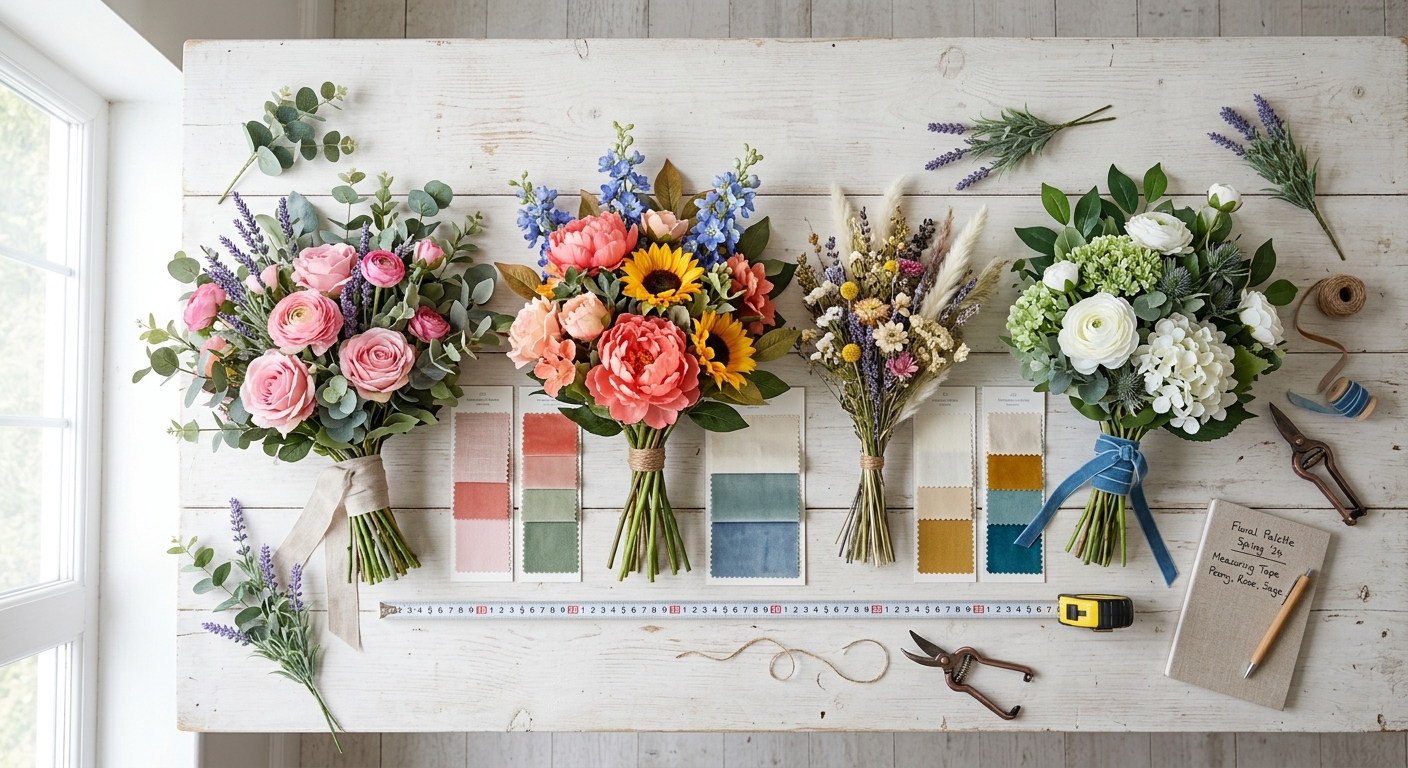
Specifying a private-label artificial flower bouquet means putting four things in writing before a single stem gets molded: exact stem count per bouquet, dimensional tolerances (height, spread, bloom diameter), a physical color approval process using lab dips or Pantone matching, and a packaging spec that survives ocean freight. Skip any one of these and you're gambling with a bulk order that might arrive looking nothing like the sample you approved. Most private-label headaches — mismatched batches, crushed blooms, colors that shifted between the sample and the container load — trace back to specs that were discussed verbally but never locked down on paper.
Factories don't guess well at scale. A supplier producing 50,000 bouquets across three colorways needs numbers, not adjectives. If your purchase order says "full, lush peony bouquet in soft pink," you've handed the factory permission to interpret "full" and "soft pink" however they see fit — and different production runs, even from the same factory, can drift.
This matters more for private label than for generic wholesale buying because your brand name is on the packaging. A retail chain reselling under its own label can't afford customer complaints about bouquets that don't match the catalog photo. The fix is a written specification sheet attached to every purchase order, covering the four elements below, signed off before tooling or bulk dyeing begins.
If you're still evaluating suppliers before you get to the spec stage, our guide on choosing the best wholesale artificial flowers supplier covers what to vet first.
Specify stem count per bouquet, stems per color, and branch length — not just "full" or "9-head." A 9-stem rose bouquet sounds standard until you realize one factory's "9-stem" includes 3 filler leaves and another's is pure blooms. Ask for a breakdown: how many focal flowers, how many filler stems, how many greenery pieces, and the length of each branch from base to tip.
Instead of "rose bouquet, full head," write: "9 stems total — 6 rose heads (2 per color: ivory, blush, burgundy), 3 eucalyptus filler stems, individual stem length 32cm ±1cm, bouquet base bound with floral tape." That single line eliminates three separate points of ambiguity.
For example, a hotel chain ordering lobby arrangements across 40 properties specified stem count per SKU down to the filler ratio — this let them reorder replacement bouquets two years later that matched the originals exactly, something that wouldn't have been possible with a loose spec.
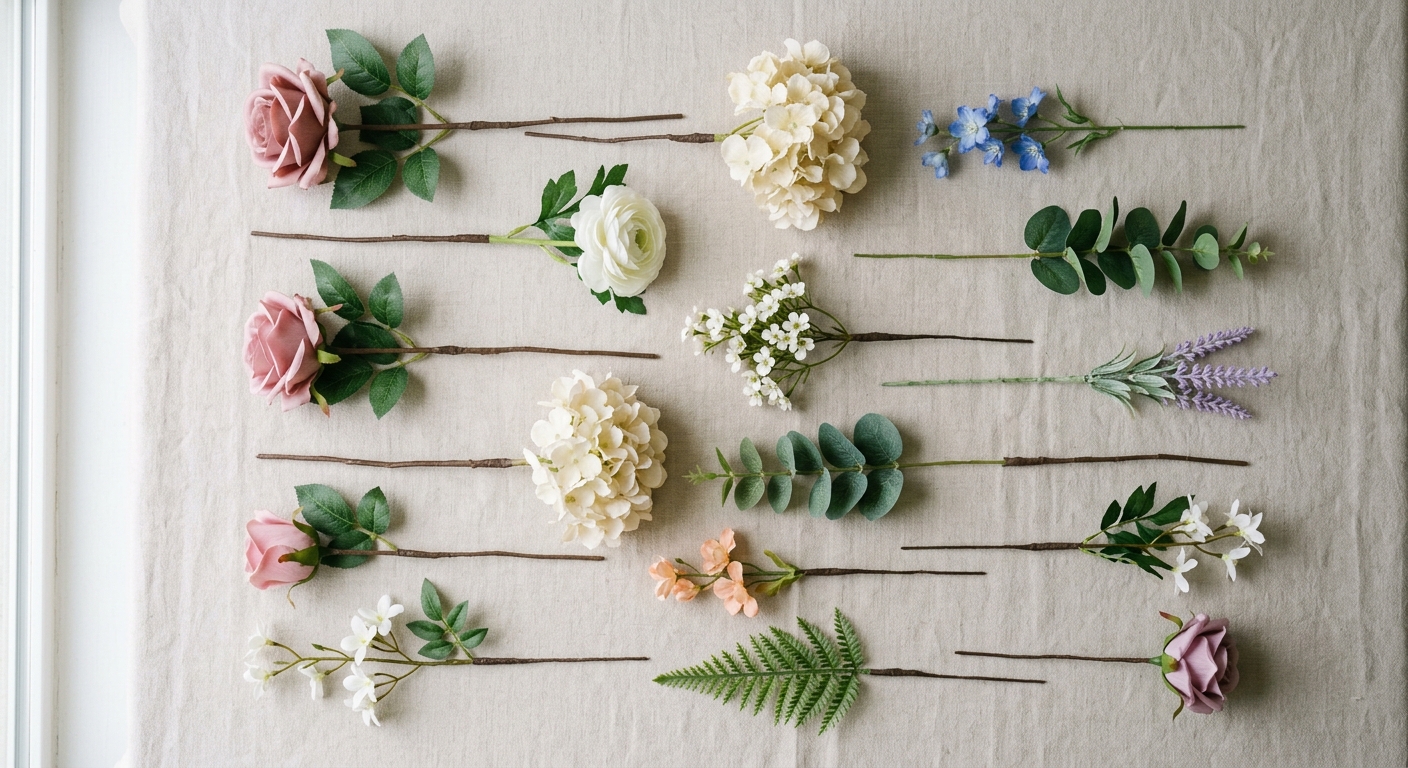
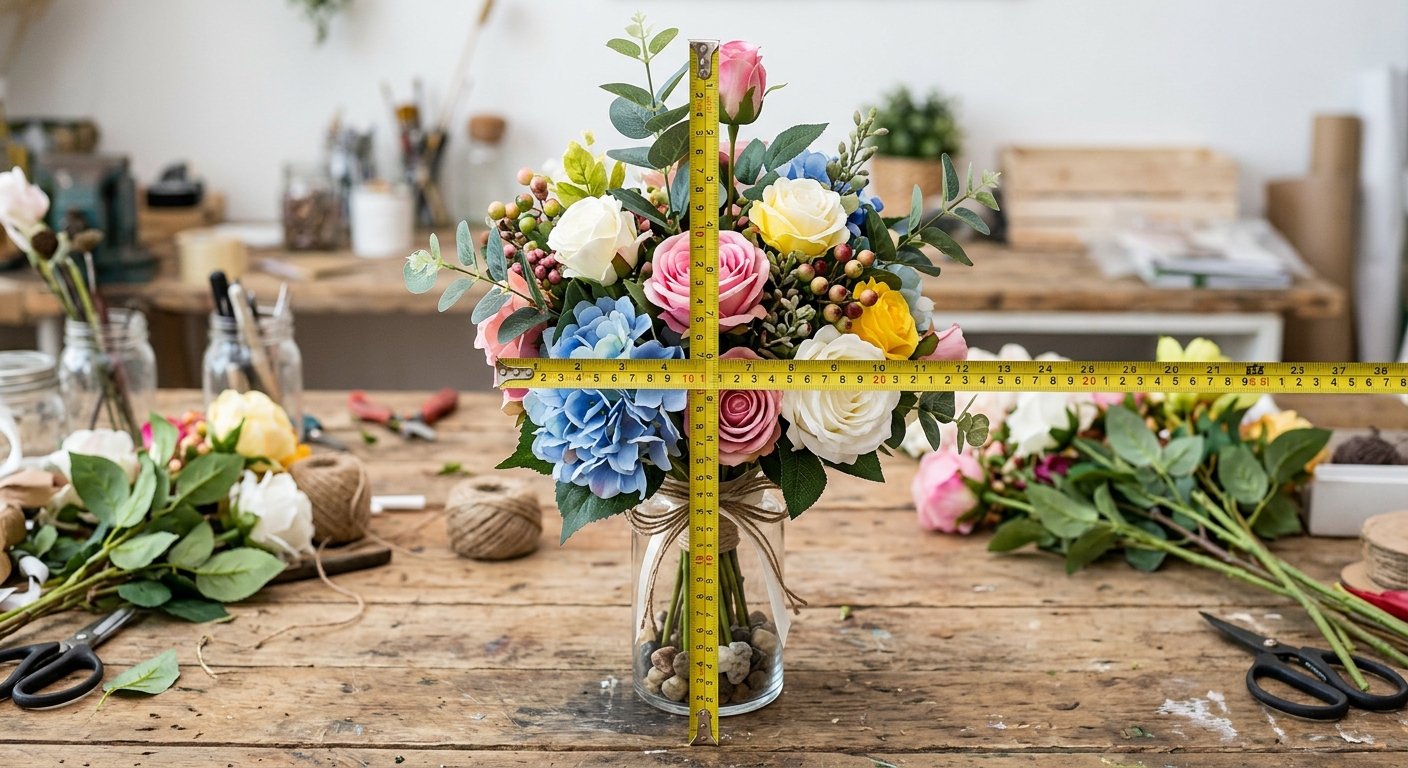
Every dimension needs a target plus a tolerance range — height, overall spread, and individual bloom diameter. "45cm tall" alone means nothing without knowing whether the factory considers ±3cm acceptable or ±0.5cm. Real Touch latex and silk blooms behave differently under heat-press molding, so tolerances should reflect the material, not a generic industry default.
If your bouquets are destined for permanent commercial installs rather than retail shelves, cross-check dimension needs against use case — our piece on artificial plant wall ideas for businesses shows how sizing decisions shift when the install is fixed rather than handheld.
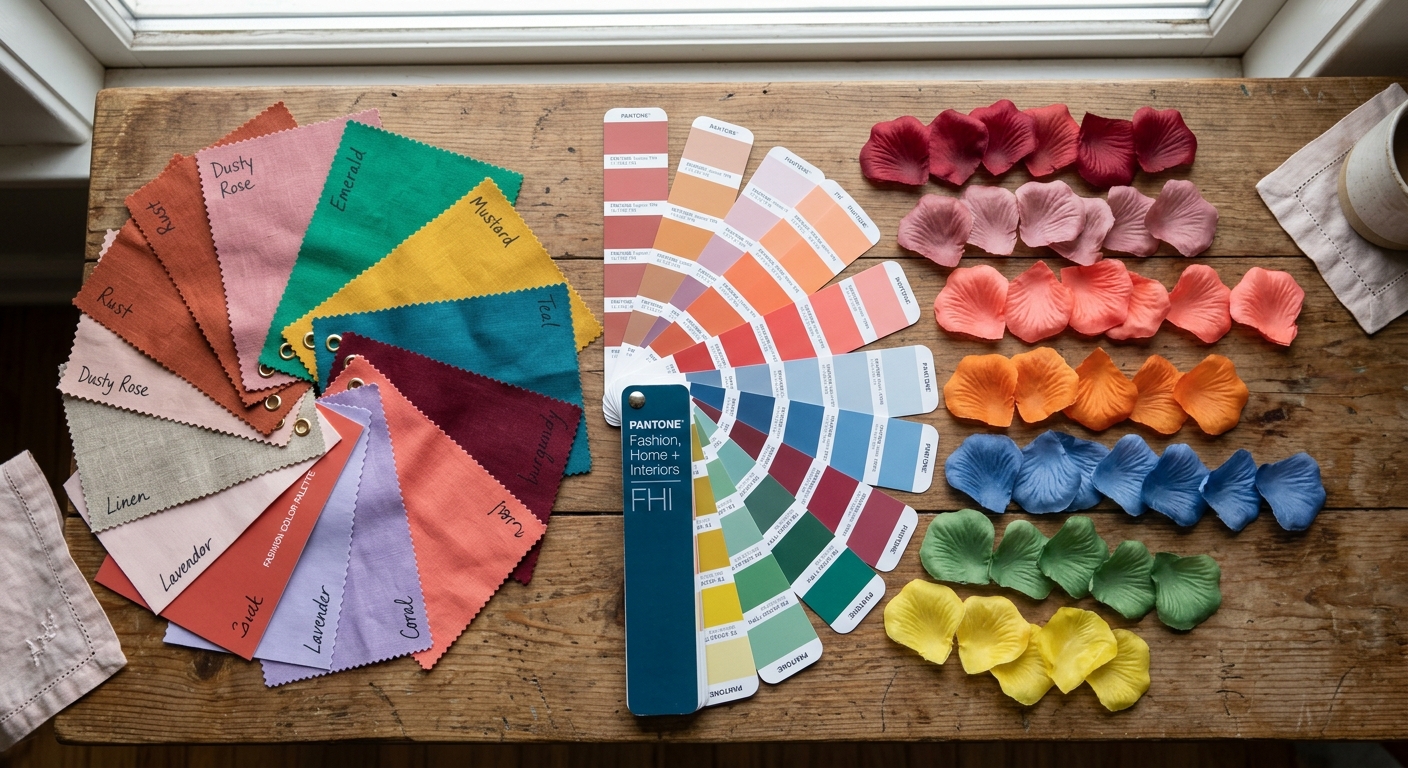
Approve colors using a physical lab dip or fabric swatch compared under two light sources — never from a screen photo. Monitor calibration varies wildly, and a blush pink that looks accurate on your laptop can read peachy-orange under retail LED lighting. Request a Pantone TCX reference number for each color, plus a physical swatch shipped to you before bulk dyeing starts.
Check the approved swatch under daylight-balanced light and under warm indoor light (roughly 2700K, typical of hotel lobbies or retail floors). Colors that shift dramatically between the two are a red flag for dye consistency at scale.
This is exactly the problem event and wedding buyers run into when sourcing thousands of stems for a single installation — our playbook on sourcing 1,000+ stems without color inconsistency goes deeper into batch-to-batch dye variance and how to control it contractually.
Once approved, request that the factory retain a signed physical reference sample for the entire production run — not just the first batch — so QC checks bulk output against the same physical standard, not memory.
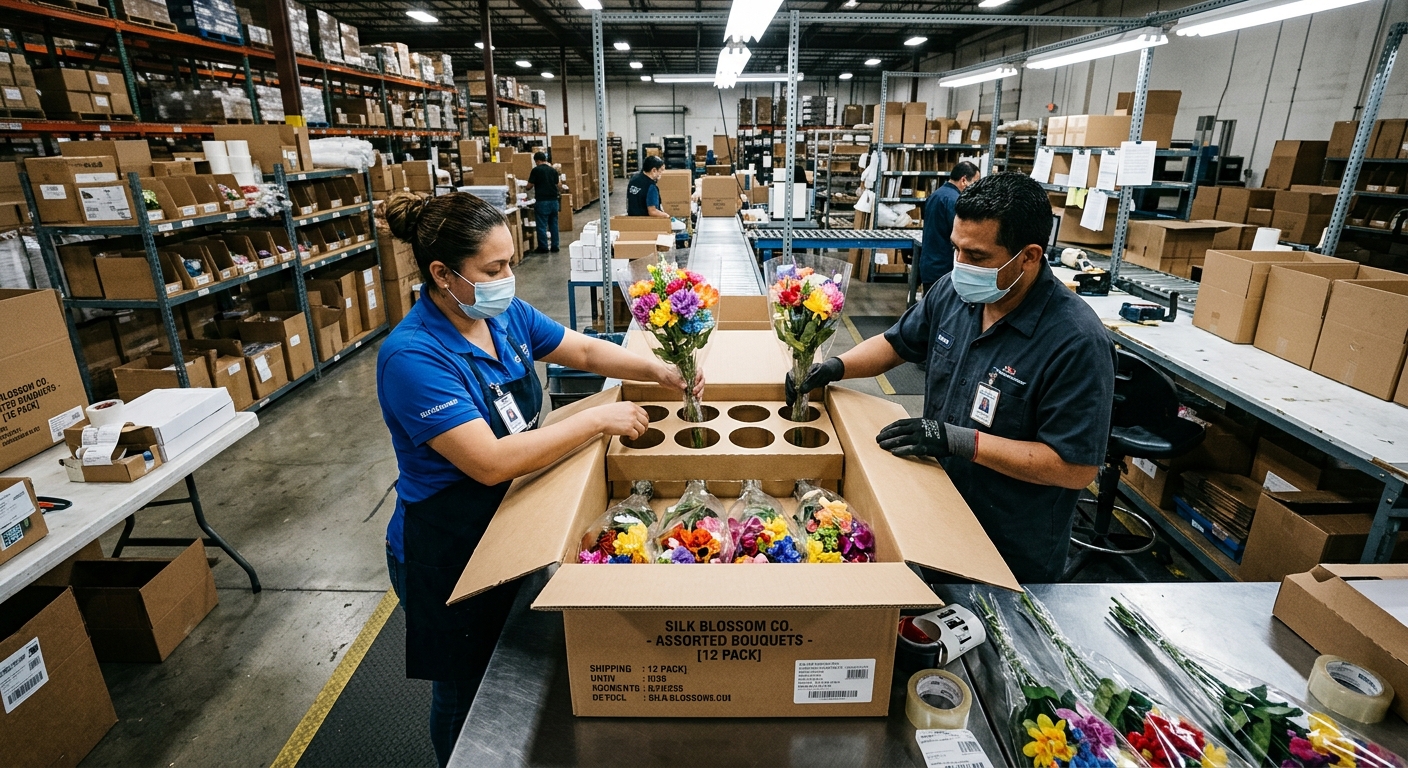
Packaging specs should cover individual protection (poly sleeve, tissue, or tray insert), inner carton configuration, and outer carton drop-test rating — because a bouquet that looks perfect in the showroom can arrive crushed after 30 days on a container ship. Ask your supplier directly: what's the carton drop-test standard, and how are bouquet heads separated inside the box to prevent petal crushing?
Beyond protective packaging, private label means specifying branded elements too: custom poly bag printing, header cards, barcode placement, and inner box artwork. Get proofs approved in physical form, not digital mockups — color and print registration on packaging film often differs from what you see on screen, same issue as the flowers themselves.
For a broader look at how customization extends beyond packaging into branding and MOQ flexibility, our custom OEM/ODM options page outlines what's typically negotiable.
A single spec sheet — attached to the PO, signed by both sides — should combine stem count, dimensions with tolerances, color codes with swatch reference numbers, and packaging structure. This isn't bureaucracy for its own sake; it's the document that protects you when a bulk shipment doesn't match expectations. Without it, disputes come down to "he said, she said." With it, you have a contractual reference point.
A retail brand launching a private-label spring collection, for instance, used this exact template across 14 SKUs — it cut their sample-to-approval cycle from three rounds down to one, because ambiguity was removed before the first sample was even cut.
Loose specs don't just cause cosmetic issues — they cause reorder chaos, retail returns, and wasted freight. A distributor who orders "approximately 40cm bouquets" might receive a batch ranging from 36cm to 46cm, which looks inconsistent on a shelf display and forces manual sorting on arrival. That sorting labor cost, multiplied across thousands of units, often exceeds what a proper spec sheet would have cost to draft.
Color drift is the costlier mistake. If bulk production runs 8 weeks after sample approval and no physical lab dip was locked in, dye lot variance can shift the final color noticeably — especially with fade-resistant outdoor-grade materials, which use different pigment stabilizers than indoor silk. If your bouquets are headed outdoors, it's worth reviewing our notes on realistic artificial outdoor plants for how UV-stable materials handle color differently than standard indoor silk.
 Knowledges
 Knowledges
 Knowledges
 Knowledges
 Knowledges
 Knowledges