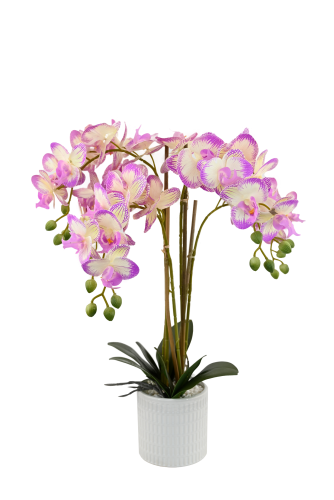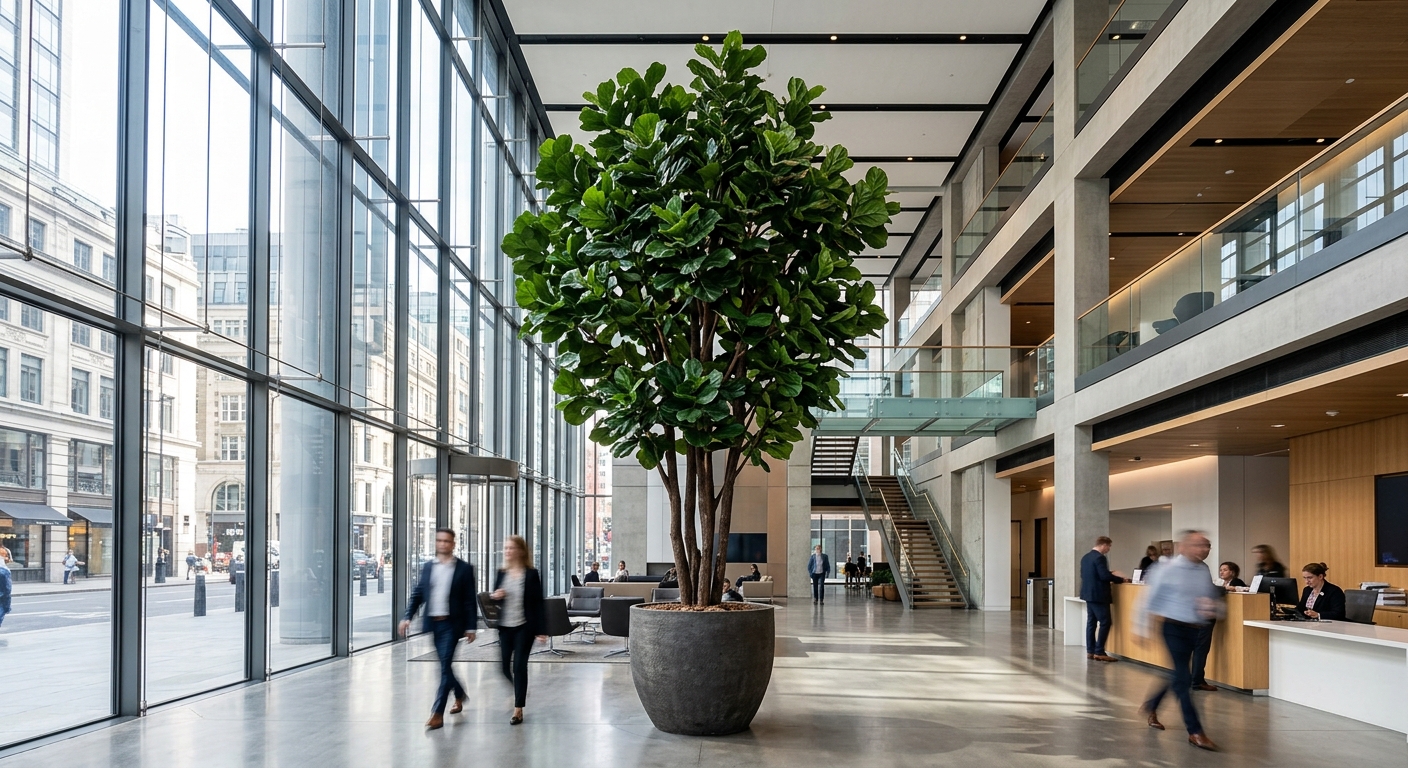
The right size for an artificial potted plant comes down to one simple ratio: canopy width should be roughly 6-10% of the viewing distance, and pot diameter should be about 40-50% of the canopy width. Get that math wrong and a plant either disappears into a large lobby or overwhelms a narrow corridor. Most commercial sizing mistakes aren't about quality — they're about buyers picking a plant that looked great in a catalog photo but was never checked against the actual room dimensions.
Here's a mistake we see constantly: a designer picks a 5-foot fiddle leaf fig because it looked proportionate in a showroom, then drops it into a 40-foot atrium where guests view it from across the room. From that distance, the plant reads as a green smudge, not a statement piece.
Viewing distance is the anchor metric for sizing. A general rule: canopy width in inches should equal roughly 6-10% of the viewing distance in inches. Standing 6 feet (72 in) from a reception desk plant, you want a canopy around 5-7 inches wide per foot of distance — translating to a 24-36 inch spread. Stand back 30 feet in an atrium, and you need a canopy pushing 6-8 feet wide to register as a focal point.
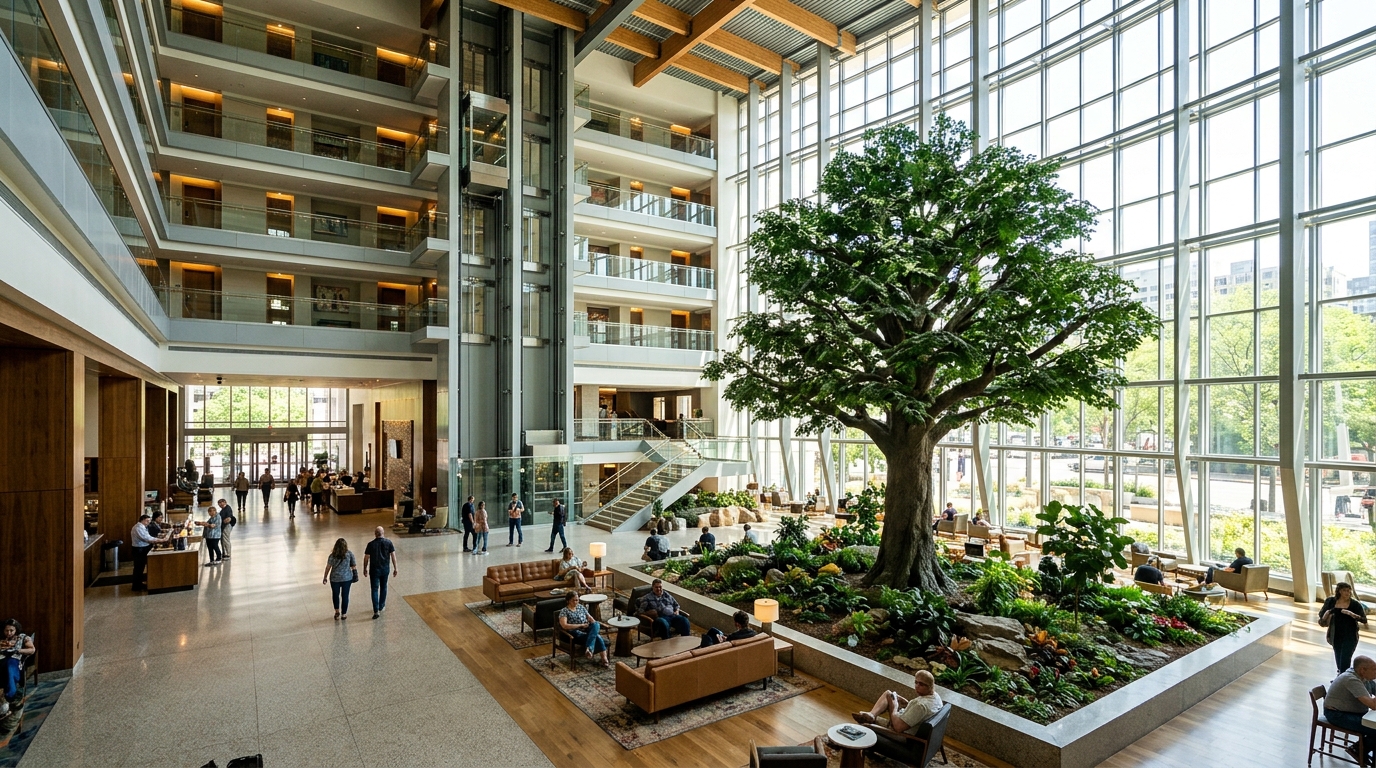
This is also why hotels investing in lobby greenery lean toward oversized specimen trees rather than several small plants — a point covered in more depth in 5 Ways Hotels and Resorts Use Artificial Plant Installations to Cut Maintenance Costs.
A plant with a wide canopy sitting in an undersized pot looks top-heavy and, frankly, cheap. The industry benchmark most commercial designers use is a canopy-to-pot ratio between 2:1 and 2.5:1 — meaning if your canopy spreads 30 inches wide, the pot should measure roughly 12-15 inches in diameter.
Indoor lighting tends to be more even and closer than outdoor daylight, which means small proportion errors are more visible. A pot that's too narrow makes even a well-crafted realistic artificial outdoor plant look unstable when brought inside for a lobby install.
Go below a 3:1 ratio (canopy far wider than pot) and the eye immediately flags something's off, even if viewers can't articulate why. It's a visual balance cue humans register almost instinctively — the same reason furniture with skinny legs under a heavy tabletop feels wrong.
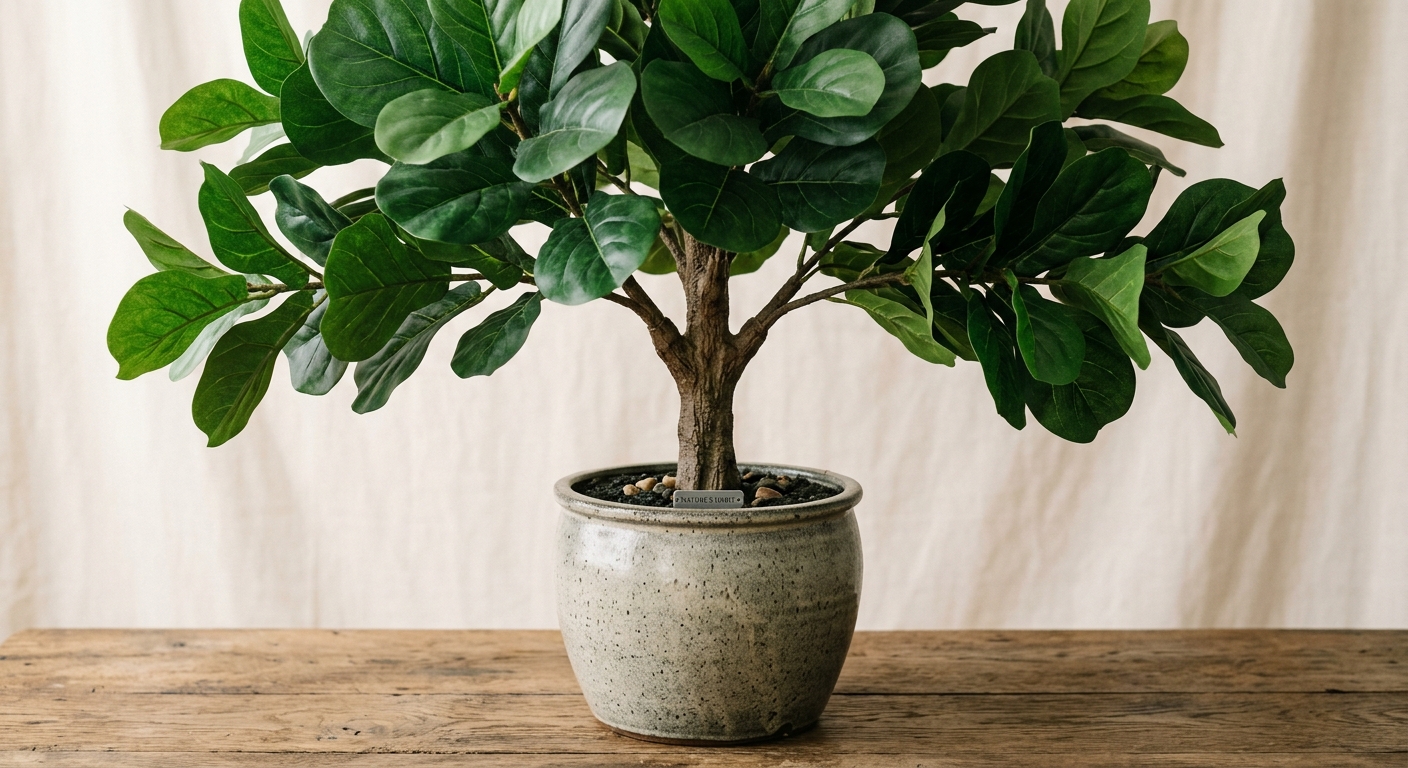
Narrow spaces punish oversized plants fast. In corridors under 6 feet wide, canopy width should max out around 24-30 inches, or foot traffic starts brushing leaves within a week — which accelerates wear even on durable materials.
For reception counters, the sweet spot is usually a 30-36 inch tall plant with a 14-16 inch pot, positioned so the canopy doesn't obstruct sightlines between staff and visitors. An office design firm we've seen reference this exact constraint chooses low, wide arrangements over tall columnar plants specifically to keep counters feeling open — a strategy discussed further in How Office Design Firms Use Artificial Greenery to Meet Biophilic Design Trends Without Upkeep.
For instance, a corporate office in a converted historic building with 5-foot-wide hallways swapped its original 40-inch canopy ficus trees for 26-inch olive trees after tenants complained about brushing against foliage — a fix that took one sizing correction, not a redesign.
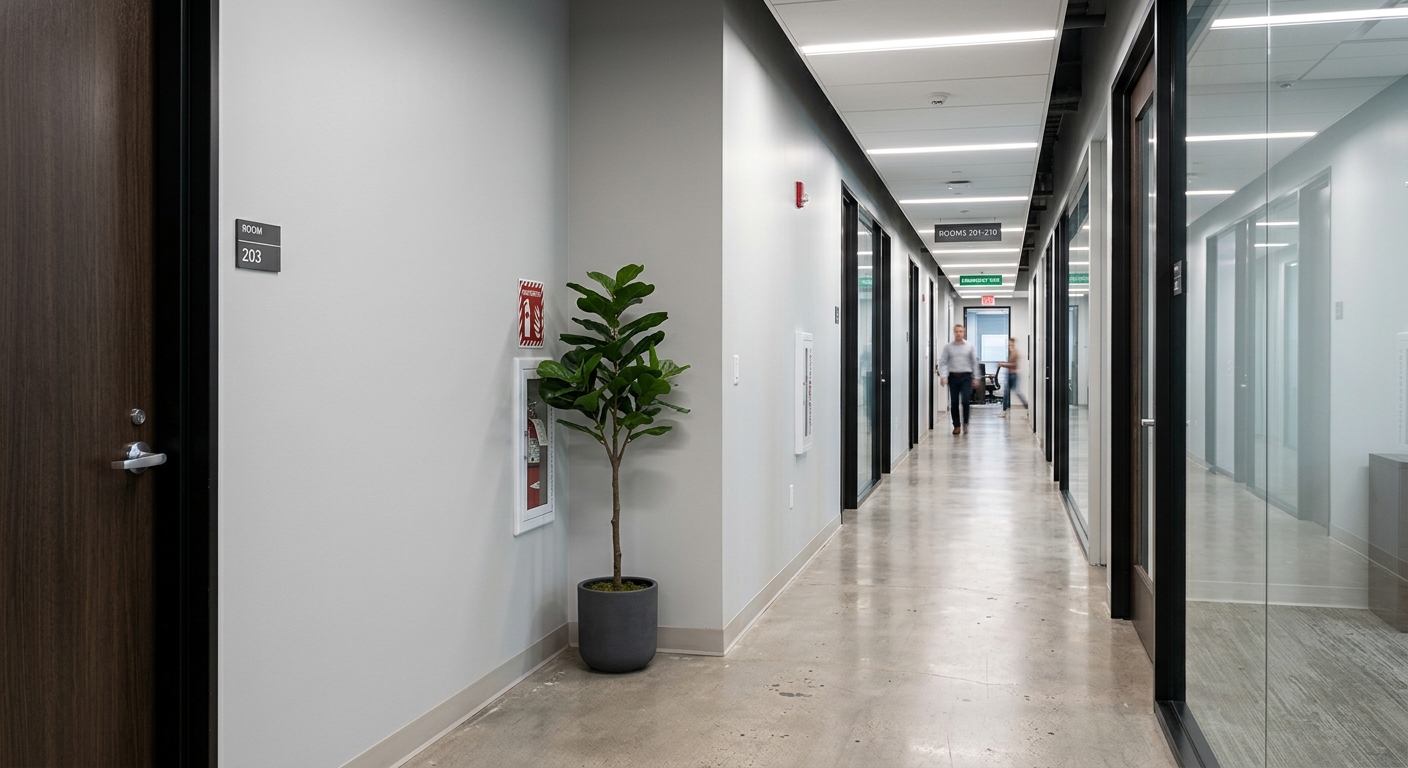
Large open spaces need plants sized in feet, not inches. A hotel ballroom corner viewed from 30 feet away needs a canopy spread of 6-8 feet minimum to avoid looking like an afterthought — and the pot needs to scale accordingly, typically 24-36 inches in diameter with internal weighting for stability.
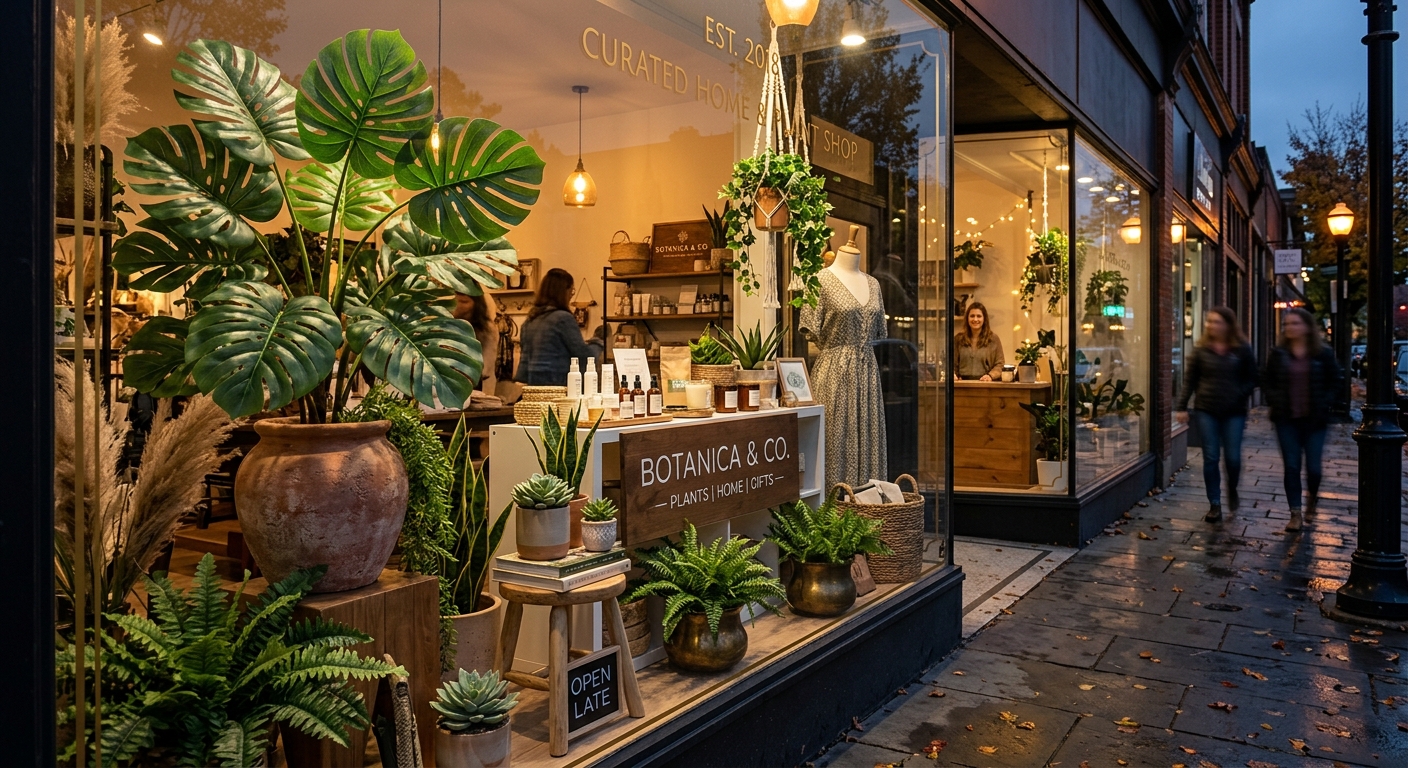
Storefront windows are viewed from the sidewalk, often 10-20 feet away, but also up close by browsing customers. This dual-distance challenge means retail brands often need two sizing tiers within the same display: a large anchor plant sized for street visibility, plus smaller accent pieces sized for close inspection. Wholesale buyers sourcing for multiple store locations should check out how to choose the best wholesale artificial flowers supplier to make sure sizing consistency holds across a chain rollout.
A bigger pot isn't just about looks — it's about stability. Outdoor and high-traffic indoor installations need pots weighted or ballasted proportionally to canopy height, especially for anything over 5 feet tall where wind or accidental bumps become real risks.
As a rule of thumb, pot weight (empty) should be at least 15-20% of the total assembled plant weight for anything placed in open walkways or near entrances with door drafts. Commercial buyers ordering custom builds should specify ballast requirements directly through OEM/ODM customization options rather than assuming standard pot weights will hold larger canopies steady.
Skip the guesswork with this three-step check before ordering:
This isn't a rigid law — it's a starting point that gets you within a realistic range before you start refining for style, brand, and material choice. If you're also weighing whether the arrangement should look intentionally styled or more naturalistic, pair this sizing logic with the guidance in Types of Artificial Flowers and How to Choose Them for Professional Displays.
Even the most lifelike realistic faux flowers and foliage lose their impact when sized incorrectly. A few recurring errors we see in commercial installs:
Height without canopy width data is almost meaningless for spatial planning. Two 6-foot trees can have canopy widths that differ by 20 inches, which changes how much floor footprint they actually need.
A canopy that's technically well-proportioned can still block signage, emergency exit paths, or camera sightlines in retail and hospitality settings — always cross-check against floor plans, not just aesthetic renderings.
Buying one size for an entire property (all lobbies, all corridors) ignores the fact that viewing distance changes room to room. This is one reason bulk buyers benefit from working directly with manufacturers who can produce mixed-size runs rather than a single fixed SKU.
 Knowledges
 Knowledges
 Knowledges
 Knowledges
 Knowledges
 Knowledges