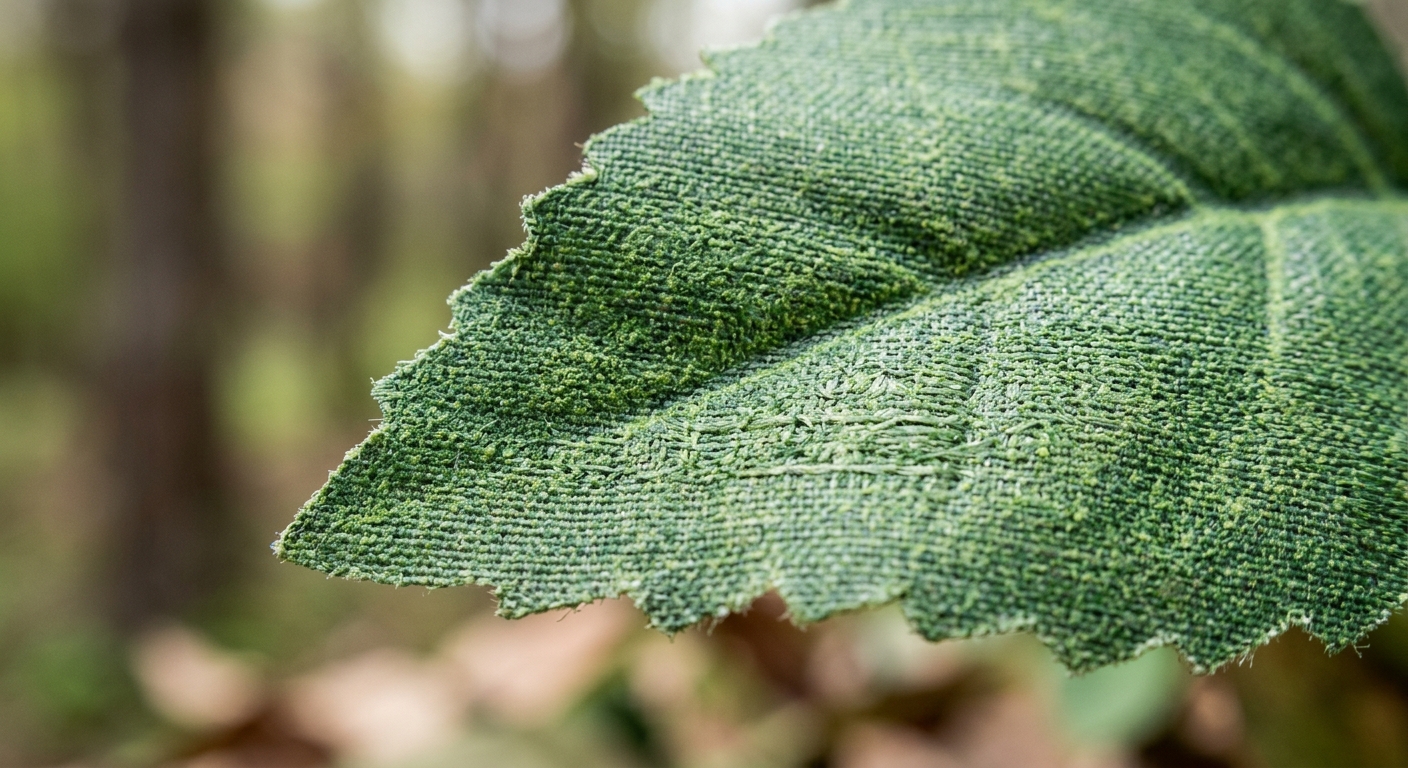
Fade-proof doesn't mean a plant never fades — it means the color loss has been slowed to a level that's invisible to the naked eye for a specified testing period, usually measured in UV exposure hours, not calendar time. A truly UV-resistant artificial plant uses stabilized pigments and UV-inhibiting additives baked into the material itself, not just a surface coating that wears off after a few rainstorms. If a supplier can't tell you the testing standard or hours behind their 'fade-proof' claim, treat it as a marketing word, not a spec.
Here's an uncomfortable truth: almost every artificial plant sold for outdoor use gets labeled 'fade-proof' or 'UV-resistant' somewhere in the listing. Almost none of the sellers can explain what that actually means in material terms. That's the gap buyers need to close before placing a bulk order.
Real UV resistance comes from two things working together: the base polymer's molecular stability under ultraviolet light, and pigment chemistry that resists photodegradation. Cheap PE (polyethylene) leaves without additives will chalk and yellow within months outdoors — the plastic itself breaks down at the surface, creating that dusty, faded look. UV-stabilized PE or PU, by contrast, has hindered amine light stabilizers (HALS) or UV absorbers mixed directly into the resin during extrusion, not sprayed on afterward.
Some manufacturers spray a UV topcoat over standard material and call it done. It works — for a while. Coatings wear off with rain, wind abrasion, and handling. Within a season, you're back to unprotected plastic underneath. Genuine UV stabilization is mixed into the material, not painted onto it.
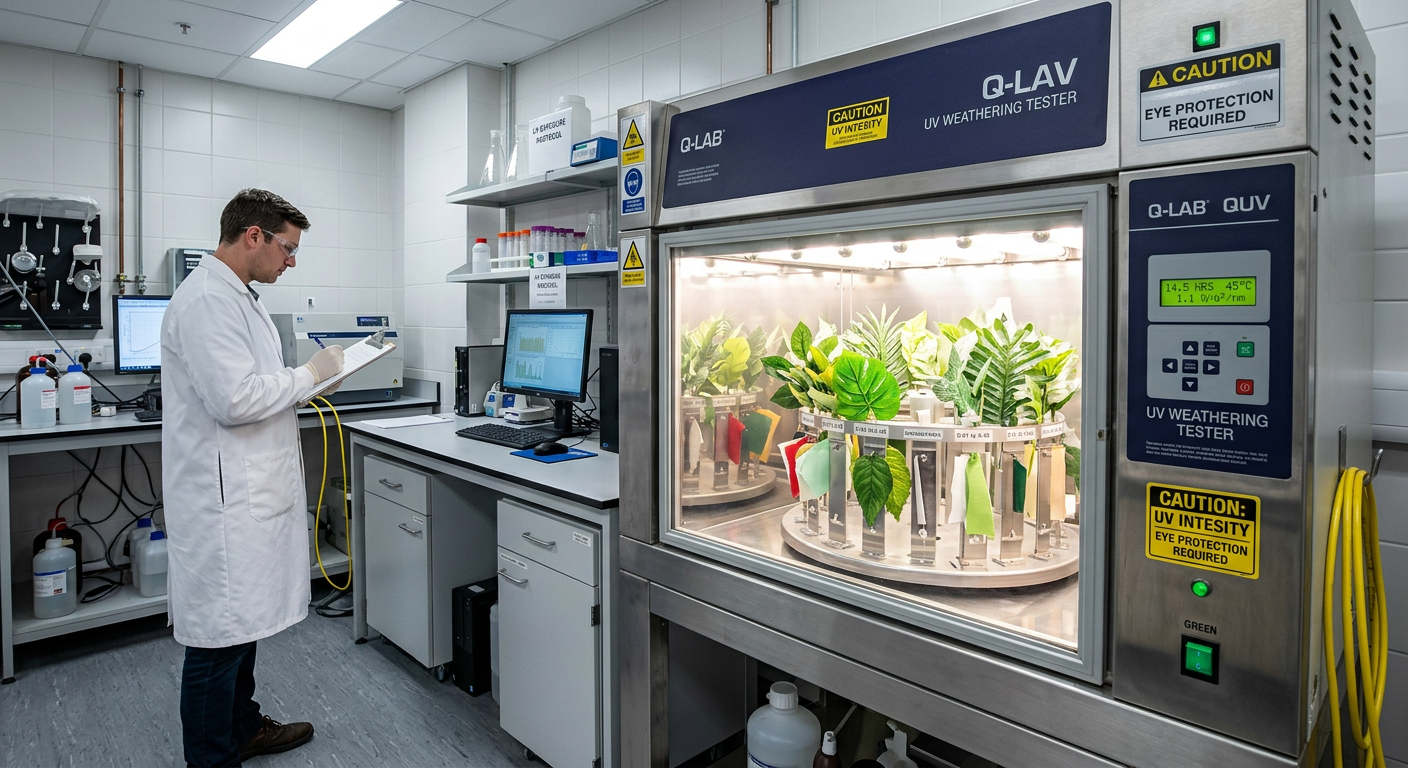
Reputable factories test UV resistance using accelerated weathering chambers — think of them as a tanning bed for plastic. Standards like ASTM G155 or ISO 4892 expose samples to intense UV lamps for a set number of hours (commonly 500, 1000, or 2000 hours) while measuring color change against a reference scale called Delta E.
A Delta E value under 1.0 after 1,000 hours of exposure is considered excellent — meaning the human eye can't detect the shift. Values between 1 and 3 are noticeable only under close comparison. Anything above 5 is a visible, obvious fade. When you ask a supplier for test data and they hand you a Delta E report with hour counts, that's a real quality signal. A generic 'yes it's UV resistant' answer is not.
Roughly, 1,000 hours of accelerated UV exposure correlates to about 1–2 years of moderate outdoor sun exposure, depending on climate and orientation. South-facing installations in high-UV regions like Arizona or the Middle East will hit that threshold faster than a shaded courtyard in a temperate climate.
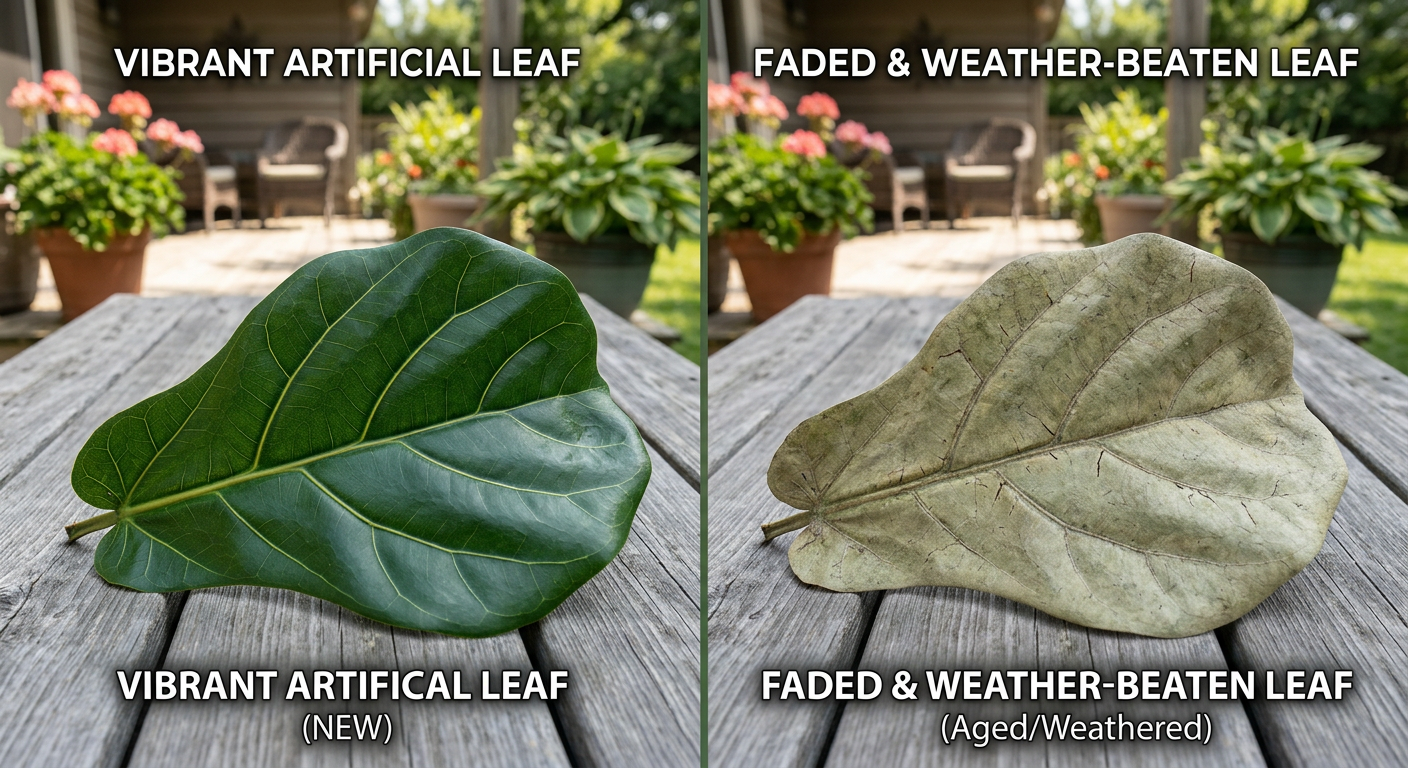
Not all materials age the same way under sunlight, and this is where a lot of buyers get burned on bulk orders. Silk-blend flowers, while gorgeous indoors, degrade quickly outdoors — the fabric fibers break down under UV and moisture combined. PU (polyurethane) and treated latex hold up dramatically better because the polymer chain itself resists photo-oxidation.
For anyone comparing options for permanent outdoor installations, our guide on the most realistic artificial outdoor plants breaks down which materials perform best in exterior settings, and our broader outdoor artificial plants guide covers climate-specific considerations too.
This trips people up constantly. 'Real Touch' refers to the tactile feel — a soft, latex-coated texture that mimics real foliage — not the UV rating. A Real Touch leaf can still fade fast if it wasn't formulated with UV stabilizers. Always ask the two questions separately: what's the material, and is it UV-stabilized.
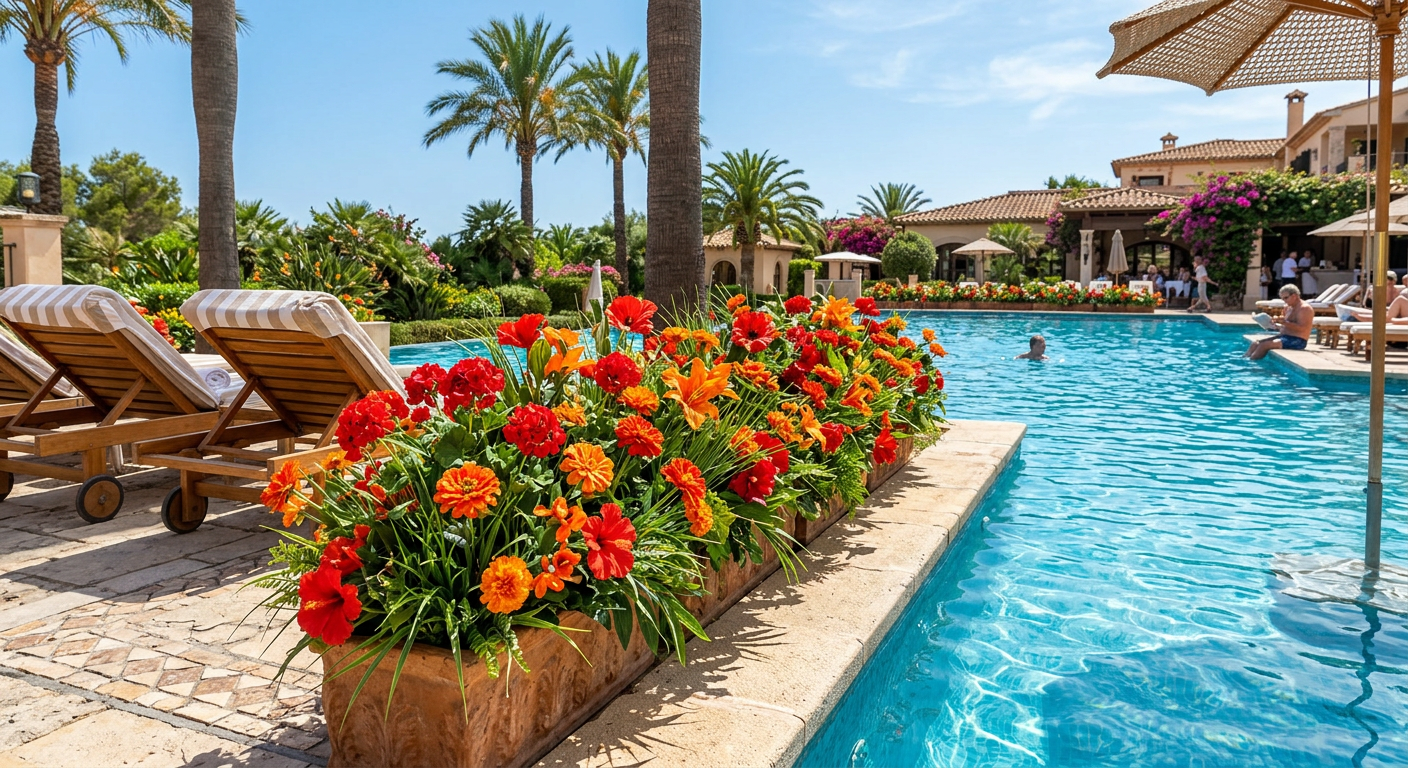
Here's something most buying guides skip: some colors fade faster than others, regardless of material quality. Reds and oranges, which rely on organic pigments, are notoriously less UV-stable than greens and whites, which often use more UV-resistant mineral-based pigments. A red silk poppy and a green fern from the same production batch will not age at the same rate outdoors.
For example, a hotel chain sourcing red artificial hibiscus for a poolside installation in Dubai found that after eight months, the reds had visibly dulled while the surrounding greenery still looked fresh. The fix wasn't a different supplier — it was switching to a UV-stable pigment masterbatch specifically formulated for red tones, which added roughly 20% to unit cost but extended visible color life past two years.
If your project leans heavily on warm, saturated colors — reds, corals, deep purples — ask your supplier specifically about pigment-grade UV stability for those colorways, not just the base material.
UV resistance ratings aren't one-size-fits-all across geography. A plant rated for 1,000 hours of accelerated testing might perform beautifully for three years in Seattle and fade visibly within one year in Phoenix. UV index, altitude, and reflective surfaces (glass, water, white stucco) all intensify real-world exposure beyond lab conditions.
Coastal installations add another variable: salt air accelerates material breakdown alongside UV exposure, so a plant that's technically UV-stable but not salt-resistant can still degrade faster than expected near oceanfront properties.
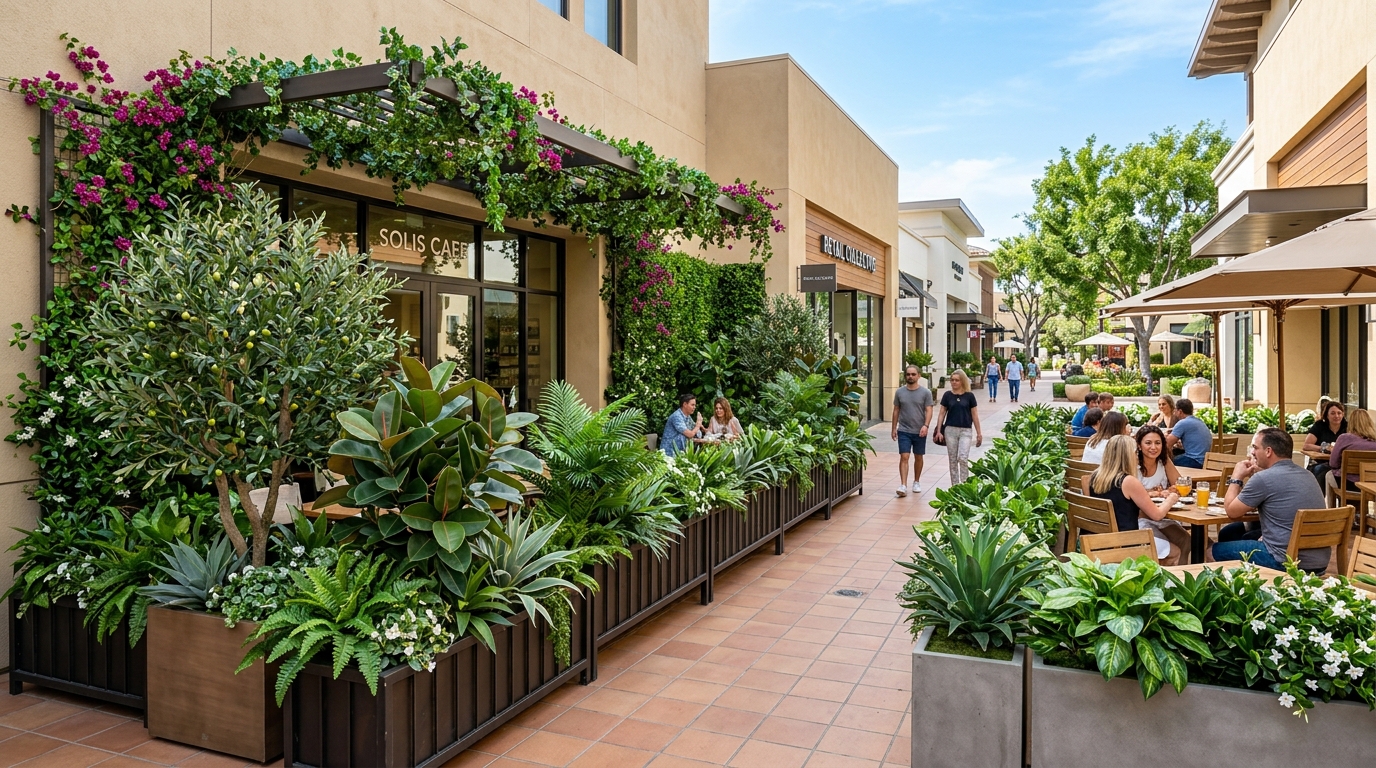
Wholesale buyers sourcing for multi-region chains — hotels, retail storefronts, restaurant patios — should request different UV grades per climate zone rather than a single blanket spec across all locations. It costs more to manage, but it prevents the embarrassing situation of replacing faded plants in your sunniest locations twice as often as everywhere else.
Skip the vague sales language and ask these directly: What UV testing standard was used (ASTM G155, ISO 4892, or equivalent)? What was the exposure duration and resulting Delta E value? Is the UV stabilizer mixed into the resin or applied as a coating? Does the stabilization apply to all colorways, or just the base green material?
A factory that manufactures in-house — rather than trading finished goods from multiple third parties — can usually answer all four questions immediately, because they control the resin formulation. That's one practical advantage of working with a direct manufacturer instead of a middleman platform: consistency in material sourcing batch to batch.
For export orders, ask for the test report to be included in your shipping documentation package. It's useful leverage if a batch underperforms and you need to negotiate replacement stock or credit.
Fade resistance is only one piece of outdoor durability. UV-stable material can still crack in extreme cold, sag under heavy wind load, or discolor from pollution and hard water spotting if not cleaned periodically. Don't assume a UV rating equals total outdoor toughness.
For general upkeep across both indoor and outdoor installations, our guide on keeping artificial flowers looking new covers cleaning routines that extend visible life regardless of UV grade. Combining proper material choice with basic seasonal maintenance is what actually gets you the multi-year lifespan buyers expect.
For wholesale buyers and hospitality groups placing large orders, the smartest move is locking UV specs into the purchase agreement upfront — not discovering them after installation. Specify material type, UV stabilizer method, and minimum Delta E performance at a stated hour count directly in your PO.
Custom projects have an advantage here: working through OEM/ODM customization lets you select UV-grade resin formulations matched to your installation's specific climate and color palette from the start, rather than retrofitting a generic product. If you're outfitting hotel exteriors, retail storefronts, or event installations meant to last multiple seasons, that upfront spec conversation saves significant replacement cost down the line.
 Knowledges
 Knowledges
 Knowledges
 Knowledges
 Knowledges
 Knowledges