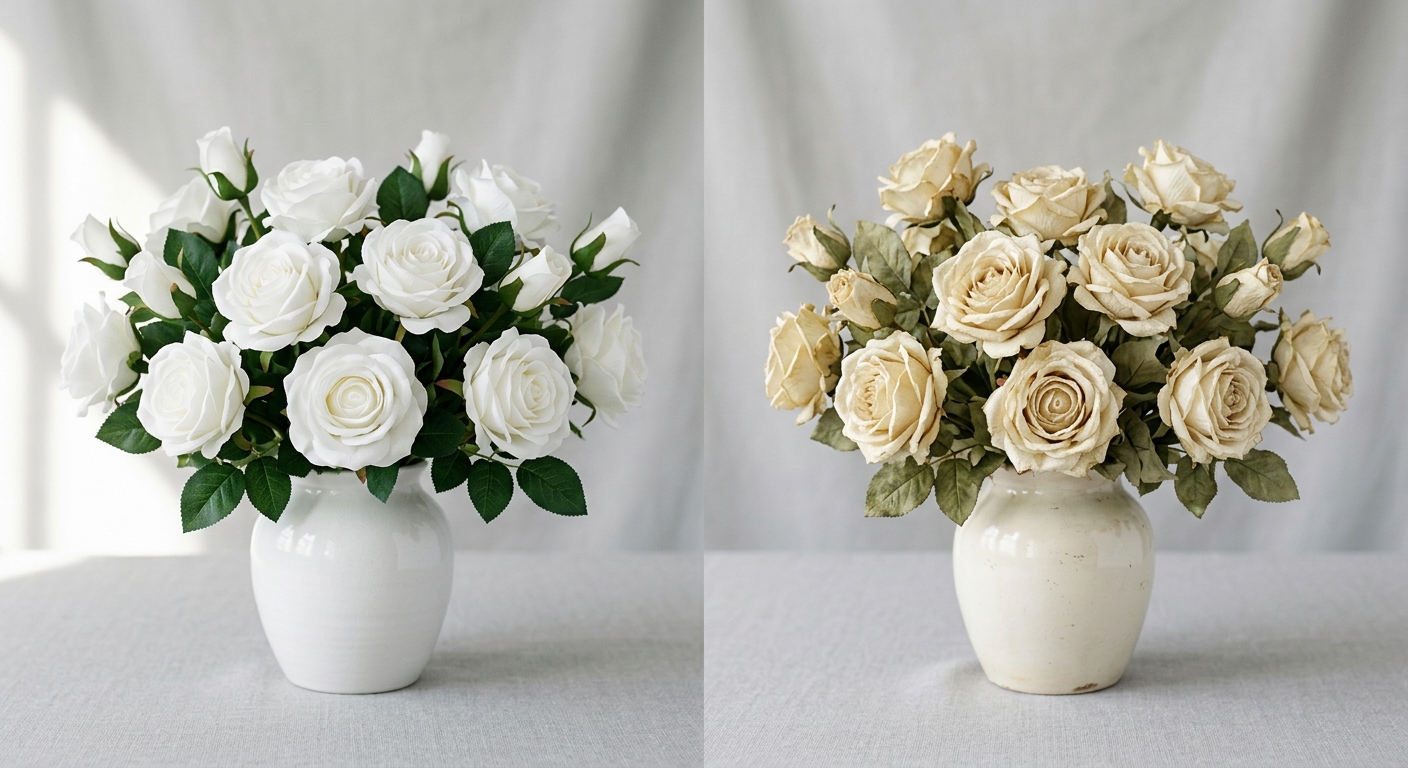
Artificial flowers turn yellow primarily because of ultraviolet radiation breaking down the polymer chains in the petals, oxidation of the dyes and binders, and a buildup of airborne pollutants like nicotine, kitchen grease, and dust. The good news? Yellowing is almost entirely preventable once you understand which material reacts to which stressor — and that decision starts at sourcing, not at the display stage.
Yellowing isn't a single phenomenon — it's three different chemical reactions that often happen at the same time. Knowing which one is hitting your product determines how you fix it.
1. Photo-oxidation. UV light (especially UVA at 315–400 nm) attacks the C-H bonds in polyester, PU, and latex. The reaction creates carbonyl groups and conjugated double bonds — both of which absorb blue light, which is why the material looks yellow to our eyes.
2. Thermal degradation. When silk or PU sits in a hot window or near a halogen spotlight, temperatures above 60°C accelerate hydrolysis of the polymer. The dye binder weakens, pigment shifts, and white petals turn cream within months.
3. Pollutant adsorption. Nicotine, cooking oils, and even ozone from laser printers chemically bond with surface dyes. This isn't fading — it's chemical staining, and it's particularly aggressive on white and pale pastel petals.
Most yellowing complaints we trace back come from a combination of factors, not just one. A retail display near a south-facing window with halogen accent lighting? That's all three mechanisms at once.
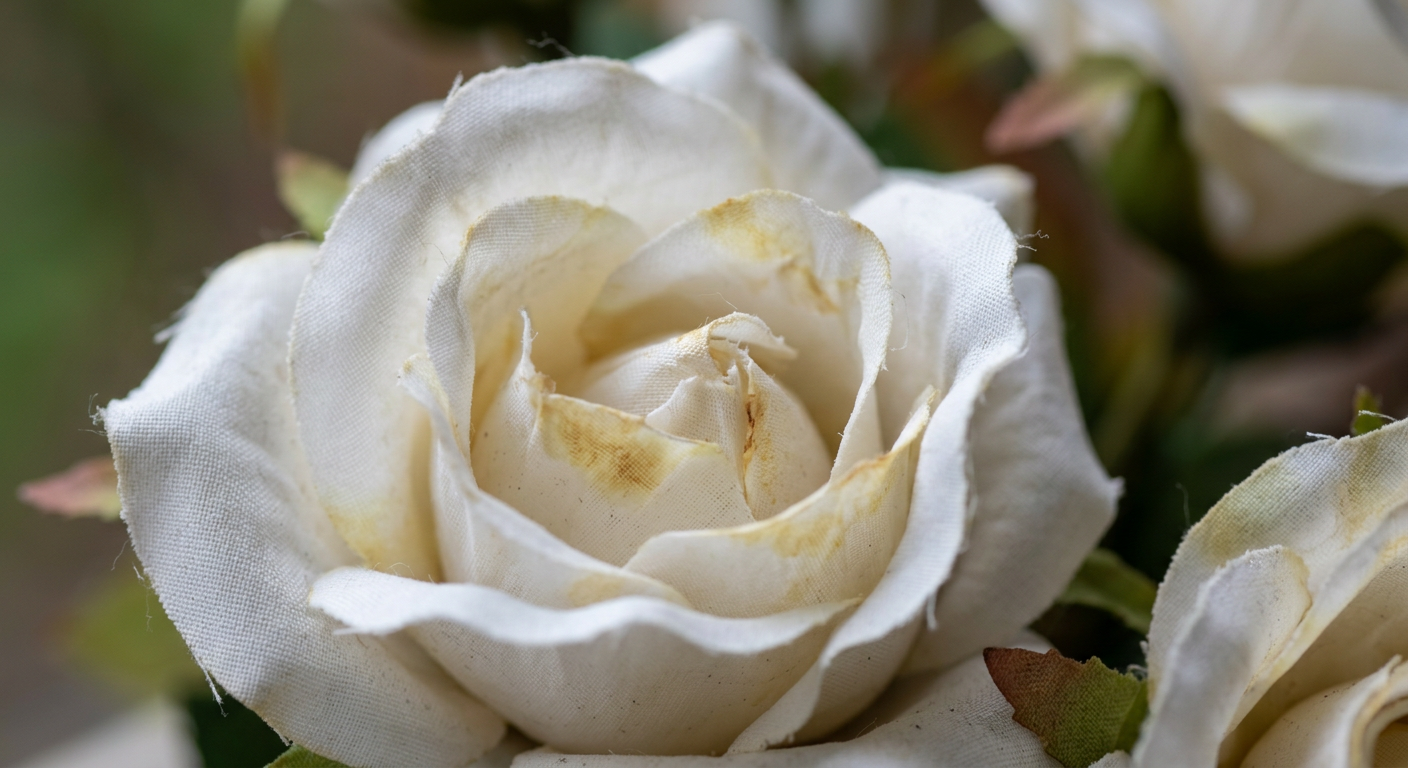
UV is the single biggest reason artificial flowers yellow — full stop. Even a north-facing window transmits enough UVA to damage uncoated polyester within 8–12 months.
In accelerated weathering tests (ASTM G154), standard polyester silk shows a measurable color shift (Delta E > 3) after roughly 300 hours of UV exposure — equivalent to about 4 months of indirect sun through glass. UV-stabilized PU with HALS (Hindered Amine Light Stabilizers) additives can push that to 1,800+ hours.
For example, a hospitality buyer outfitting a beachfront resort lobby with floor-to-ceiling glass needs HALS-treated PU stems. Standard silk in that environment will yellow visibly within a single summer season. We've seen this play out in actual projects — see our breakdown of the best artificial plants for outdoors for material specs that survive direct sun.
Not all faux florals age equally. The base material — and how the color was applied — predicts yellowing behavior more than any other factor.
Silk (polyester fabric): The workhorse of the industry. Solution-dyed polyester resists yellowing well indoors but is vulnerable to UV outdoors unless the fabric is coated.
PU (polyurethane): Used in real-touch petals. PU can yellow on its own through a process called “phenolic yellowing” — even in the dark, if it's stored against BHT-treated cardboard or in humid conditions. Quality manufacturers use aromatic-free PU or add antioxidants to prevent this.
Latex: The most realistic feel, the worst yellowing resistance. Natural latex oxidizes from the moment it leaves the mold. Synthetic latex compounds with antioxidants last longer but still aren't ideal for sun-exposed locations.
EVA foam: Common in budget tier products. Stable indoors, but cheap formulations contain residual peroxides that cause progressive yellowing within 12 months even in a closed warehouse.
For deeper material guidance, our types of artificial flowers guide walks through which fabrics suit which environments.
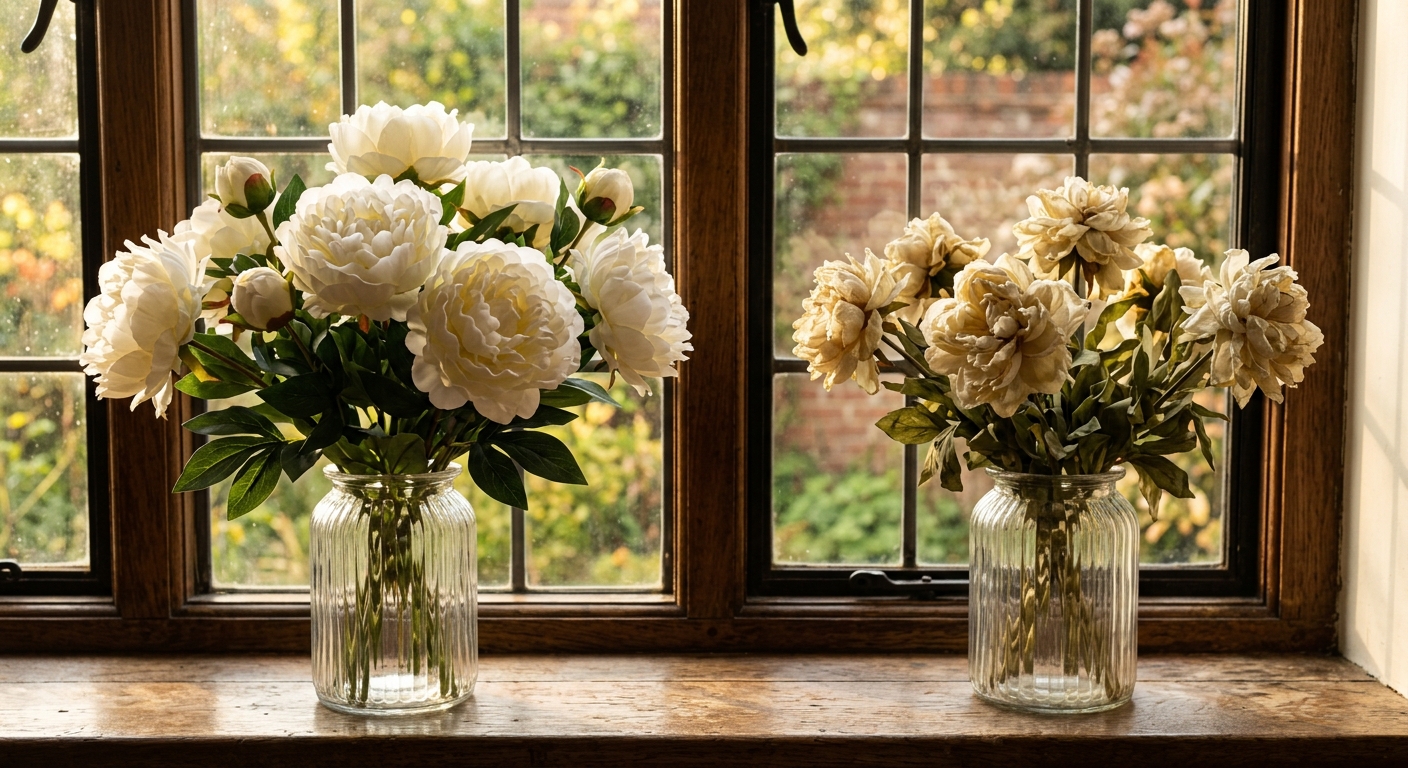
Here's something most buyers don't realize: a significant portion of yellowing complaints originate during storage and shipping — before the flowers ever go on display.
When PU and white nylon petals are sealed in plastic bags with cardboard inserts containing BHT (a common antioxidant in kraft paper), the BHT off-gases and reacts with nitrogen oxides in the air. The result: pink-to-yellow staining concentrated along contact points. This is why our factory uses acid-free tissue and BHT-free packaging for white and pastel SKUs.
Storage above 70% relative humidity accelerates hydrolysis in PU and adhesives. A distributor warehousing stock in coastal Florida without climate control will see measurable yellowing in white blooms within 6 months.
Compressed petals develop heat pockets and trap residual moisture. Cartons should be stacked no more than 4 high for delicate white florals.
For a wedding planner case study on how packaging affects bulk consistency, see our playbook on sourcing 1,000+ stems without color inconsistency.
Even out of direct sunlight, artificial flowers yellow when their environment is hostile. The big four:
For instance, a hotel chain we work with installed white orchid arrangements in their spa entrance — within 4 months, the petals showed obvious yellowing from chlorine vapor migration. The fix was switching to UV-stable, chemically-inert PE (polyethylene) stems for that specific location. Same product family, different polymer, problem solved. This kind of room-by-room material thinking is covered in our guide for hotels and resorts.
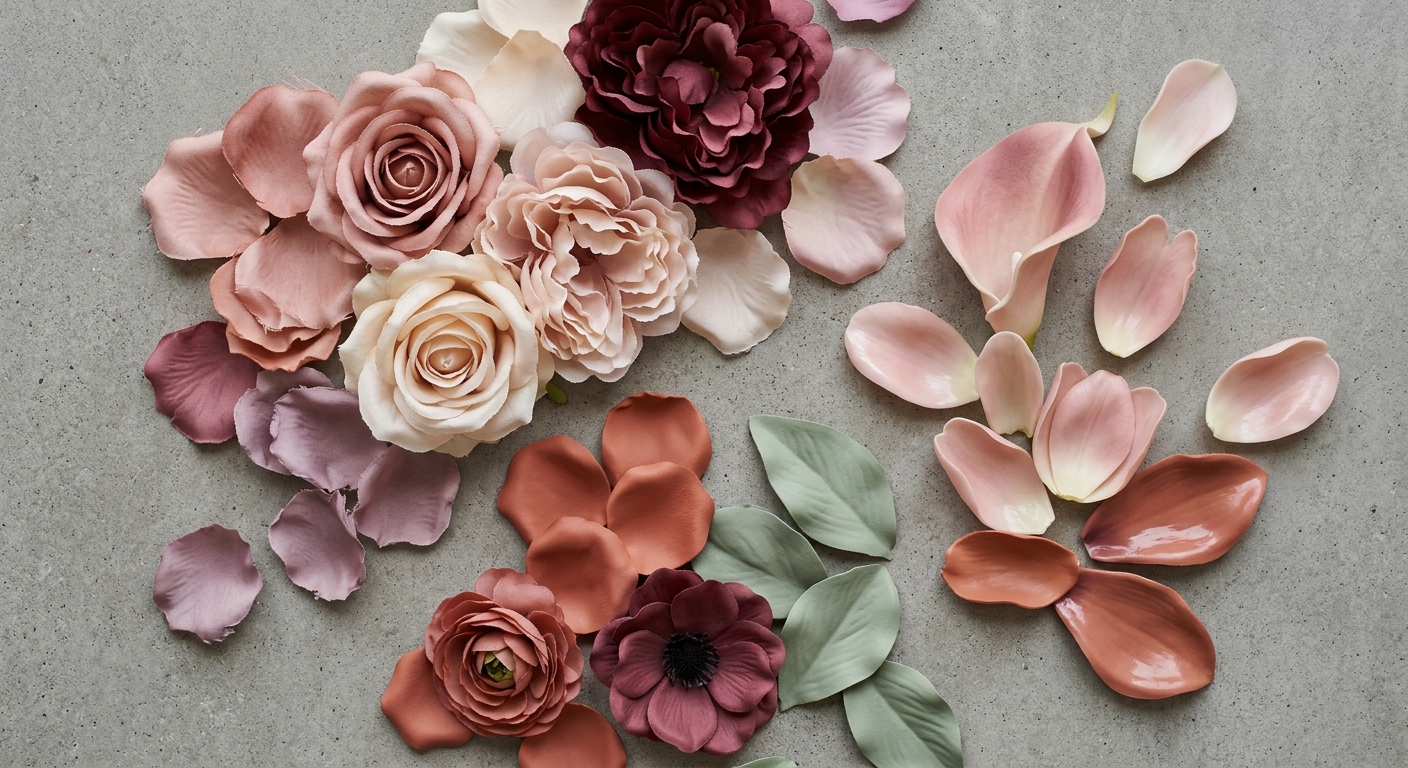
Yellowing prevention starts at sourcing and continues through display. Here's the checklist that actually works:
Honest answer: sometimes yes, often no. It depends on which type of yellowing has set in.
Surface staining (dust, nicotine, grease): Yes, restorable. A gentle wash in lukewarm water (under 30°C) with a drop of pH-neutral detergent removes most surface yellowing. Air dry petals upside down, never in direct sun.
Phenolic yellowing on whites: Sometimes. Sodium bisulfite solution (5g per liter) can reduce the staining if caught within 2–3 months. Beyond that, the damage is usually permanent.
UV photo-oxidation: Almost never. The polymer chains are physically altered. No cleaning solution rebuilds a broken chemical bond. Replacement is the only real option.
Heat damage: Not reversible. Crystalline structure changes in the polymer don't undo themselves.
The takeaway? Yellowing caught in the first month or two from a surface source can often be cleaned. Anything chemical or UV-induced is essentially permanent — which is why prevention matters far more than restoration.
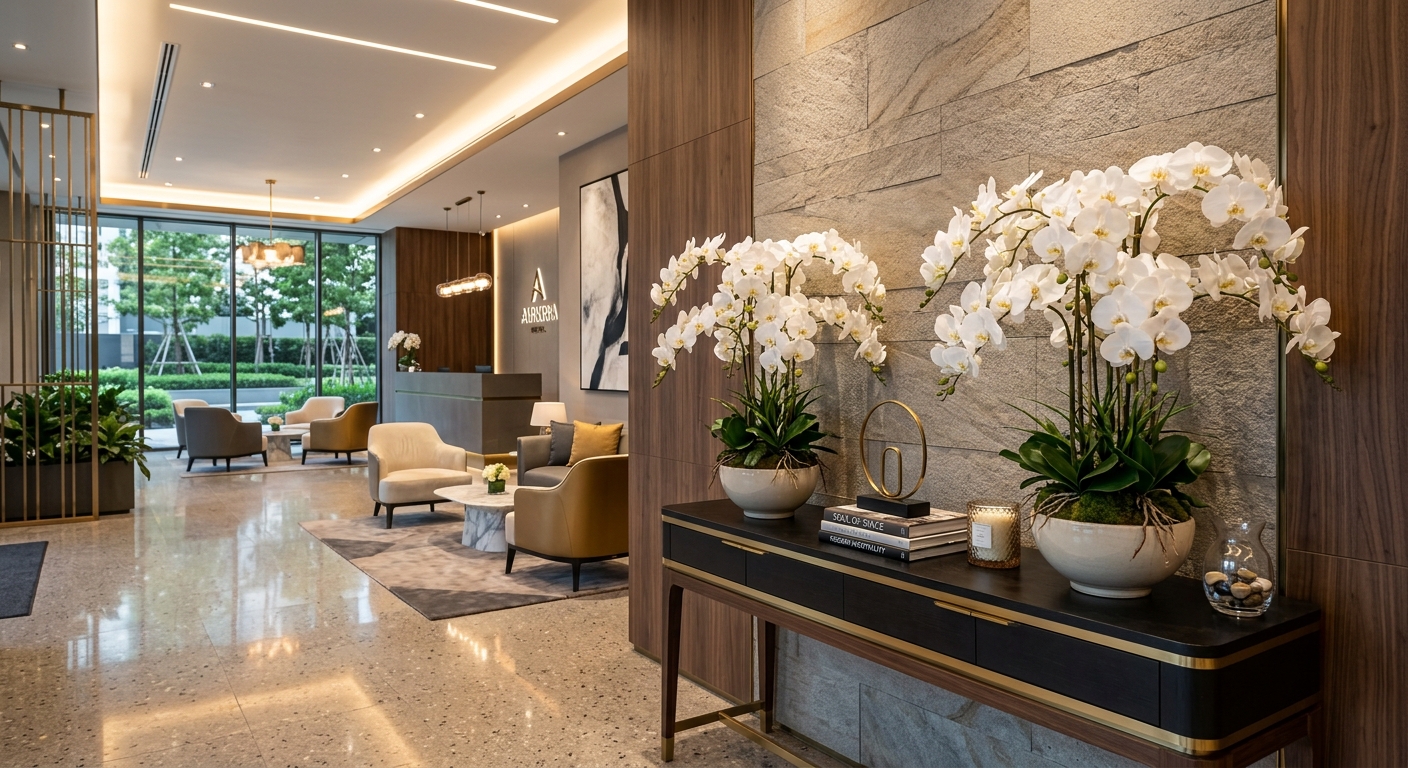
If you're a wholesaler, retail brand, or event planner ordering at scale, the right manufacturing specs eliminate most yellowing issues before they start. What we recommend asking any factory:
This level of specification is exactly what factory-direct OEM/ODM relationships make possible. Trading platforms rarely let you control polymer chemistry. A direct manufacturer can. For more on choosing the right partner, see our wholesale supplier selection guide.
Yellowing in artificial flowers is a solvable problem — but only if you treat it as a materials science question, not a maintenance afterthought. The biggest gains come from sourcing UV-stabilized polymers, choosing solution-dyed fibers, controlling storage humidity, and keeping whites away from direct sun and reactive pollutants. Get those right, and your faux florals will outlast multiple generations of fresh-flower contracts at a fraction of the cost.
For wholesale buyers, retailers, and event professionals planning long-term installations, the chemistry of the product matters as much as its design. If you'd like to discuss UV-stable, custom-spec arrangements for your project — whether that's commercial plant walls, hotel lobbies, or seasonal retail collections — our team can help you build a specification that prevents yellowing from day one. Reach out with your project details, or browse our full product catalog to start.
 Knowledges
 Knowledges
 Knowledges
 Knowledges
 Knowledges
 Knowledges