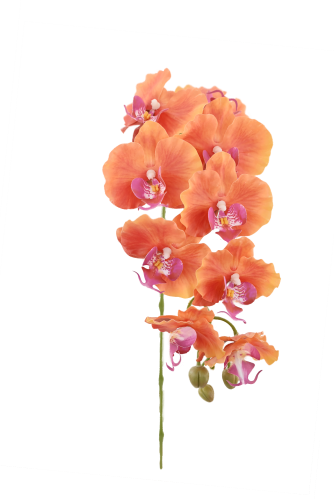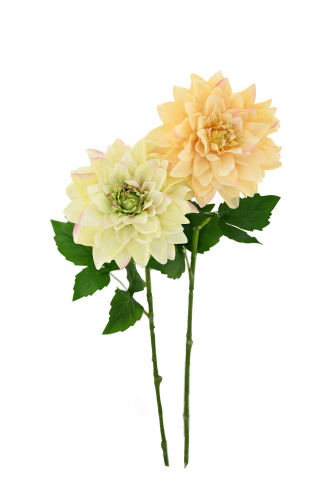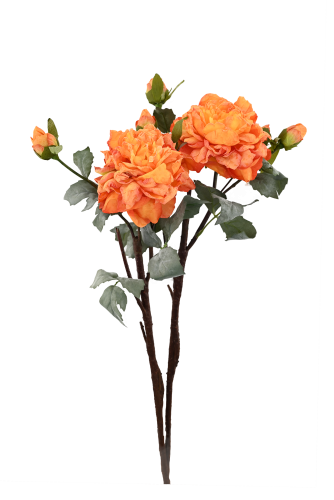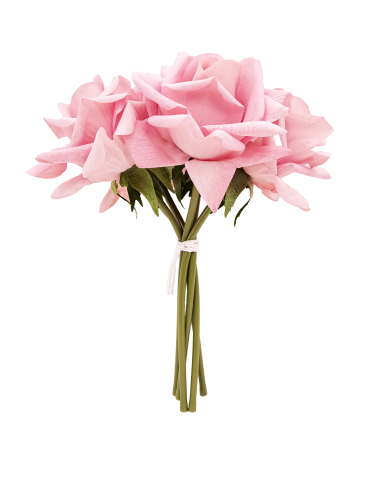
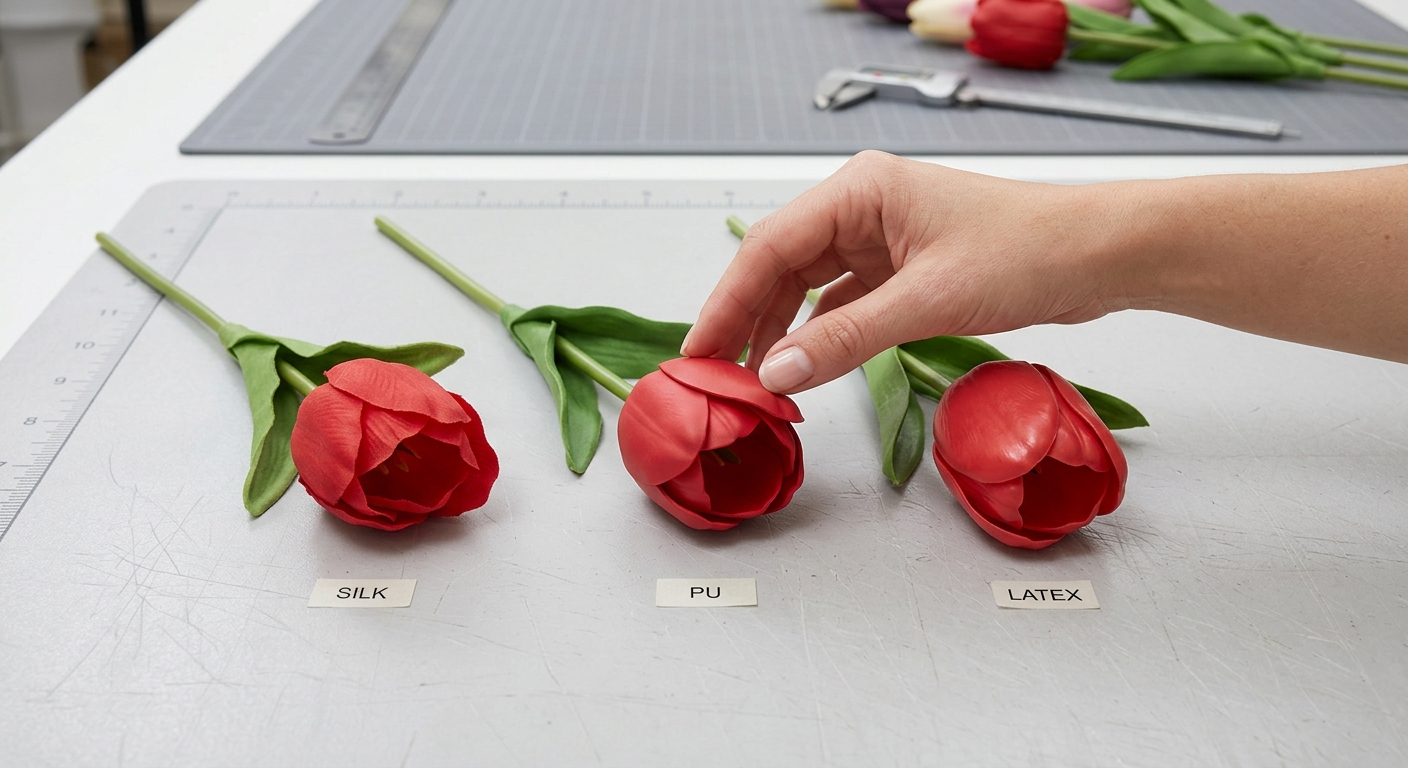
Silk is the most cost-effective choice for mass-market retail lines, PU (polyurethane) hits the sweet spot of realism and durability for commercial installations, and latex delivers the most convincing tactile experience for premium wedding and event products. The “right” material isn't about which one is objectively best — it's about which one aligns with your price point, your end customer's expectations, and how the flower will actually be used. This guide breaks down the real differences so you can make sourcing decisions with confidence instead of guesswork.
Most buyers treat material selection as an afterthought — they pick whatever their last supplier offered. That's a mistake. The material you choose determines your landed cost, your return rate, your product's shelf appeal, and whether a buyer reorders next season.
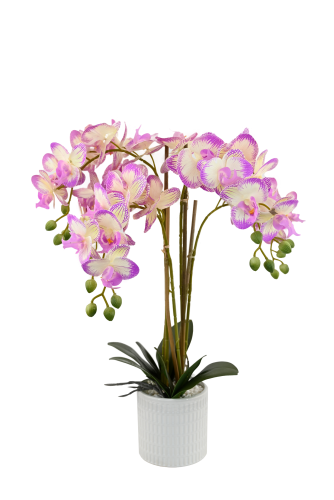
Think of it this way: a hotel chain buying 2,000 orchid arrangements for lobby displays has completely different requirements than a wedding planner sourcing 500 bridal bouquets. The hotel needs UV stability and easy cleaning. The wedding planner needs petals that feel real when guests touch them during the ceremony. Same flower, radically different material needs.
Understanding the types of artificial flowers and how to choose them starts with understanding what each material actually does — and doesn't — deliver.
Silk flowers aren't actually made of silk anymore — the term is industry shorthand for polyester-fabric flowers that mimic the look and drape of real petals. They've been the backbone of the artificial flower market for decades, and for good reason.
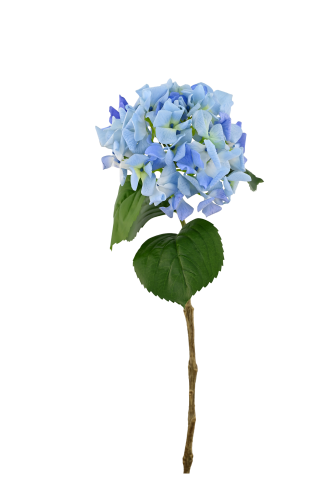
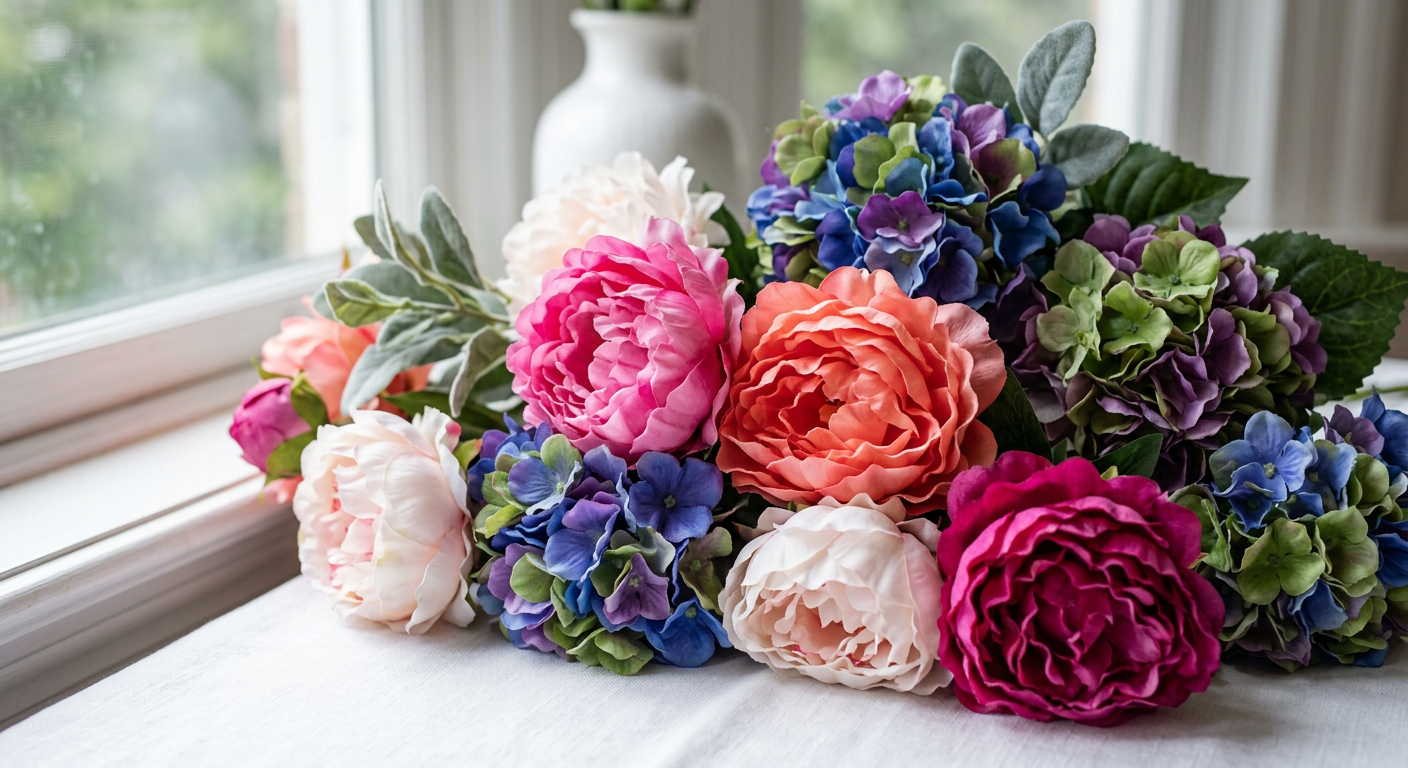
Cost efficiency is silk's superpower. Per-stem costs in bulk orders can run 30–50% lower than PU equivalents, which makes silk the obvious choice when you're filling a 40-foot container for a retail chain. The fabric accepts dye beautifully, so color customization is virtually unlimited — you can match a Pantone reference within a single sampling cycle. Silk also handles complex petal shapes well: ruffled peonies, multi-layered dahlias, and dense hydrangea clusters are all easier (and cheaper) to produce in fabric than in foam-based materials.
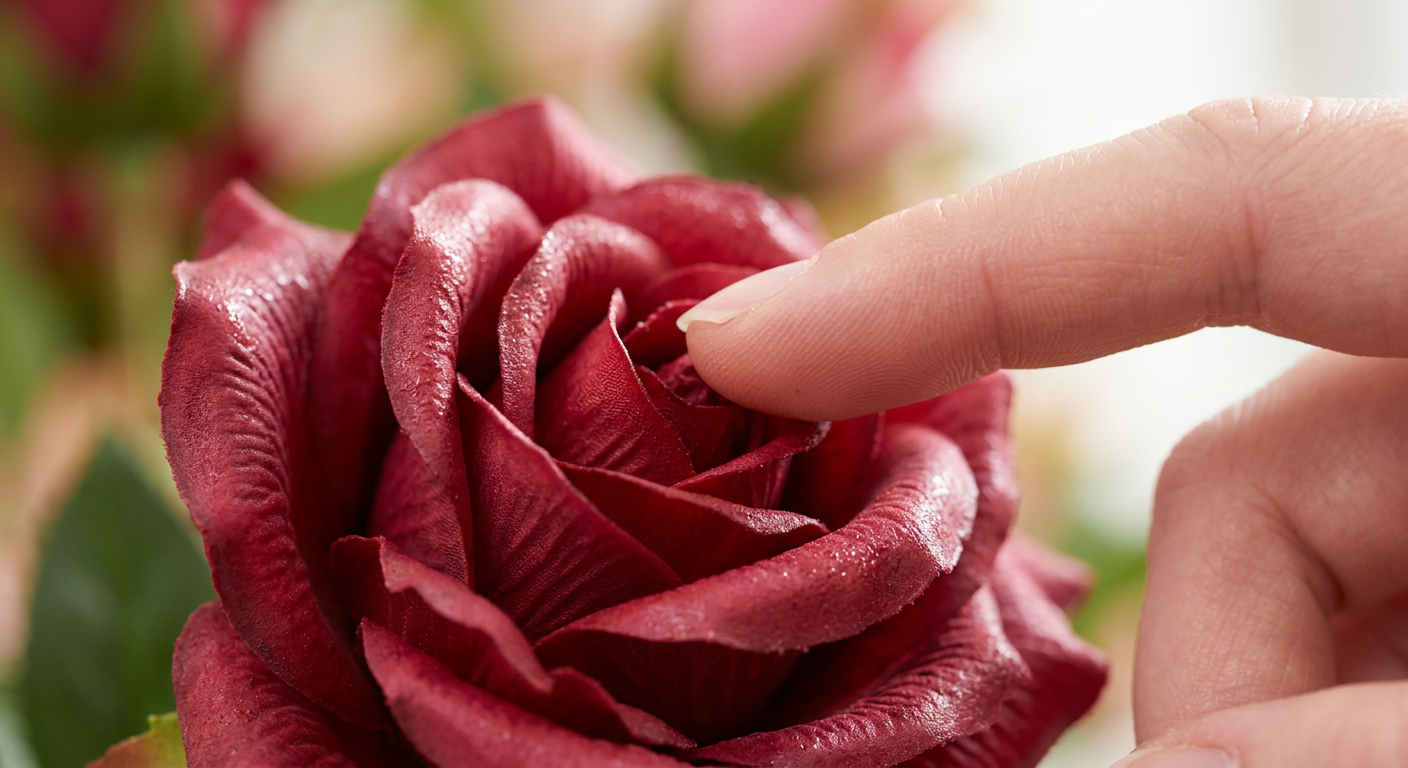
Touch. Pick up a silk rose and you immediately know it's artificial. The petals feel like fabric because they are fabric. For retail displays behind glass or high-shelf arrangements, this doesn't matter. For anything customers will handle — table centerpieces, bridal bouquets, showroom displays — it's a liability.
Silk also fades faster under direct sunlight. Indoor use? You'll get 3–5 solid years. Near a south-facing window or in a sun-drenched lobby? Expect noticeable fading within 12–18 months without UV-treated coatings.
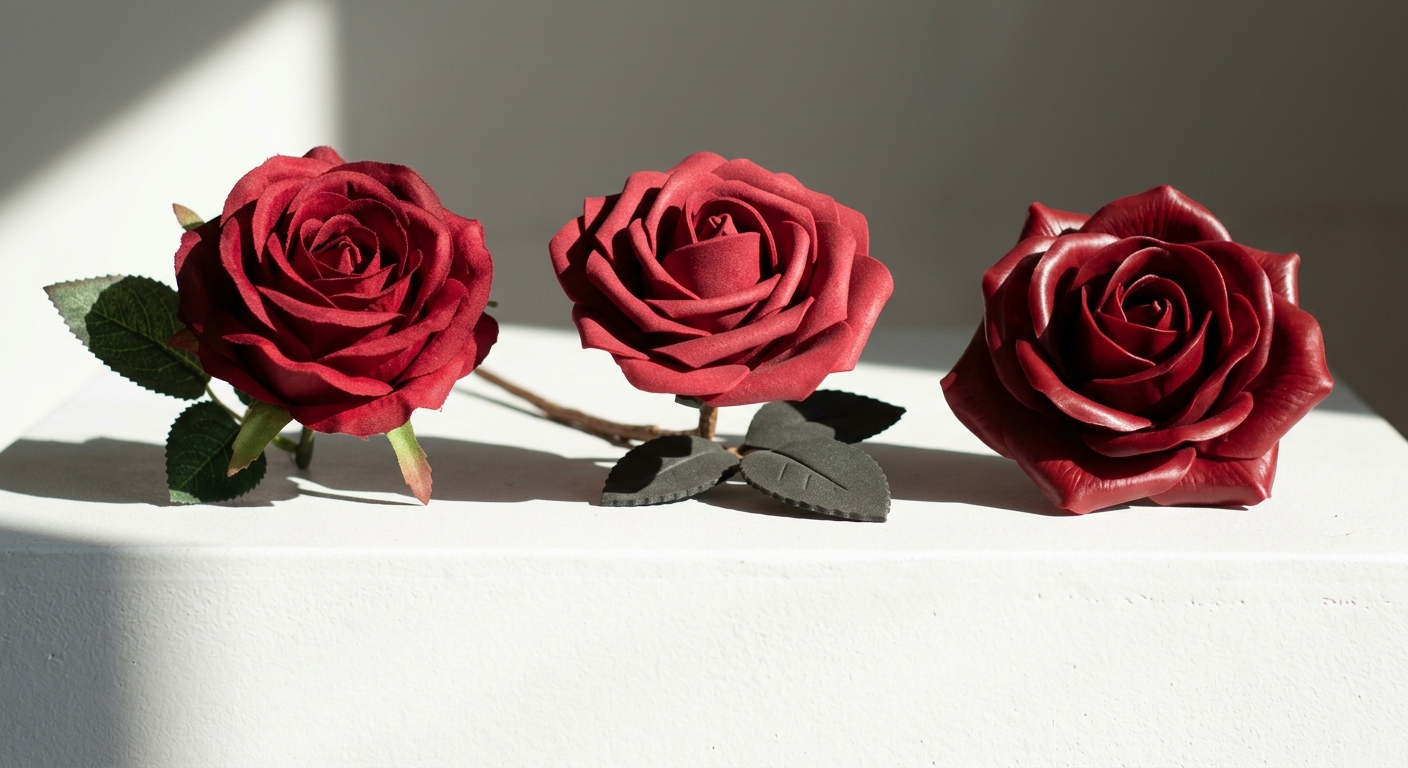
PU flowers are made by injecting polyurethane foam into molds shaped from real botanical specimens. The result is a petal with visible veining, subtle thickness variation, and a soft-to-the-touch surface that's dramatically more realistic than silk. This is the material behind most “Real Touch” product lines on the market.
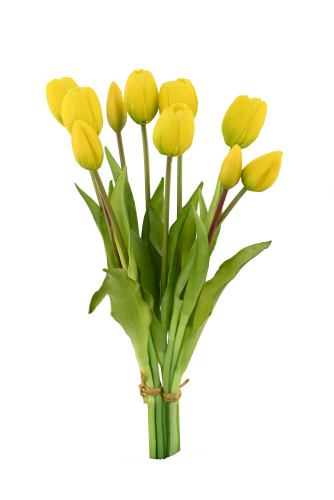
Realism, both visual and tactile. A well-made PU calla lily or tulip is genuinely difficult to distinguish from a fresh flower at arm's length. The foam holds pigment in a way that mimics the translucency of real petals — you get depth of color rather than the flat surface color typical of fabric. PU also outperforms silk on durability: the material resists crushing, holds its shape after shipping, and doesn't fray at the edges over time.
For commercial installations — hotel lobbies, corporate offices, restaurant décor — PU is the smart default. It looks premium, handles well during installation, and requires minimal maintenance. A quick wipe with a damp cloth keeps it looking fresh, which matters when you're reading our guide on simple ways to clean artificial flowers.
Cost and complexity. PU stems typically run 20–40% more than silk equivalents, and the molding process means lead times for new custom designs are longer. You're also somewhat limited in petal complexity — PU works brilliantly for flowers with thick, smooth petals (roses, tulips, orchids, calla lilies) but struggles with ultra-thin, ruffled varieties like sweet peas or wisteria.
A European hotel supply distributor we work with switched their entire orchid and rose line from silk to PU after guest feedback surveys repeatedly mentioned that lobby flowers “looked fake.” The material upgrade cost them roughly 25% more per arrangement, but their reorder rate from hotel clients jumped by over 40% in the following year. The math worked.
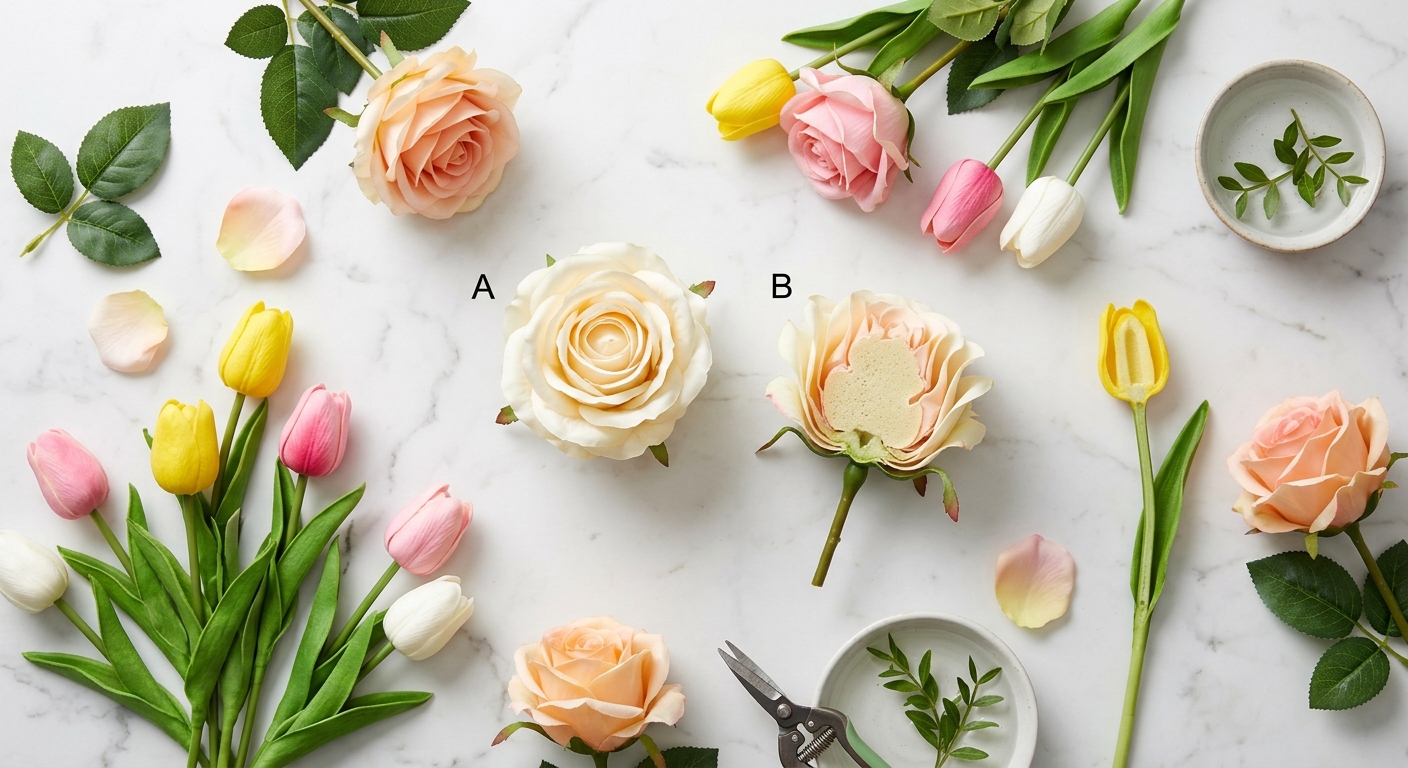
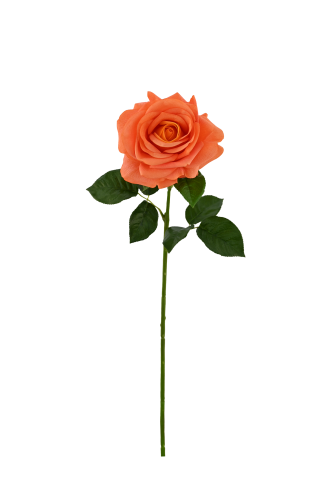
Latex flowers represent the top tier of artificial flower realism. Made from natural or synthetic rubber, latex petals have a moist, cool-to-the-touch feel that mimics fresh-cut flowers more convincingly than any other material. When people say they “couldn't tell it was fake,” they're almost always holding a latex flower.
Touch is everything here. Latex petals bend, flex, and spring back like living tissue. The surface has a subtle sheen that catches light the way a real petal does — not the matte flatness of fabric or the uniform smoothness of foam. For bridal bouquets, close-up photography props, and high-end event décor where guests will physically interact with the flowers, latex is unmatched.
This is especially relevant for the wedding market. If you're helping clients decide between fake vs. real flowers for weddings, latex flowers are the argument-closer. They photograph identically to fresh flowers and survive a full day of handling without wilting or bruising.
Price and production constraints. Latex is the most expensive of the three materials, sometimes 50–80% more per stem than silk. MOQs tend to be higher because the production process is more specialized. Latex is also more sensitive to extreme heat — prolonged exposure above 40°C (104°F) can cause softening or tackiness, which rules it out for outdoor summer installations in hot climates.
Color range is another limitation. While silk accepts virtually any dye color, latex is harder to pigment in ultra-vivid or unusual shades. You'll get gorgeous natural tones, but neon pink or electric blue? That's silk territory.
Numbers and ratings are easier to compare in a table than in paragraphs. Here's the quick-reference version:
| Criteria | Silk | PU (Polyurethane) | Latex |
|---|---|---|---|
| Visual Realism | ★★★★☆ | ★★★★★ | ★★★★★ |
| Touch Realism | ★★★☆☆ | ★★★★☆ | ★★★★★ |
| Unit Cost (Bulk) | Lowest | Medium | Highest |
| UV & Fade Resistance | Moderate | Good | Moderate |
| Durability / Lifespan | 3–5 years | 5–7 years | 3–5 years |
| Best Use Case | Retail / Mass Market | Hotels & Commercial | Weddings & Events |
| Customization Flexibility | Very High | High | Moderate |
| MOQ Friendliness | Low MOQ | Medium MOQ | Higher MOQ |
A few things jump out. If budget drives your decision, silk wins every time. If you need the longest lifespan with minimal maintenance, PU is your pick. And if your end customer will touch, hold, or photograph the flower up close, latex justifies its premium.
Here's something most sourcing guides won't tell you: the best artificial flower arrangements often combine materials within a single product. A rose with PU petals and silk leaves. A bridal bouquet with latex focal flowers surrounded by silk filler stems. A commercial installation with PU orchids and silk greenery backing.
Blending materials lets you optimize cost without sacrificing realism where it matters most. The focal flower — the one the eye (or hand) goes to first — gets the premium material. Supporting stems, leaves, and filler use cost-effective silk. This approach can cut your per-arrangement material cost by 20–30% while maintaining a premium look and feel.
For instance, a Middle Eastern event décor company we supply builds their signature wedding arch packages with latex roses for the front-facing blooms and silk hydrangeas for the background fill. The total material cost drops significantly, but the visual impact from the guest's perspective is indistinguishable from an all-latex build.
When you're exploring how to make artificial flowers look real, material blending is one of the most underused professional techniques.
Stop thinking about materials in isolation. Start thinking about your customer's customer. What does the end user actually experience?
Your buyer is scrolling a product page or walking past a shelf. They're making a decision based on color, price, and a photo. Touch doesn't matter at the point of purchase. Go with silk. Maximize your margin, invest in photography, and offer the widest color range possible.
The arrangement will be in place for years. It needs to survive cleaning crews, HVAC airflow, and the occasional guest who reaches out to check if it's real. PU is your default. The durability pays for itself over the installation's lifetime, and the touch realism prevents that “cheap fake” impression that undermines a luxury hotel's brand.
Close contact is guaranteed. Brides hold bouquets. Guests touch centerpieces. Luxury shoppers pick up products and examine them. Latex for focal flowers, silk or PU for supporting elements. This is where the blended-material strategy really shines.
None of these three materials are inherently outdoor-rated without treatment. For realistic artificial outdoor displays, look for UV-coated PU or specially treated silk with fade-resistant finishes. Latex should generally stay indoors.
This might be the most important practical advice in this entire article: never commit to a material for a new product line based on photos or spec sheets alone. Order samples in all three materials for your key SKUs and put them through real-world testing.
At artificialflowerplant, our sampling cycle is designed specifically for this kind of comparative evaluation. You can request samples across multiple materials for the same flower variety through our custom OEM/ODM page, so you're comparing apples to apples — same design, different material, clear decision.
Buyers fixate on per-stem cost. It's the wrong metric — or at least an incomplete one. Total cost of ownership matters more, especially for commercial and hospitality buyers.
A silk arrangement at $8 per stem that fades noticeably after 18 months and needs replacing costs you $16 over three years. A PU arrangement at $11 per stem that still looks fresh after five years costs you $11 over the same period. The “expensive” option is actually 31% cheaper on a per-year basis.
For retail lines with seasonal turnover, this math flips — you're not keeping product for five years, so the lower upfront cost of silk is genuinely the smarter investment. Context determines everything.
PU's crush resistance means lower damage rates during international shipping. We've seen silk-heavy shipments arrive with 3–5% damage on delicate petal edges, while PU equivalents on the same route come through at under 1%. Over a 10,000-stem order, that difference pays for the material upgrade.
Forget the analysis paralysis. Use this three-question framework to land on the right material in under a minute:
That's it. Three questions, clear answers. The nuances we've covered above help you fine-tune, but this framework gets you 80% of the way to the right decision instantly.
If you're building or expanding an artificial flower product line and want to compare materials hands-on, reach out to our team for a multi-material sample kit tailored to your specific flower varieties. With over 5,000 SKUs and in-house production across all three material types, we can help you find the exact combination that fits your market, your margin, and your customers' expectations.
 Knowledges
 Knowledges
 Knowledges
 Knowledges
 Knowledges
 Knowledges