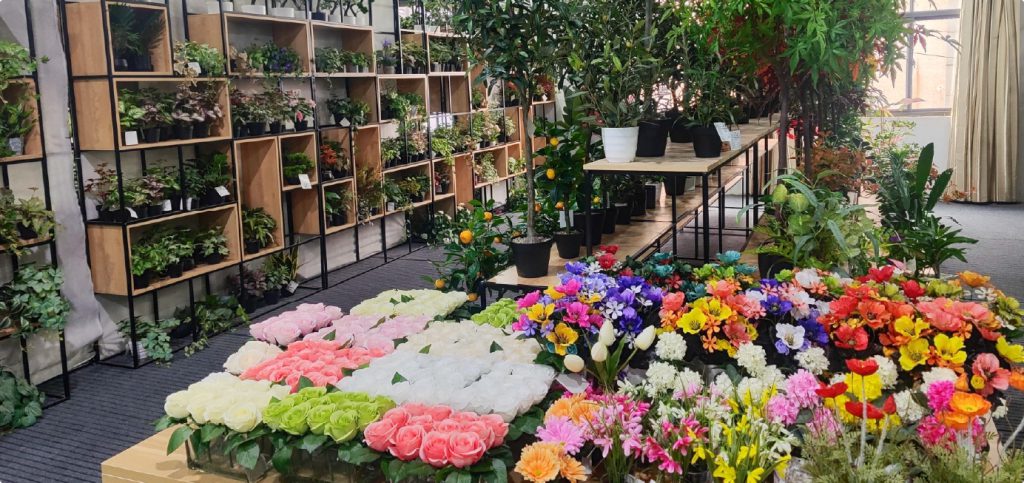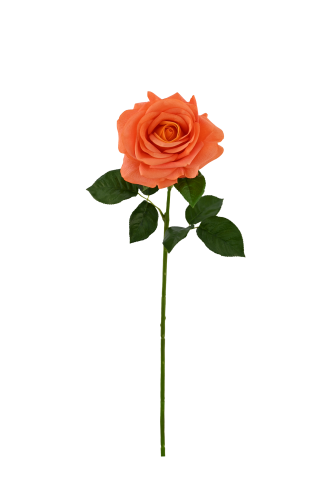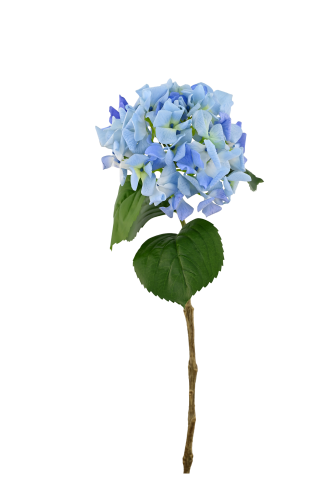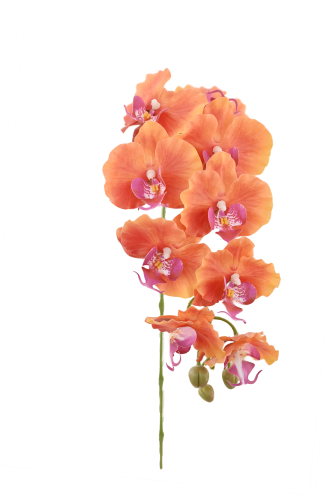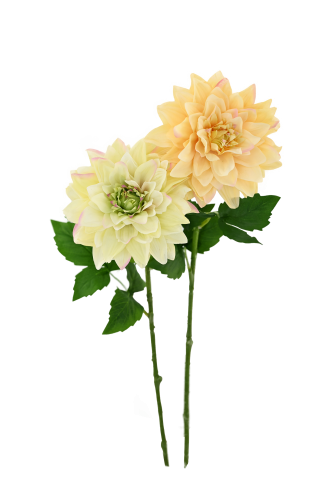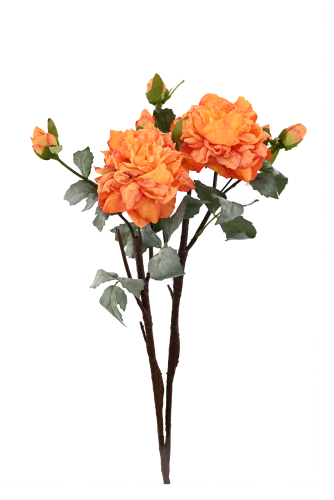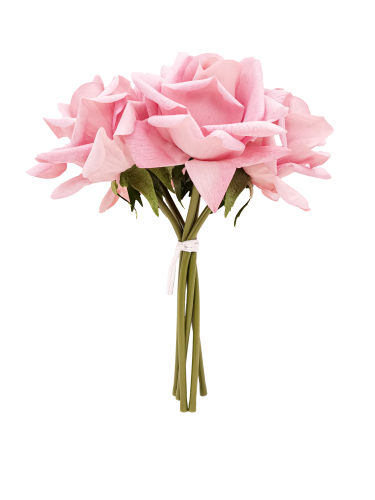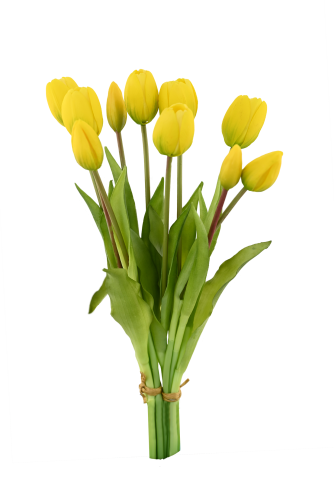
Artificial flowers have evolved dramatically in recent years. High-quality faux flowers can now closely resemble fresh blooms, offering the beauty of real flowers without the maintenance, watering, or limited lifespan. However, not all artificial flower arrangements look convincing. Poor shaping, unrealistic materials, or improper arrangement can make even expensive faux flowers appear artificial.
The good news is that with the right techniques, artificial flowers can look nearly indistinguishable from real ones. Professional interior designers, decorators, and commercial display specialists use specific methods to enhance realism. This guide explains exactly how to make artificial flowers look real using proven professional techniques.
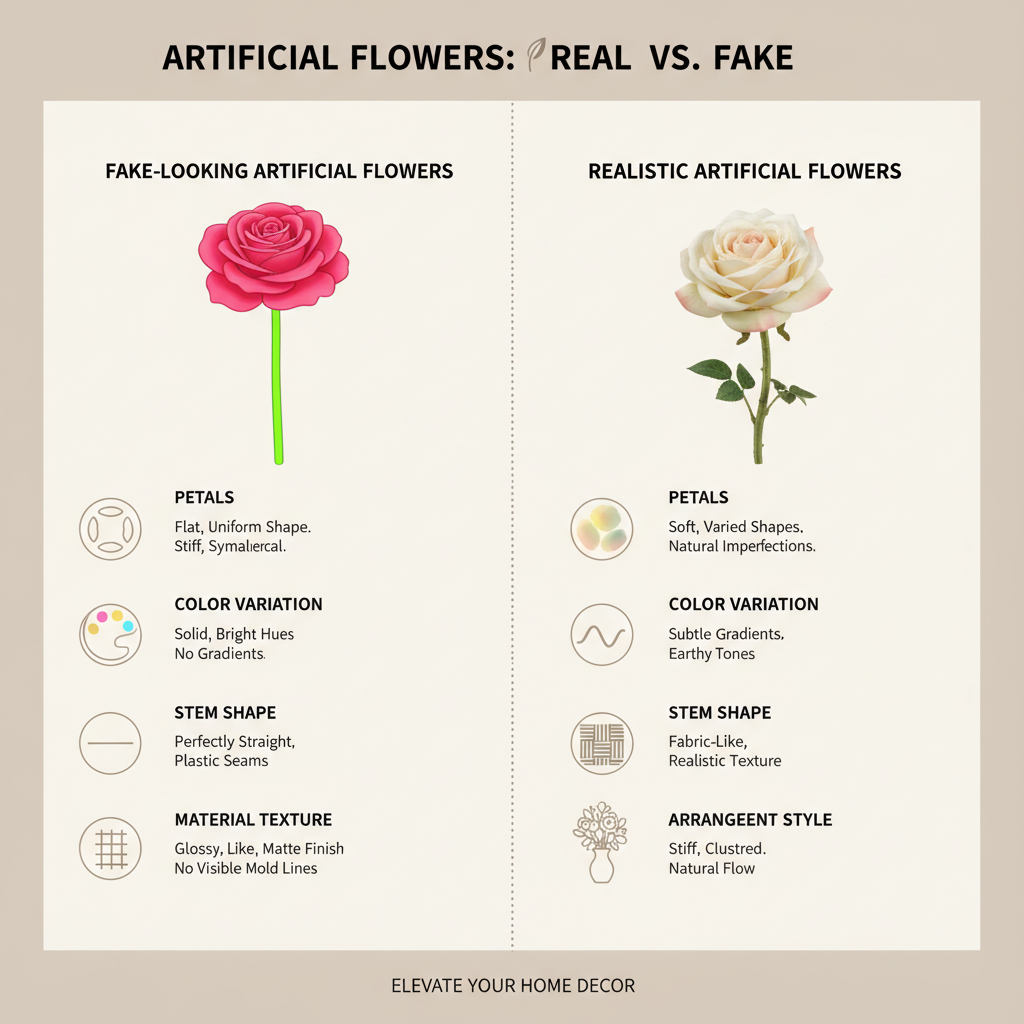
Understanding why artificial flowers look fake is the first step to making them look real. Real flowers have natural imperfections, organic shapes, and subtle variations that artificial flowers must replicate.
The most common signs that artificial flowers look fake include:
Real flowers grow naturally, which means they have irregular shapes, gentle curves, and layered depth. Artificial flowers must be shaped and arranged intentionally to recreate these natural characteristics.
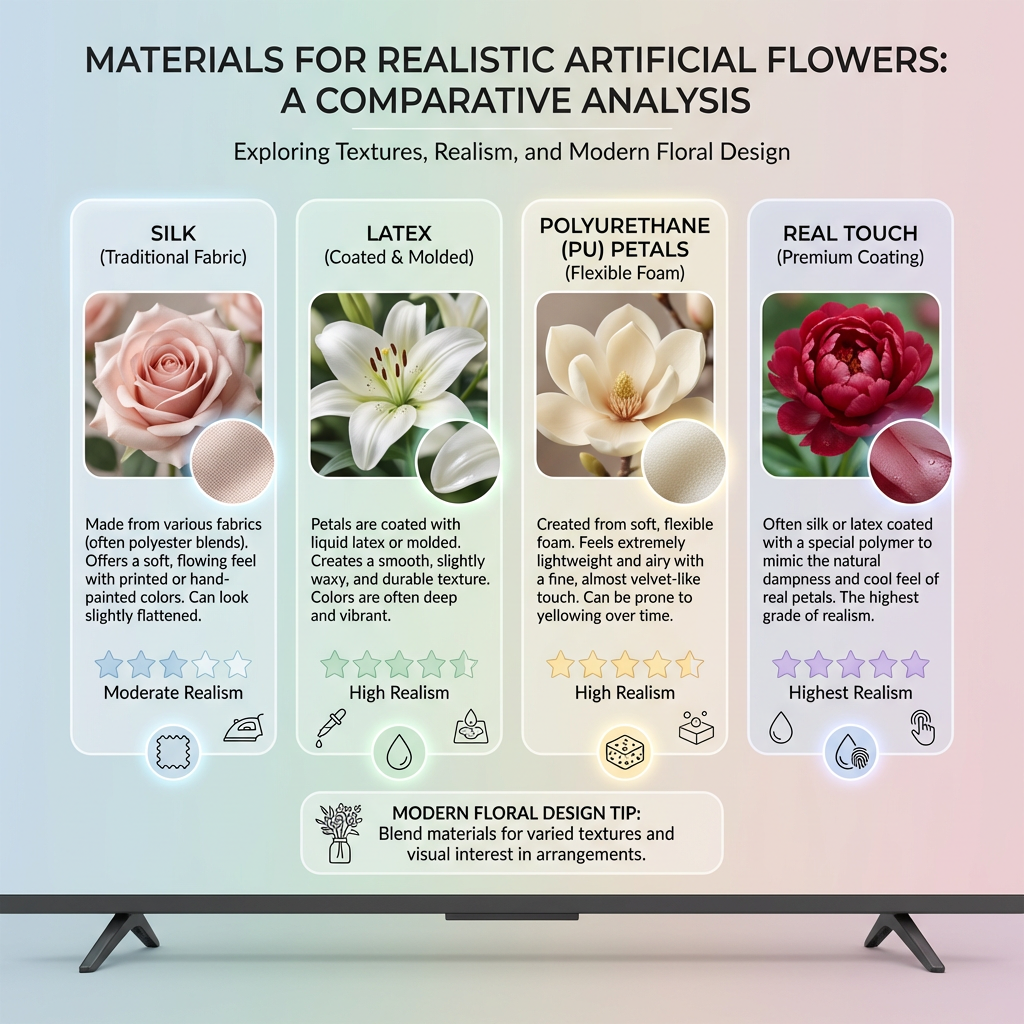
The realism of artificial flowers begins with material quality. Higher-quality artificial flowers are designed to replicate the texture, color variation, and structure of real blooms.
The most realistic artificial flowers are typically made from:
Avoid artificial flowers made from rigid plastic with glossy surfaces, as these immediately appear artificial.
When selecting artificial flowers, look for these realism indicators:
High-quality artificial flowers provide the foundation for realistic arrangements.
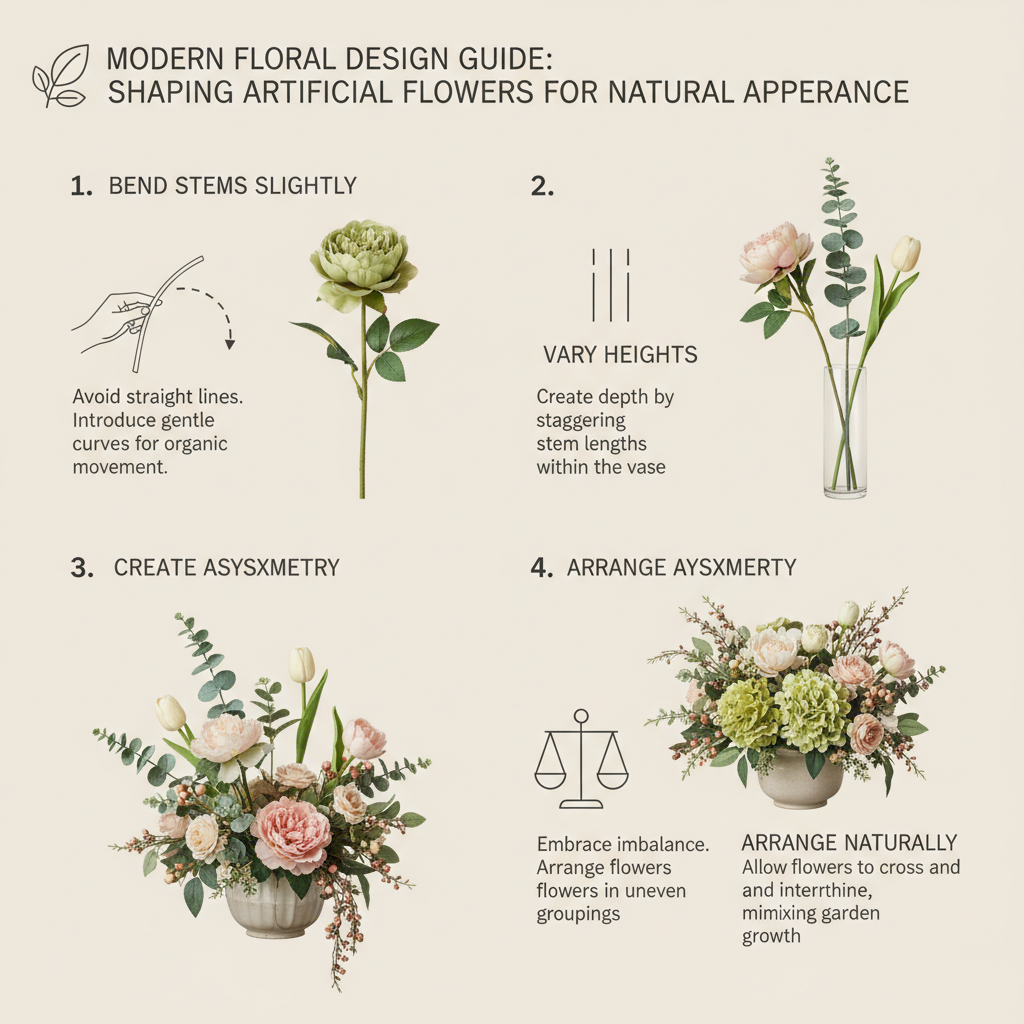
One of the most effective ways to make artificial flowers look real is to shape the stems properly. Artificial flowers often arrive perfectly straight, but real flowers rarely grow this way.
Gently bend each stem to create natural curves and variation. Avoid making all stems identical. Small differences in angle and direction create a realistic appearance.
Real flower arrangements have variation in height. Some blooms sit higher, while others sit lower. Adjust stem lengths to create natural layering and depth.
Perfect symmetry looks artificial. Instead, arrange flowers with slight irregularity to mimic natural growth patterns.
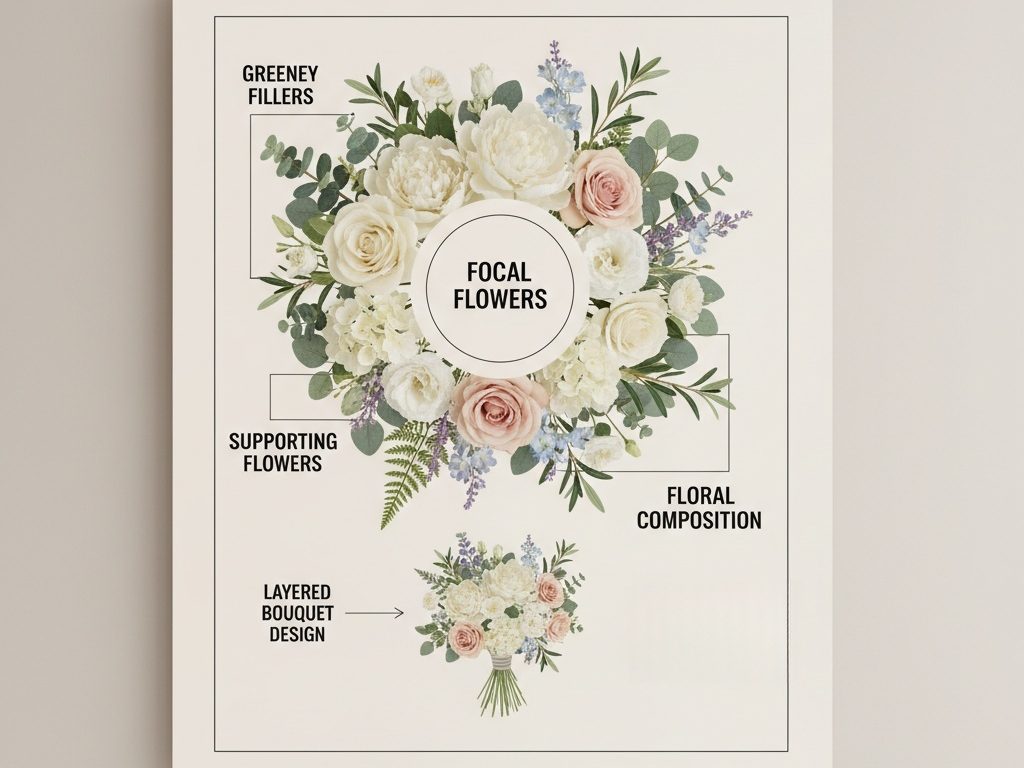
Professional flower arrangement techniques dramatically improve realism.
Real flower arrangements typically include:
This layered structure creates visual balance and depth.
Artificial flowers packed too tightly look unnatural. Leave space between blooms to allow each flower to appear distinct and natural.
Odd-numbered groupings often appear more natural and visually balanced.
Greenery plays a critical role in making artificial flower arrangements look real. Real flowers rarely exist without leaves, branches, or supporting foliage.
Examples of effective greenery include:
Greenery adds texture, variation, and realism.
The container significantly affects how realistic artificial flowers appear.
Recommended container materials include:
Avoid lightweight plastic containers, which reduce realism.
The vase should properly support the flower arrangement without overcrowding or excessive empty space.
Adding water to a transparent vase can greatly improve realism.
When artificial flowers appear in water, the arrangement closely resembles fresh flowers. To prevent stem damage, seal stem ends if necessary or use artificial water solutions designed for faux arrangements.
This simple technique creates a strong visual illusion of freshness.
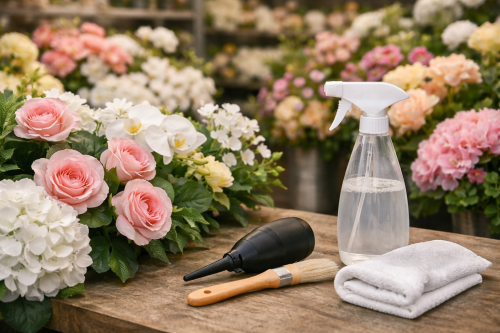
Artificial flowers that appear overly shiny often look fake.
To improve realism:
Matte finishes and natural shaping improve authenticity.
Combining artificial flowers with real natural elements significantly improves realism.
Examples include:
These elements create organic variation that enhances the overall arrangement.
Lighting affects how artificial flowers appear.
Natural lighting softens artificial materials and improves visual realism.
Harsh lighting can expose artificial textures. Indirect lighting creates a more natural appearance.
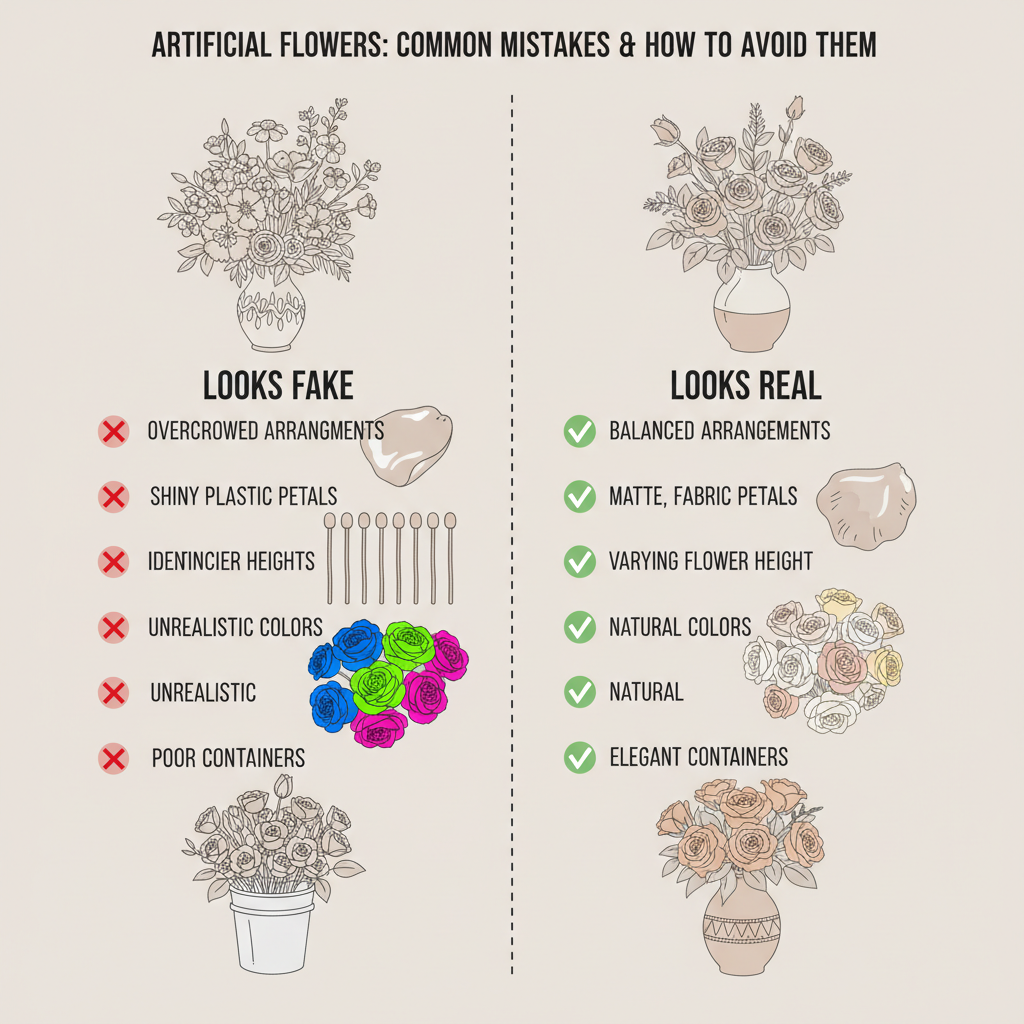
Avoid these common mistakes:
Correcting these mistakes dramatically improves realism.
Professional decorators use specific techniques to make artificial flowers appear real.
Key professional tips include:
These techniques create convincing and natural displays.
Artificial flowers can enhance many environments when arranged properly, including:
Proper placement enhances realism and visual impact.
Choosing realistic artificial flowers starts with evaluating the details that closely replicate natural blooms. High-quality faux flowers are designed to mimic the texture, color variation, and flexibility of real flowers, so it is important to examine both materials and construction before purchasing.
When selecting artificial flowers, pay attention to the following factors:
Yes. High-quality artificial flowers arranged properly can closely resemble real flowers.
Latex, real-touch materials, silk, and polyurethane provide the most realistic appearance.
High-quality artificial flowers can last for many years without fading or deterioration.
Yes. Artificial flowers are widely used in interior design, hospitality, and commercial environments.
Artificial flowers can look remarkably realistic when high-quality materials, proper shaping, and professional arrangement techniques are used. The key factors include selecting realistic materials, shaping stems naturally, using appropriate containers, and arranging flowers with variation and depth.
With proper selection and arrangement, artificial flowers provide long-lasting beauty without maintenance. They offer a practical and visually appealing alternative to fresh flowers, making them an excellent choice for homes, offices, and commercial environments.
 Tips
Tips
 Tips
Tips
 Tips
Tips
 Tips
Tips
 Tips
Tips