Hotels and resorts that switch to artificial plant installations typically cut their greenery-related maintenance budgets by 40–60% — some properties report savings exceeding $100,000 annually. The five primary strategies involve replacing high-turnover lobby arrangements, eliminating poolside plant damage cycles, creating permanent green walls, standardizing guest room botanicals, and deploying UV-stable outdoor installations that survive harsh climates without irrigation. These aren’t compromises on aesthetics; they’re deliberate operational upgrades that free up both labor and capital while keeping the property looking immaculate 365 days a year.
Here’s a number that should get any hotel GM’s attention: the average 200-room resort spends between $80,000 and $250,000 per year maintaining live plant displays. That includes horticulturists, irrigation systems, soil replacement, pest control, and the constant cycling of dead or wilting specimens. And that figure doesn’t account for the hidden cost — guest complaints when a lobby centerpiece looks tired on a Tuesday morning because the florist doesn’t come until Thursday.
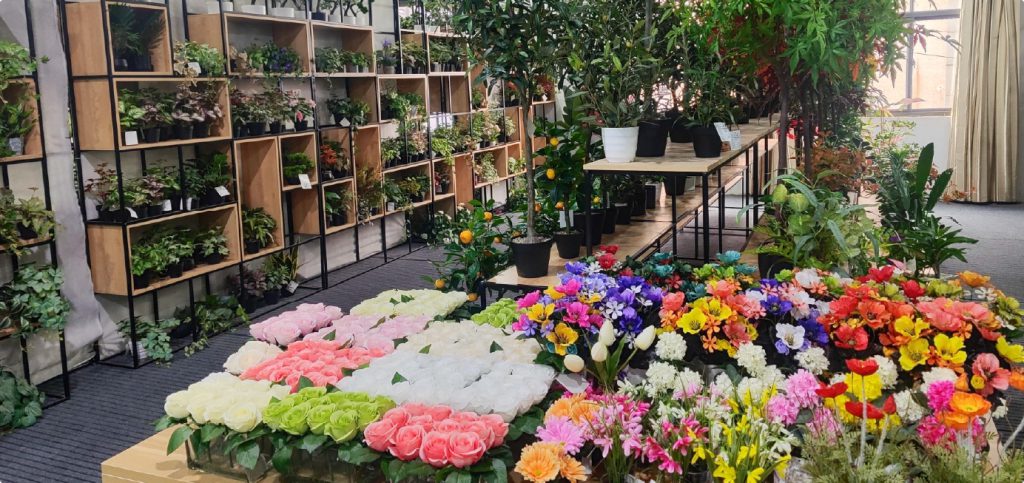
The hospitality industry has quietly become the fastest-growing commercial segment for artificial botanicals. Major hotel groups across Southeast Asia, the Middle East, and Europe have been transitioning common-area greenery to premium faux installations since the early 2020s. The catalyst? Modern manufacturing techniques — particularly Real Touch technology using silk, PU, and latex blends — have made artificial plants virtually indistinguishable from live ones at conversational distance. Guests don’t notice. Accountants definitely do.
What follows are the five specific deployment strategies that deliver the biggest cost reductions without sacrificing the lush, welcoming atmosphere that defines premium hospitality.
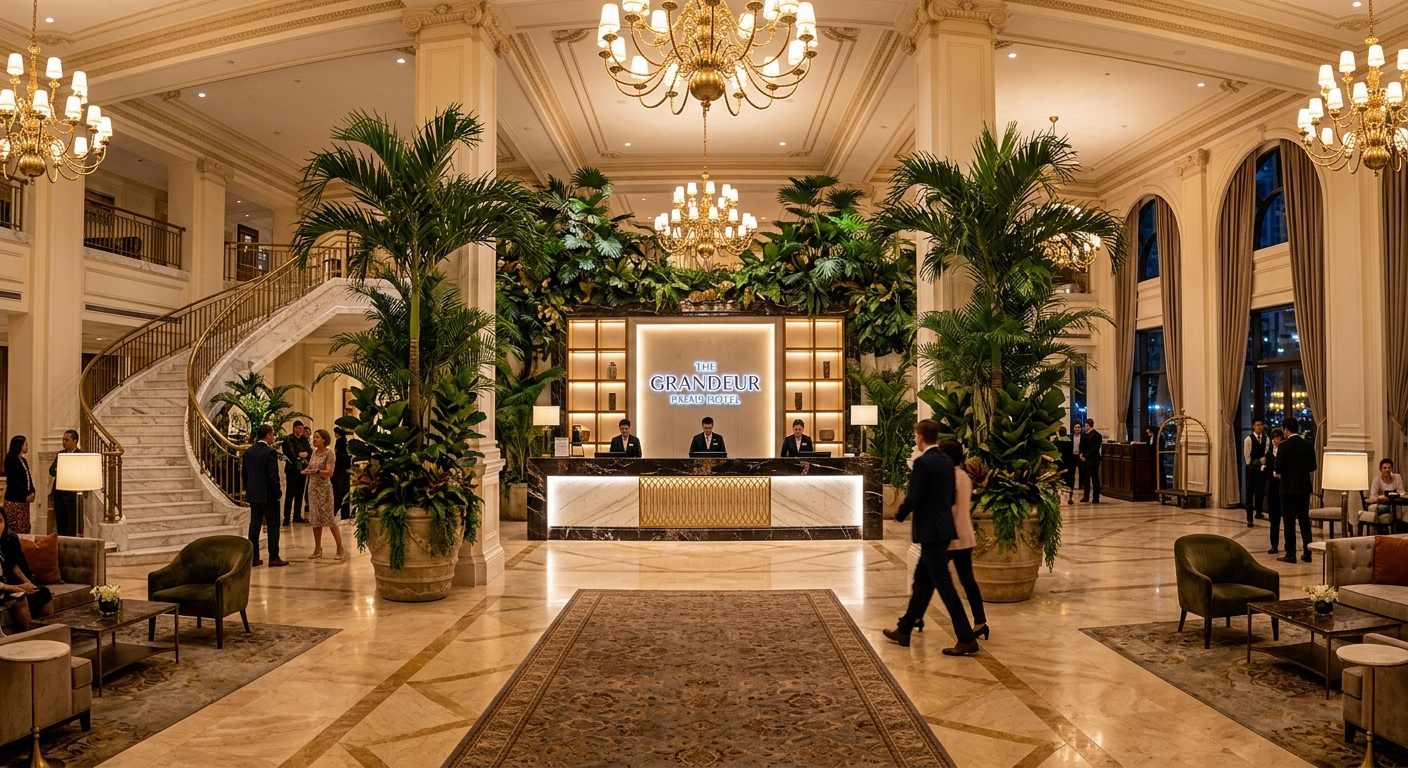
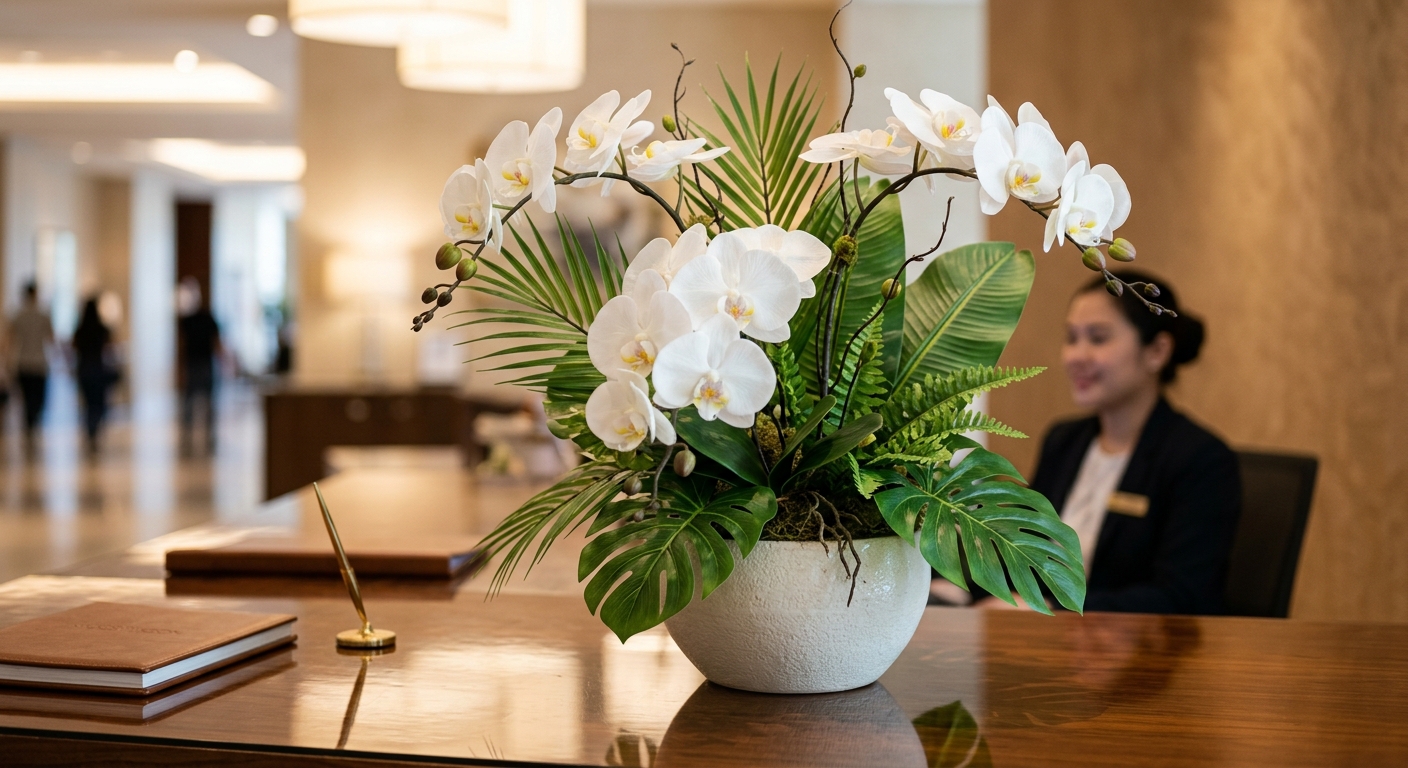
The hotel lobby is the single most expensive location for live botanicals. Fresh flower arrangements in a five-star lobby get swapped every 3–5 days. That’s 70–120 full replacements per year, per display station. For a property with four lobby arrangement points, you’re looking at $40,000–$80,000 annually in flowers alone — before labor.
Smart hotel operators don’t go 100% artificial in the lobby overnight. The proven approach is a hybrid model: permanent artificial foliage as the structural base, with a single fresh accent element (one vase of real orchids, for example) rotated weekly. This cuts arrangement costs by 70–80% while preserving the “real” impression for guests who lean in close.
For instance, a 350-room beach resort in Dubai transitioned its lobby to this hybrid model using custom silk orchid and monstera arrangements as the permanent base. Their floral budget dropped from $6,200/month to $1,400/month — a 77% reduction — while guest satisfaction scores for “property aesthetics” actually improved by two points. The reason? The artificial base always looked perfect, eliminating the mid-week droop that plagued their previous all-fresh rotation.
Off-the-shelf artificial arrangements rarely work for hotel lobbies because every property has a distinct design language. This is where OEM/ODM customization becomes critical — matching specific color palettes, vessel dimensions, and brand aesthetics. A factory-direct supplier can produce bespoke lobby installations that align precisely with the interior designer’s vision, including branded packaging for multi-property rollouts.
Chlorine, salt spray, humidity, and direct sun — pool areas are where live plants go to die. Most resorts replace poolside greenery 3–4 times per year because chlorinated water splash-back burns foliage within weeks. Salt-air coastal properties fare even worse.
Beyond the plants themselves, live poolside greenery creates drainage complications. Soil runoff clogs pool deck drains. Over-watering near the pool shell risks structural issues. Fallen leaves and petals increase pool filtration loads and cleaning frequency. Remove the live plants and you remove an entire category of maintenance headaches.
Not all artificial plants survive outdoor pool environments. You need UV-stabilized materials rated for 3,000+ hours of direct sun exposure without significant fading. Look for realistic artificial outdoor plants manufactured with UV-resistant polyethylene and PU coatings. The best products maintain color integrity for 4–6 years in tropical climates and 6–8 years in temperate zones.
Key species that work well around pools: artificial bird of paradise, faux traveler’s palms, synthetic agave, and artificial bamboo screens for privacy partitions. Avoid anything with delicate petal structures that might look odd when wet — stick to bold, architectural foliage.
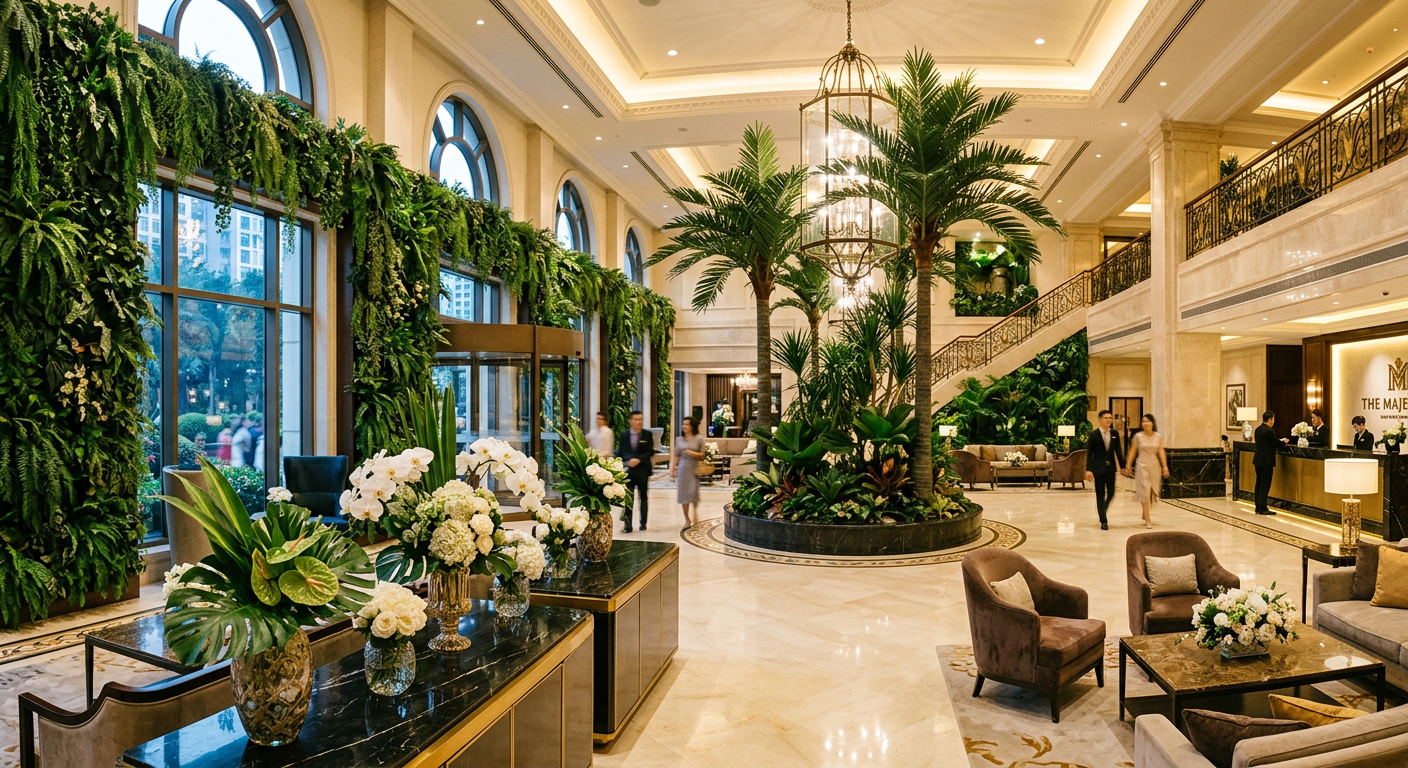
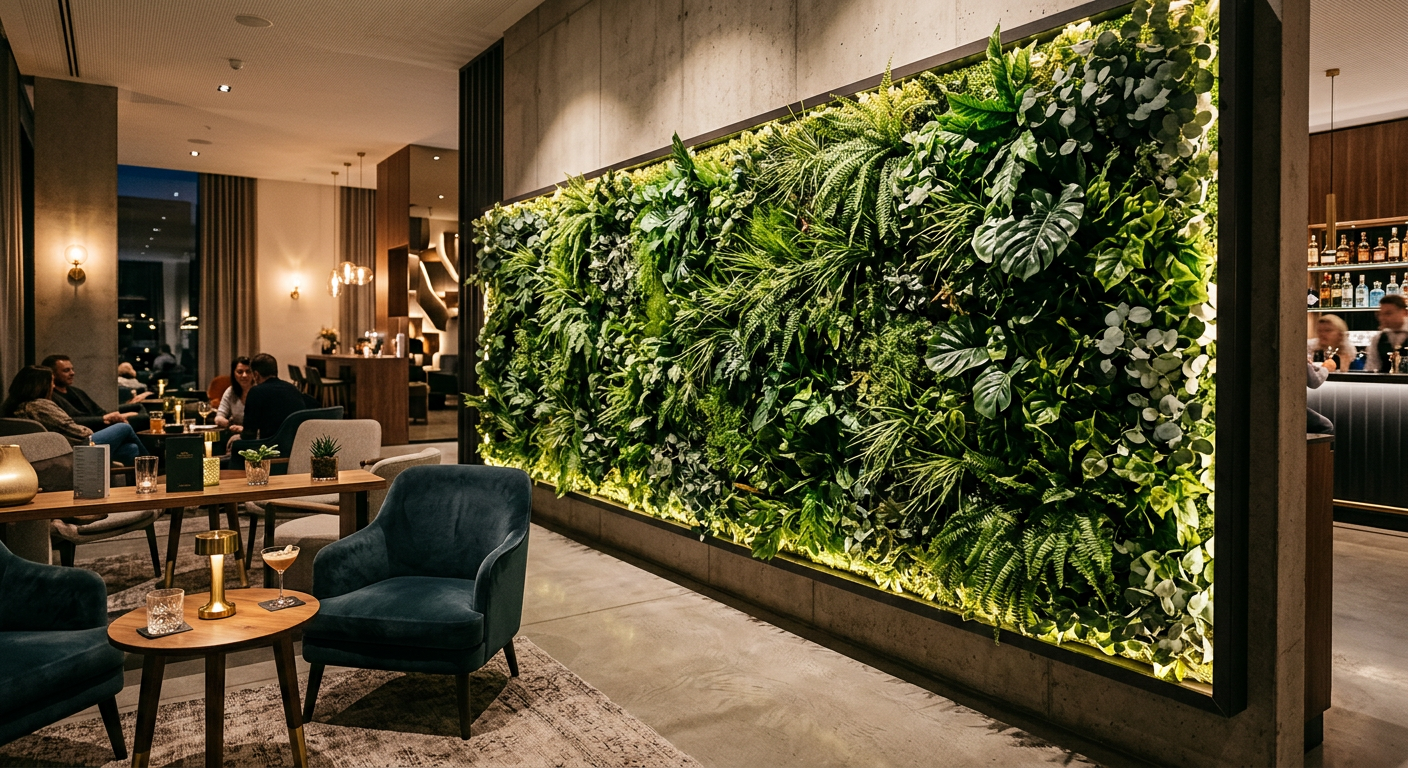
Living green walls are stunning. They’re also engineering nightmares. A genuine living wall requires integrated irrigation, drainage trays, grow lights, nutrient dosing systems, and quarterly plant replacements. Installation costs run $150–$500 per square meter, with annual maintenance adding another $80–$200 per square meter. For a 30-square-meter feature wall in a hotel restaurant, that’s $2,400–$6,000 per year in upkeep — indefinitely.
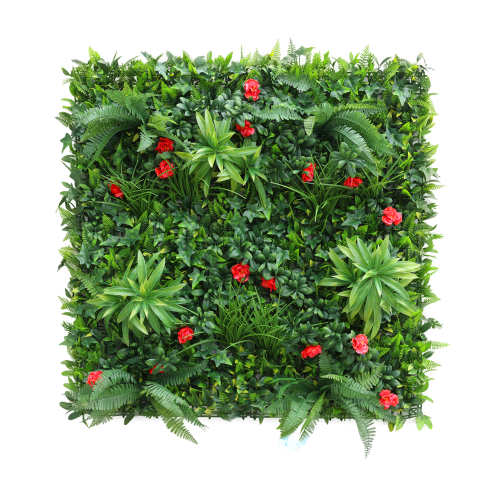
An artificial green wall of equivalent size costs roughly $60–$180 per square meter installed, with annual maintenance limited to quarterly dusting or compressed-air cleaning — maybe $300–$500 total for that same 30-square-meter wall. The math isn’t subtle.
The design flexibility is actually superior too. With artificial panels, you can install green walls in windowless corridors, underground spa areas, and air-conditioned ballrooms where live plants would struggle or fail entirely. There are no light requirements, no water supply routing, and no risk of mold from trapped moisture behind the wall structure.
For hotels exploring this approach, our guide on artificial plant wall ideas for businesses covers panel systems, modular layouts, and specification considerations for commercial-grade installations.
Here’s a bonus that doesn’t show up on the maintenance spreadsheet: artificial green walls are the single most photographed feature in modern hotel interiors. They create “selfie stations” that generate organic social media exposure. Unlike a live wall that might have brown patches or uneven growth on any given day, an artificial wall looks photo-perfect every single time a guest pulls out their phone.
A single fresh orchid in each guest room sounds like a lovely touch — until you multiply it across 300 rooms, factor in the replacement cycle, and add the labor cost of housekeeping staff who now need to water, inspect, and swap dying plants daily. For a mid-size resort, in-room live plants can quietly consume $25,000–$50,000 per year.
Artificial botanicals solve more than just cost. They solve consistency. Every room looks identical on check-in. There’s no variation between the orchid in room 412 (freshly placed) and the wilting specimen in room 208 (four days old). For hotel brands obsessed with standardized guest experience — and they should be — this consistency is operationally significant.
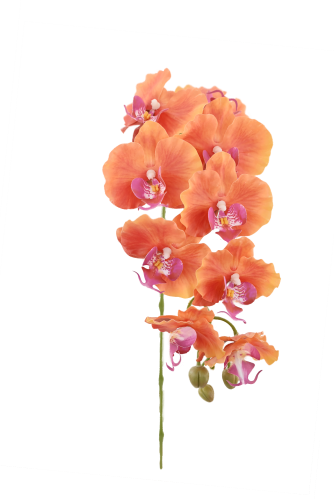
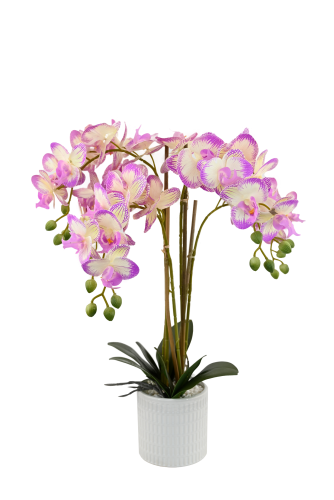
A boutique hotel group operating 12 properties across Southeast Asia standardized their guest room botanicals using custom-manufactured faux phalaenopsis orchids in branded ceramic vessels. Each unit cost approximately $18 to produce at scale. With an expected lifespan of 5+ years per unit and zero ongoing care beyond the occasional wipe-down during room cleaning, their per-room botanical cost dropped from roughly $85/year (live) to under $5/year (artificial, amortized). That’s a 94% reduction.
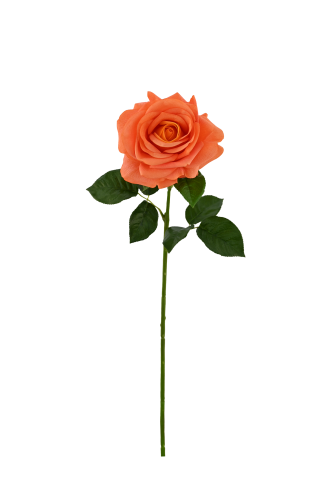
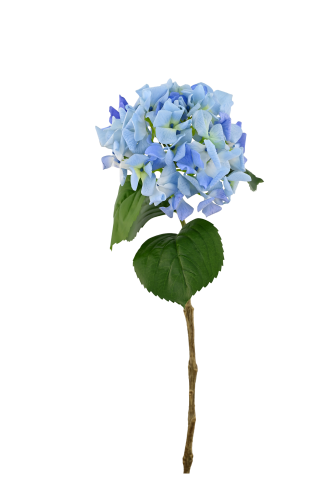
Guest rooms are intimate spaces. People touch things. This is where material quality matters most. Cheap plastic flowers will undermine a premium brand faster than having no flowers at all. Specify realistic faux flowers that look real up close — Real Touch latex and silk blends where petals feel soft and natural between the fingers. The tactile experience is what separates a luxury-grade artificial flower from a dollar-store fake.
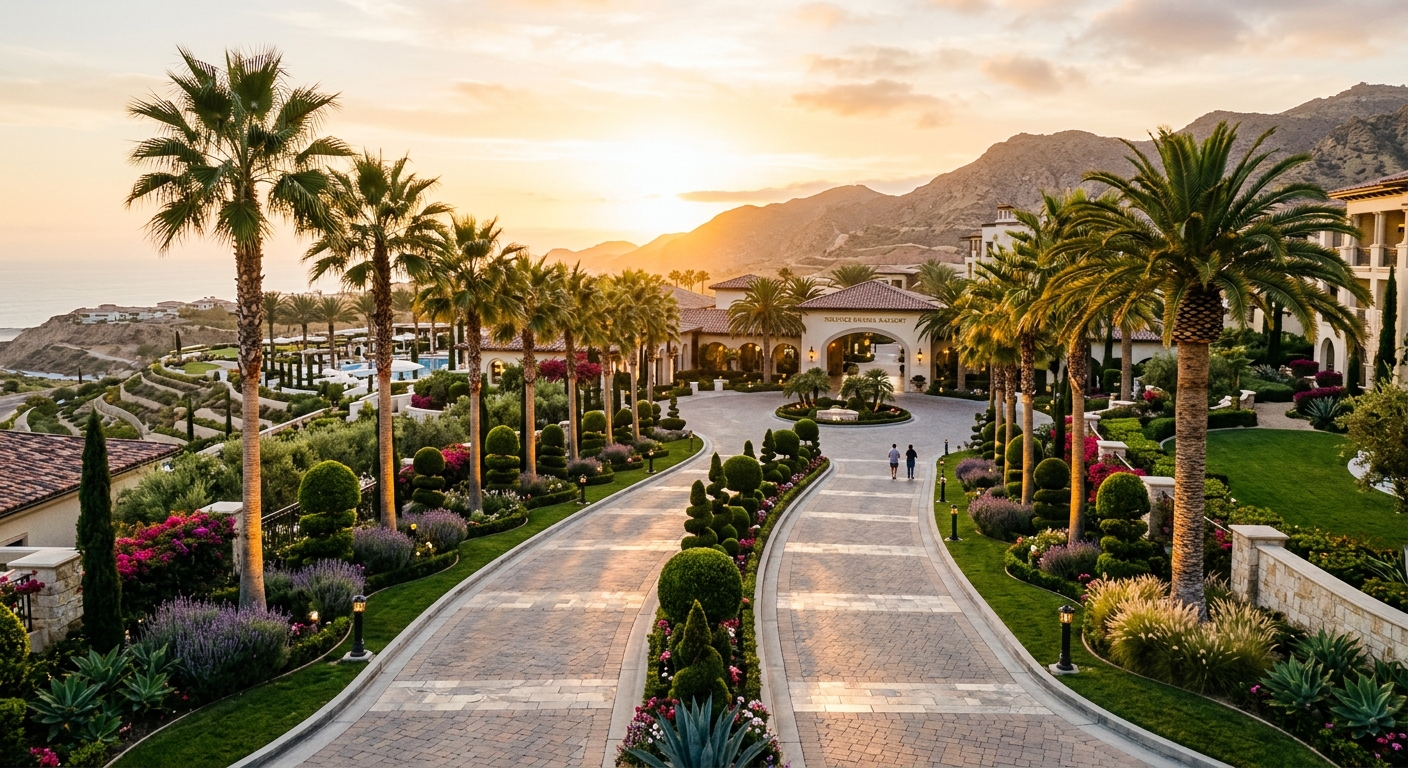
Outdoor landscaping is where maintenance costs truly spiral. Between irrigation infrastructure, seasonal replanting, fertilization schedules, pruning, and storm damage replacement, exterior greenery at a large resort can consume $150,000–$400,000 annually. And in arid or extreme-climate locations — think desert resorts, tropical islands, or properties at altitude — keeping live plants alive borders on agricultural engineering.
The highest-impact outdoor applications for artificial plants in hospitality are:
Outdoor artificial plants must be engineered differently from indoor products. Insist on UV stabilizers in the base polymer, stainless steel or galvanized internal support structures, and weighted or anchored bases for wind resistance. Premium outdoor artificial trees should carry a UV rating of at least 5,000 hours. For a comprehensive breakdown of what to look for, see our guide to the best artificial plants for outdoors.
Numbers talk. The table below compares the ongoing operational realities of live versus artificial plant installations across the metrics that matter most to hotel operations teams.
The most striking line item is staffing. Live plant programs at large properties typically require either a dedicated in-house horticulturist ($35,000–$55,000/year salary) or a contracted landscaping service ($2,000–$8,000/month). Artificial installations shift maintenance to existing housekeeping staff with no specialized training required — just periodic dusting and the occasional deep clean.
Water consumption is another factor gaining weight in 2026, particularly for properties pursuing sustainability certifications. A mid-size resort’s decorative plant irrigation can consume 50,000–200,000 gallons annually. Eliminating that usage strengthens ESG reporting and, in water-scarce regions, reduces a genuine operational risk.
Buying artificial plants for a single boutique hotel is straightforward. Sourcing for a hotel group with 5, 10, or 50 properties is a supply chain challenge that requires a different kind of partner.
Hotel groups need a manufacturer — not a reseller — that can deliver:
Working with a factory-direct supplier like artificialflowerplant eliminates the middleman markup that inflates costs by 30–50% through trading companies. With over 15 years of manufacturing experience and 5,000+ product varieties, we support hospitality clients from initial design consultation through production, quality inspection, and export logistics. Our in-house production facilities mean your quality control isn’t outsourced — it’s embedded in every stage.
Transitioning from live to artificial plants doesn’t have to be an all-or-nothing decision. The most successful hotel implementations follow a phased approach:
Start with back-of-house areas, corridors, elevator lobbies, and conference rooms. These spaces consume maintenance budget but receive less guest scrutiny. It’s a low-risk proving ground that generates immediate savings and builds internal confidence in the product quality.
These are the areas where live plants fail most frequently and cost the most to maintain. The ROI here is dramatic and fast — often paying back the installation investment within 6–9 months.
By this stage, your team has seen the quality up close, your GM is convinced, and your designer has had time to specify premium-grade materials for the spaces that matter most. This is where the hybrid model — artificial base with minimal fresh accents — delivers the best balance of cost savings and luxury perception.
Ready to explore what’s possible for your property? Browse our full product catalog or reach out to our team for a consultation on custom hospitality installations. We’ll provide samples, pricing, and production timelines tailored to your project scope — whether that’s a single boutique hotel or a 50-property international rollout.
 Tips
Tips
 Tips
Tips
 Tips
Tips
 Tips
Tips
 Tips
Tips
 Tips
Tips