 Tips
Tips
A practical guide to cleaning artificial flowers used in retail displays, events, and installations. Covers material-specific care, safe dust removal, outdoor exposure, and maintenance tips that help faux florals stay realistic longer.
Read More Tips
Tips
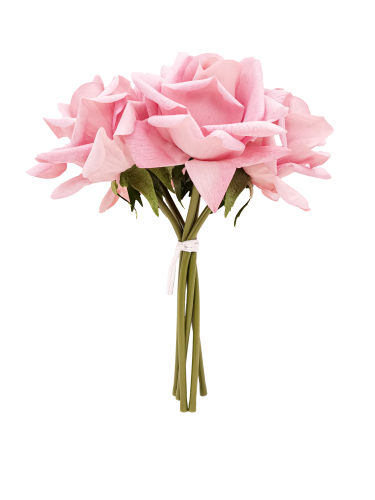
Modern faux florals no longer look tacky. This guide explains why fake flowers can appear elegant when styled with realistic materials, balanced colors, and thoughtful design.
Read More Tips
Tips
This guide explains how to choose the best artificial plants for outdoors, covering UV protection, weather resistance, plant types, styling tips, and climate-specific recommendations.
Read More Tips
Tips
Explore the differences between fake and real wedding flowers. Compare cost, durability, appearance, fragrance, and maintenance to make informed choices for weddings and events.
Read More
Artificial flowers can look beautifully lifelike—but only if they’re kept clean. Dust, airborne residue from food service areas, and indoor pollutants can slowly dull petals, mute colors, and make arrangements look “tired.” The good news: cleaning faux flowers is quick when you match the method to the material.
This guide covers practical, low-risk ways to clean artificial flowers (silk, plastic, latex/PU, and outdoor faux florals), plus a simple maintenance routine to keep your displays and installations looking fresh year-round.
Over time, artificial flowers collect dust, lint, and grime—especially in high-traffic areas, near entryways, display windows, food & beverage zones, and HVAC vents. That buildup can:
Regular cleaning preserves the “new” look and prevents stubborn grime from bonding to textured petals and leaves.
Before you pick a method, do a quick check:
If you’re unsure, start with dry cleaning methods first and only escalate if needed.
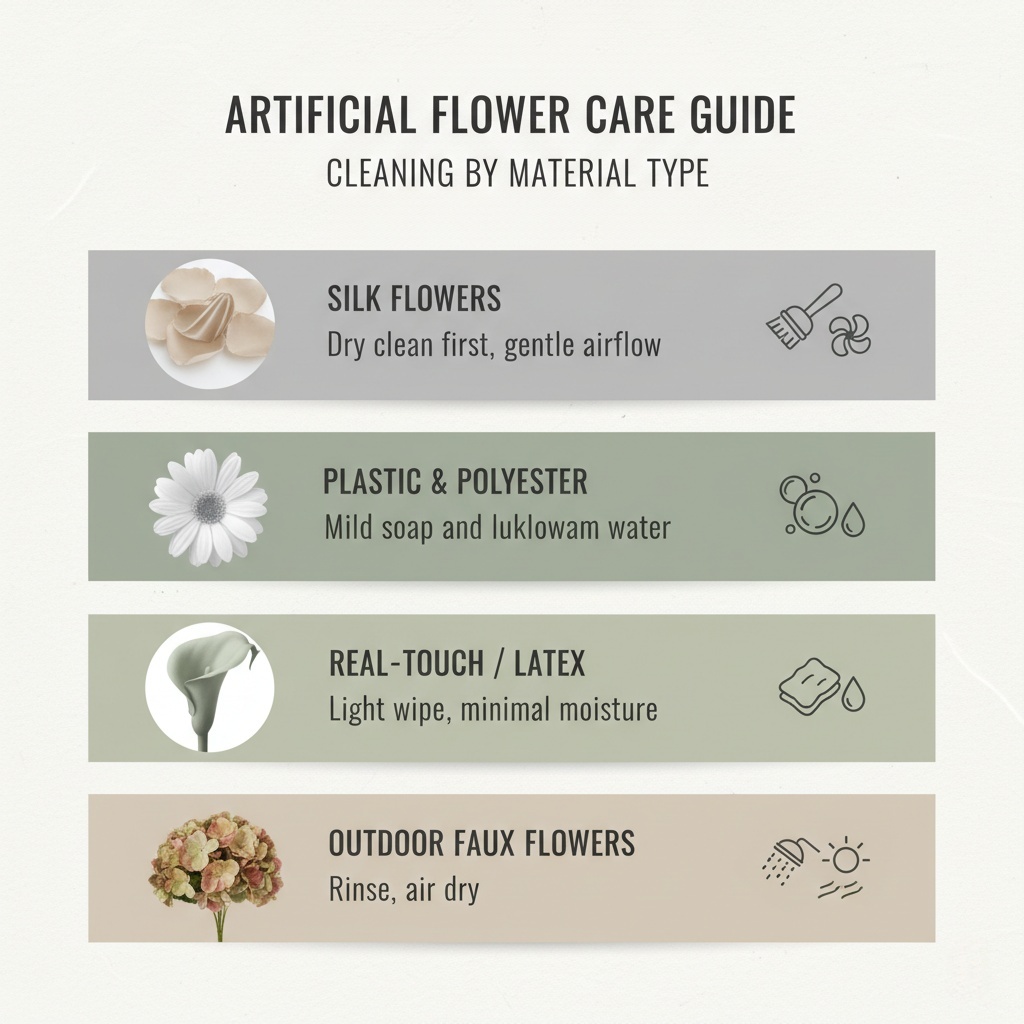
Different faux flowers react differently to water, friction, and cleaners. Use the section that matches your arrangement.
Best for: premium silk florals, fabric petals, delicate printed petals
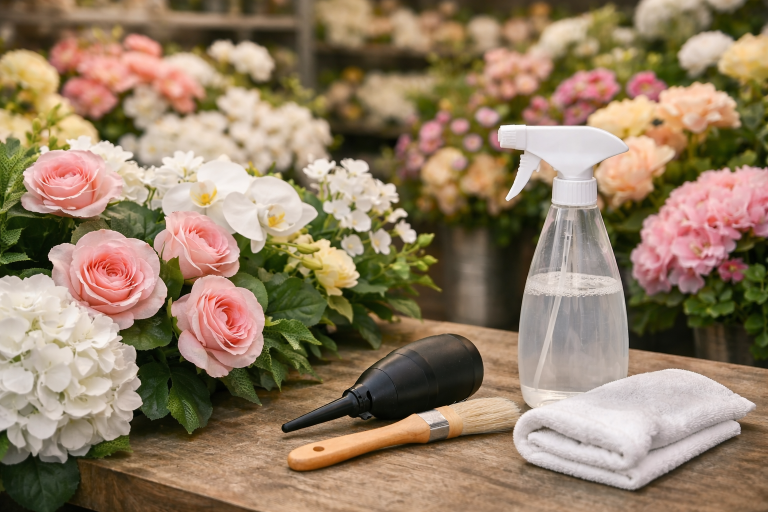
Safest approach: dry cleaning first, minimal moisture
Recommended methods
Avoid
Best for: most molded plastic flowers, polyester petals, everyday faux bouquets
You can usually use gentle washing.
Quick wash method
Tip: If the bouquet includes glued elements, wash in short dips rather than soaking.
Best for: “real touch” petals, latex-coated surfaces, PU petals
These can be realistic—but some finishes are sensitive.
Best approach
Avoid
Outdoor faux flowers face extra dirt: pollen, road dust, rain residue, and sun exposure.
Cleaning routine
If you notice fading, it’s usually UV-related—prolonged sunlight exposure matters because UV exposure can cause fading and long-term material degradation. Cleaning helps, but placement and UV protection matter more.
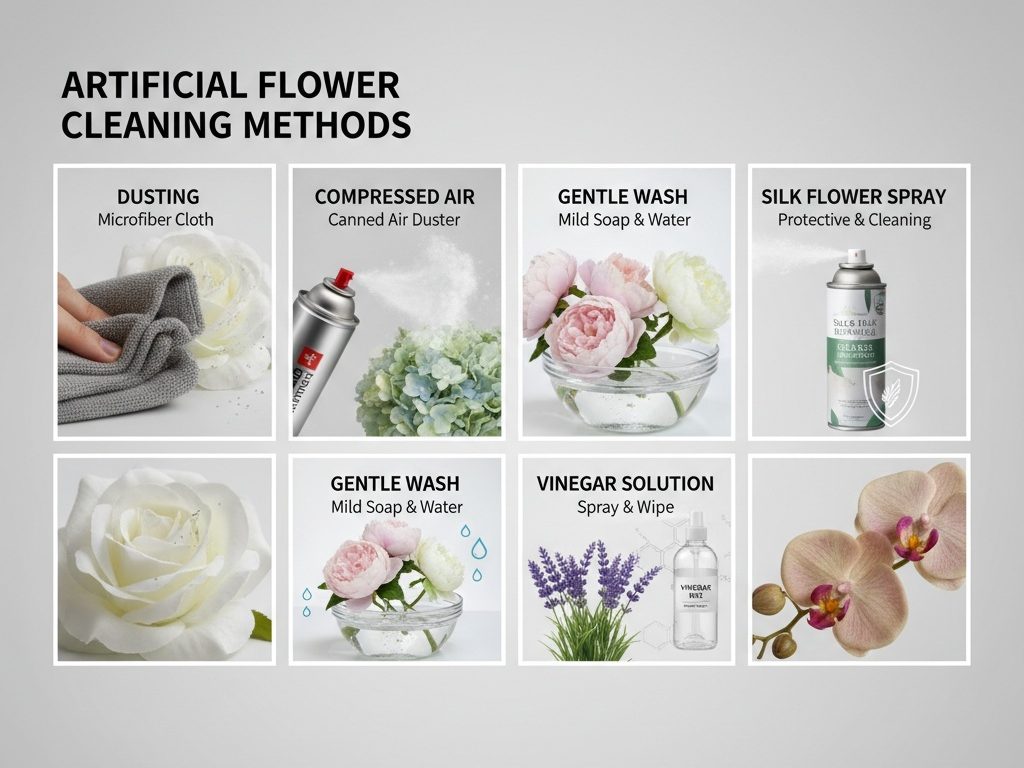
Use the lightest method that solves the problem.
Mix 1:1 white vinegar + water in a spray bottle.
How to use:
Caution: skip vinegar for unknown coatings, painted edges, or delicate silk prints.
If you use a commercial silk flower cleaner:
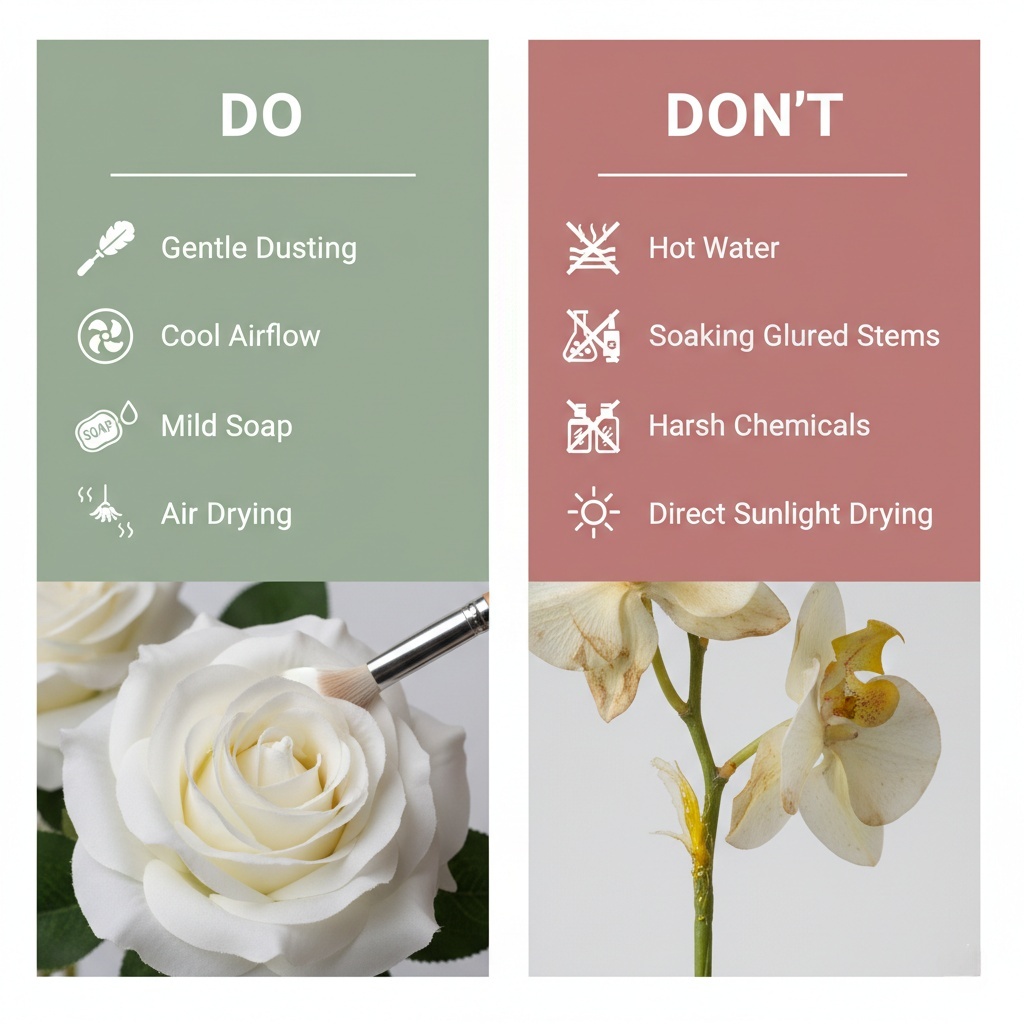
These are the most common reasons faux flowers lose their “new” look:
When in doubt, start with dry dust removal, then move to minimal moisture.
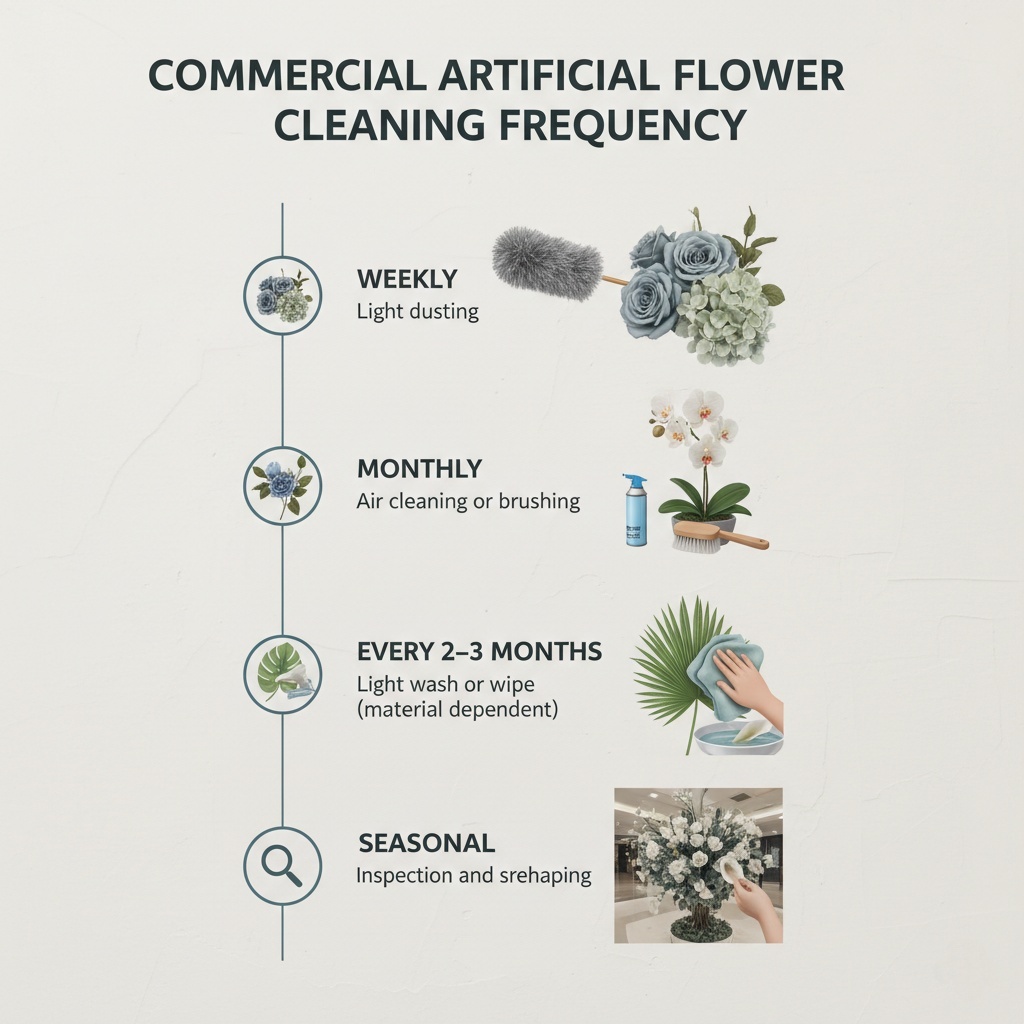
A simple schedule that works for most retail displays, event setups, showrooms, and indoor installations:
If your flowers are placed near food service zones, open-air entrances, or high-dust walkways, you may need a more frequent routine.
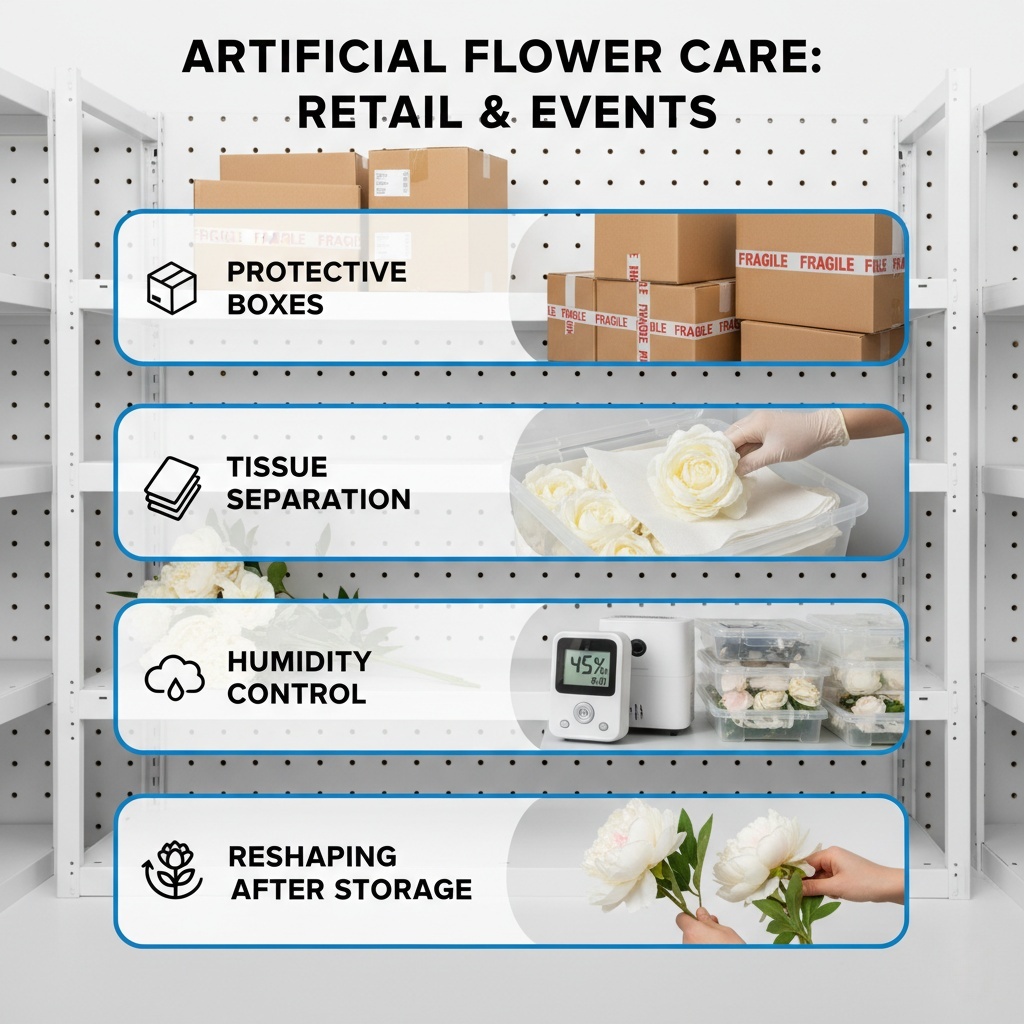
If you rotate seasonal merchandising or store event florals:
Well-made artificial flowers typically use:
If you source from reputable artificial flower manufacturers, you’ll often reduce maintenance frequency and reshaping work while keeping display consistency—and your arrangements stay realistic longer.
Can artificial flowers be washed with water?
Often yes—especially plastic and many polyester flowers. For silk or coated “real-touch” petals, start with dry cleaning methods and use minimal moisture.
How do you clean artificial flowers without damaging them?
Use the gentlest option first: microfiber dusting, soft brush, or cool air. Only use water-based cleaning when the material is washable and construction (glue, coating) can handle it.
Can I use a hairdryer to remove dust from faux flowers?
Yes—use a cool, low setting and keep a safe distance. It’s ideal for layered petals and hard-to-reach crevices.
How often should you clean faux flowers?
Light dusting weekly is ideal. Deeper cleaning depends on placement: kitchens, entryways, and retail displays usually need more frequent care.
Cleaning artificial flowers is simple when you match the method to the material. Regular dusting keeps faux blooms bright and realistic, while occasional deeper cleaning removes grime that can dull color and texture. With the right routine—plus careful storage and gentle handling—your artificial flowers can look fresh and beautiful for years.