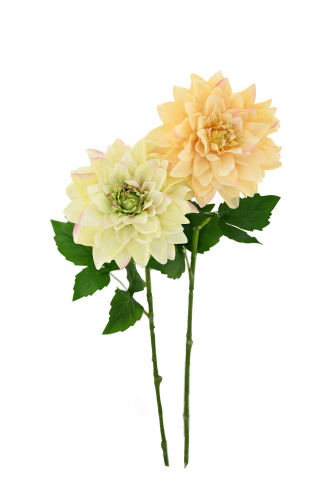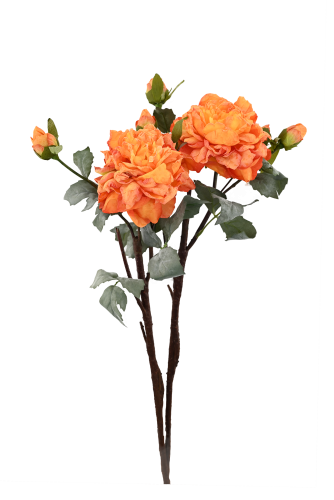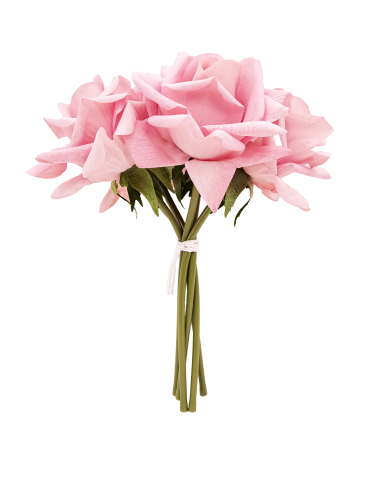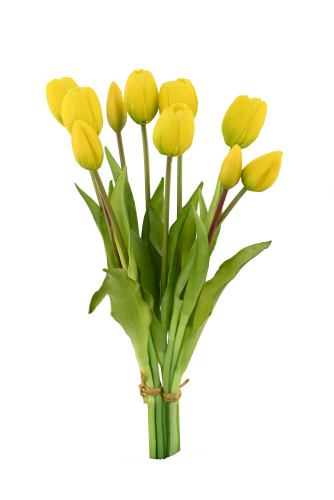
If you’re searching for the most realistic faux flowers, you’re probably trying to avoid one thing: arrangements that look perfect at a distance but feel obviously fake the moment someone walks closer. The good news is that realistic artificial flowers aren’t rare anymore—but “realistic” depends on the flower type, the material feel, and how you style it.
This guide gives you a clear, practical way to choose faux flowers that look real up close, not just in photos.
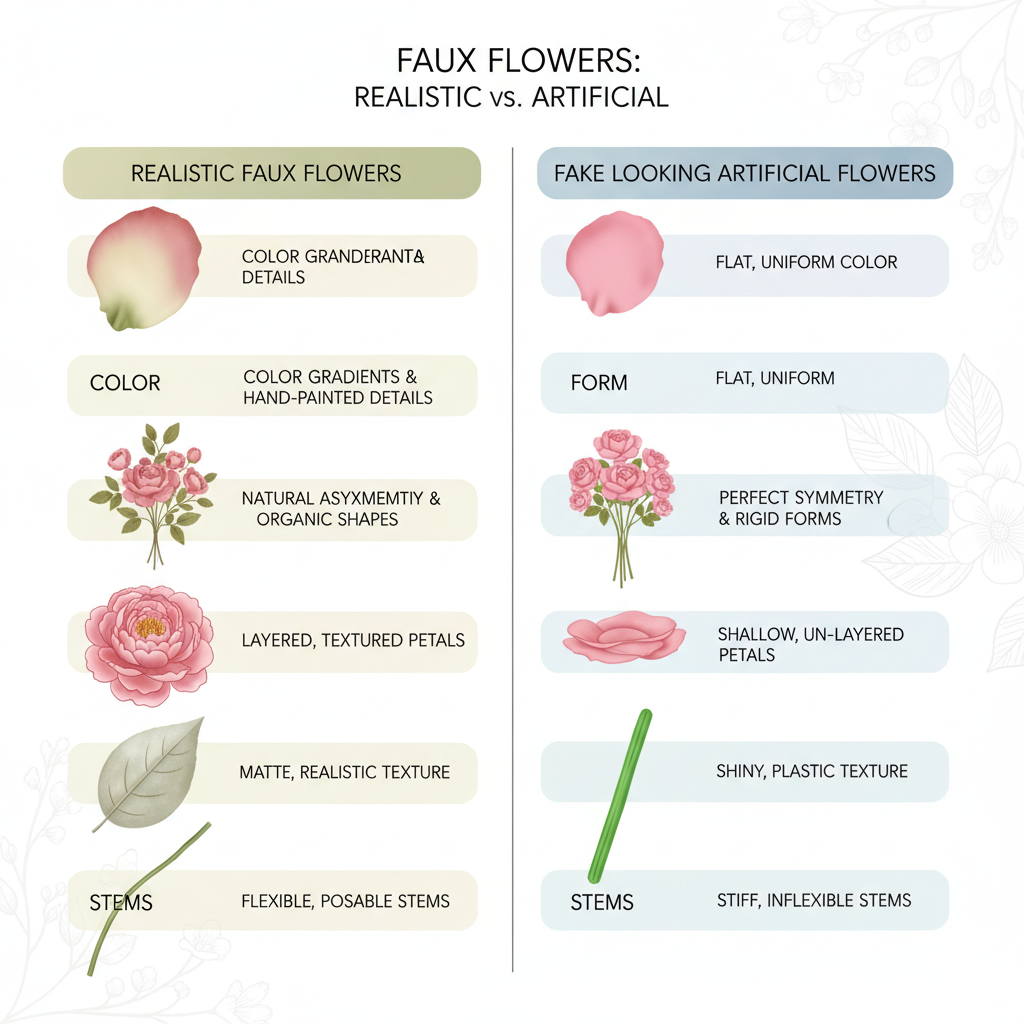
The most realistic faux flowers share a few visual “tells” that mimic nature. When those details are missing, even an expensive-looking bouquet can feel artificial.
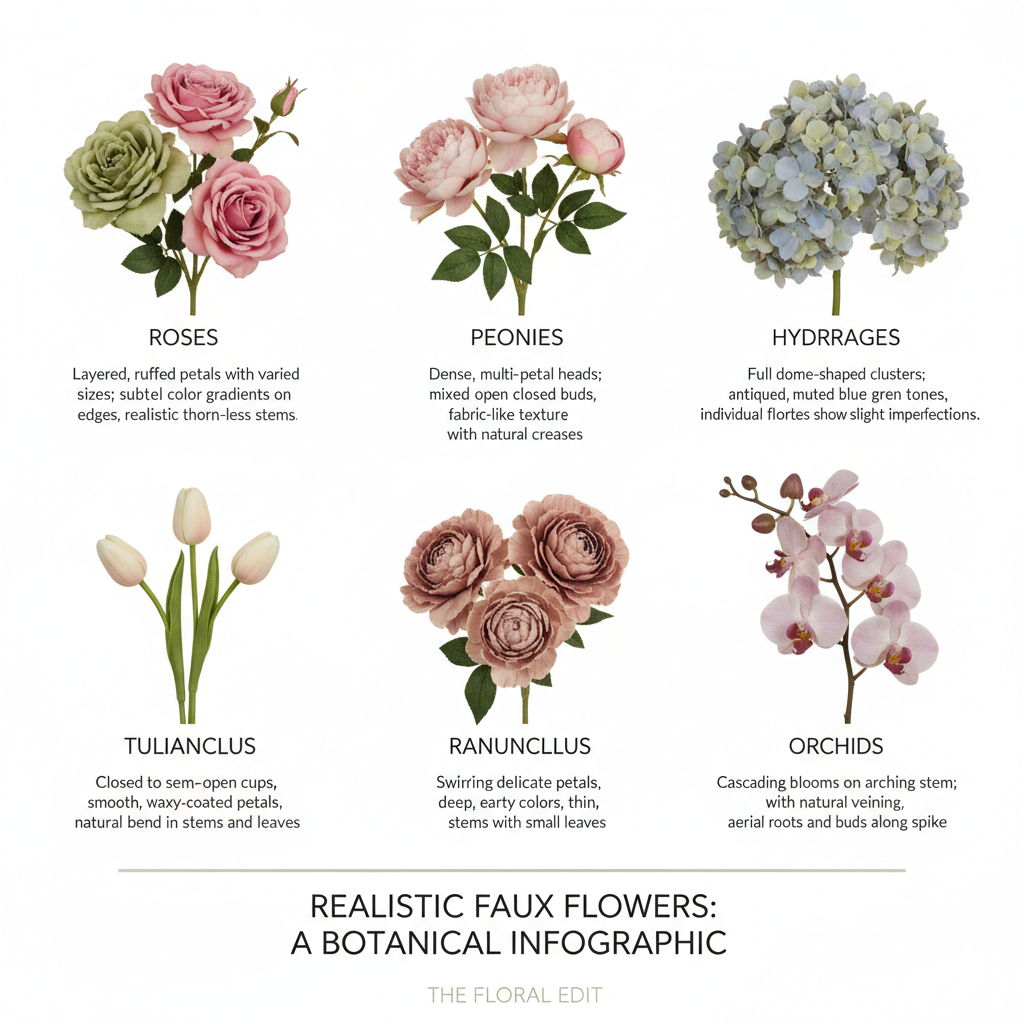
Not every flower type “translates” equally into faux form. Some are naturally easier to replicate because their real-life structure already hides minor imperfections.
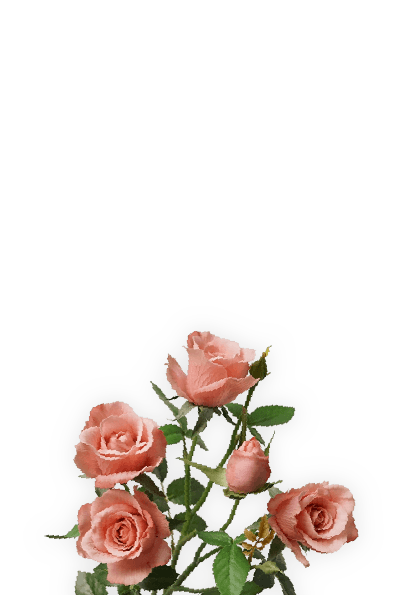
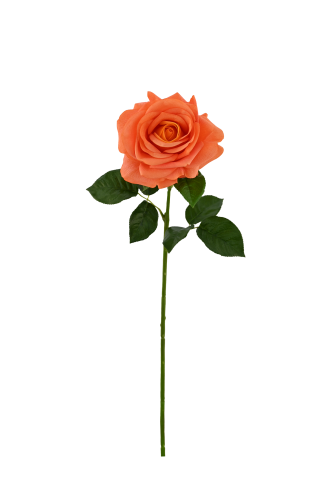
Roses are one of the safest picks for realistic faux flowers because the layered petal structure creates depth. The most realistic rose stems show gentle curl, natural petal thickness, and soft color transitions.
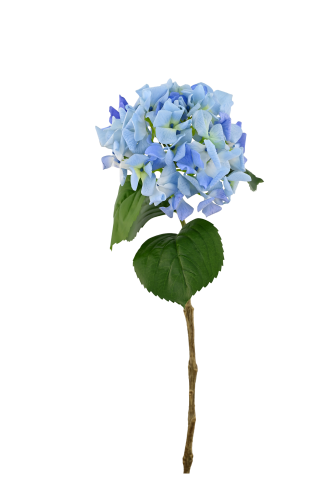
Hydrangeas look realistic when the cluster has variation—slightly different bloom angles, subtle color shifts, and non-uniform density. When every small bloom looks identical, hydrangeas can look obviously artificial.
Tulips can look incredibly real from a few feet away, but they rely heavily on stem realism and gentle curvature. If the tulip stem looks stiff or glossy, the illusion breaks quickly.
Peonies look realistic when the petal edges feel light and irregular and the bloom has depth. Because peonies are naturally “messy,” they can hide small imperfections well.
Ranunculus flowers have tight, layered petals that can look very real—unless the layers are too uniform. Slight variation is key.
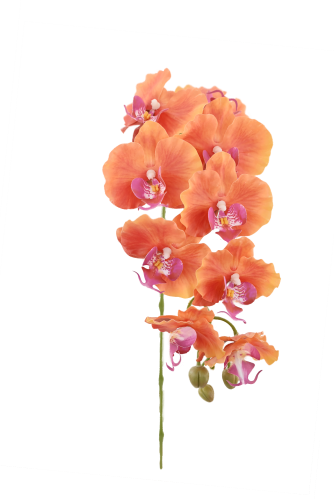
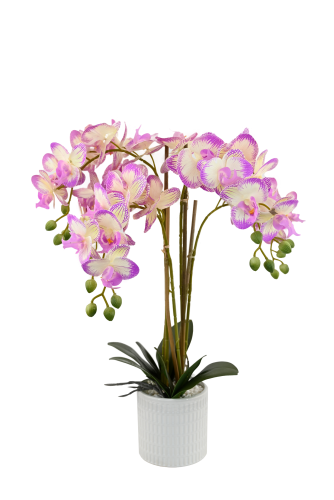
Orchid realism depends on petal shape accuracy and a natural-looking stem structure. Overly stiff petals can look decorative rather than real.
These flowers can look real, but they need believable petal texture and a center that doesn’t look like plastic.
Practical tip: If you’re buying for close-up settings (weddings, photography, table centerpieces), prioritize flower types that naturally have depth and layering: roses, peonies, hydrangeas, ranunculus.
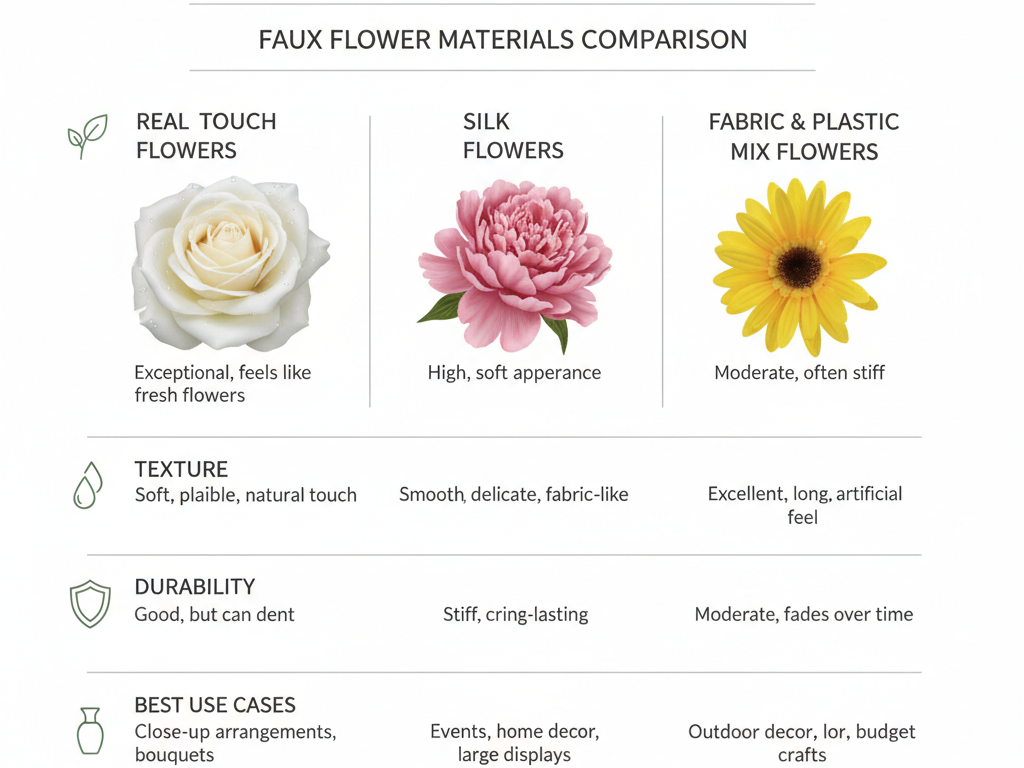
Different faux flower builds look realistic in different ways. The “best” option depends on how close people will be, whether touch realism matters, and how long the arrangement needs to hold up.
| Type | Looks most real when… | Strengths | Best for |
| Real Touch / Soft-touch | You want realism up close and a more natural feel | Strong close-view realism, often more believable petal presence | Weddings, events, premium home décor, photography |
| Silk-style flowers | You want soft visual realism with natural texture | Elegant look, gentle color appearance, classic styling | Home décor, seasonal displays, styled spaces |
| Fabric + plastic mix | You want a practical, durable arrangement that still looks good | Durability, easy maintenance, good value | Long-term retail display, offices, everyday décor |
Rule of thumb:
If guests will view the flowers within arm’s length, choose Real Touch / Soft-touch styles first. If the flowers are mostly viewed from a few feet away, silk-style and high-quality fabric mixes can still look excellent.
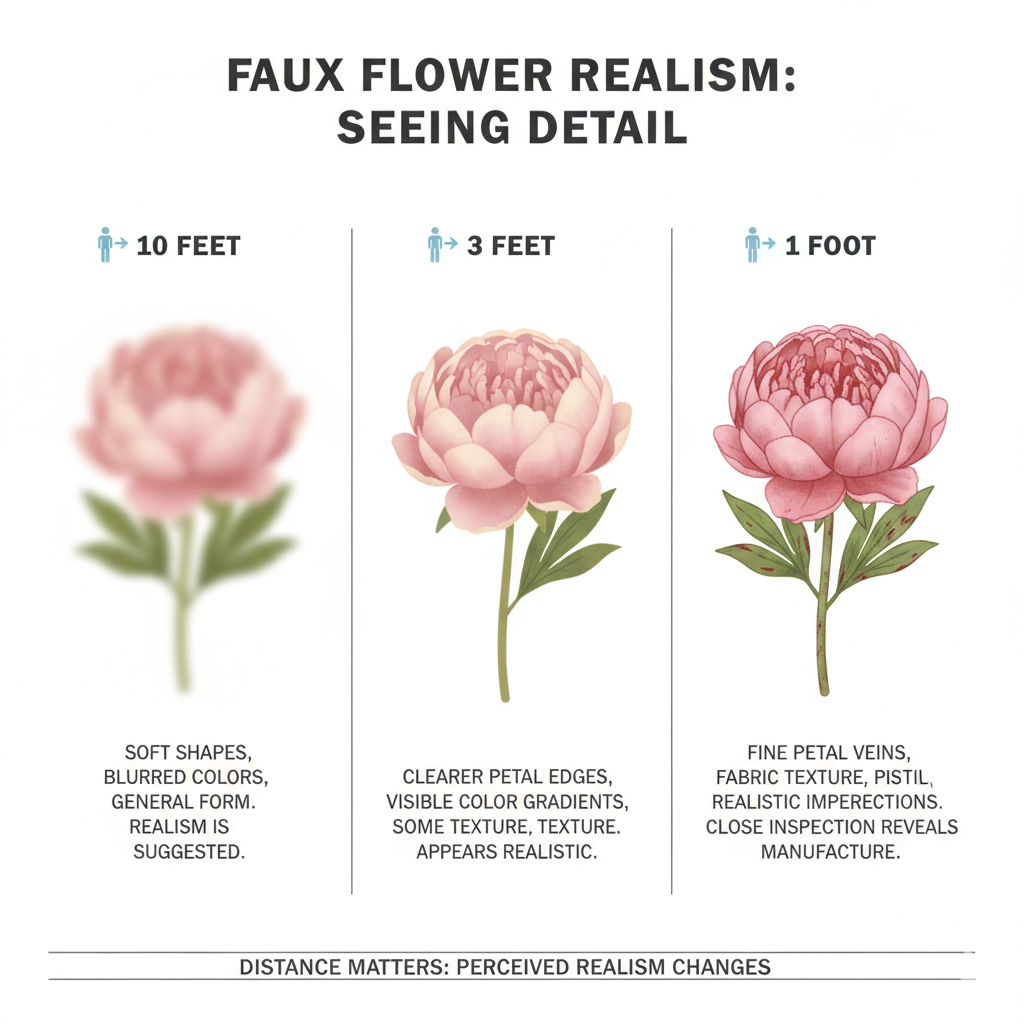
This is the part many shoppers miss: faux flowers don’t need to “pass” the same test in every environment.
At this distance, shape and color harmony matter more than petal texture.
You’ll notice shine, stiffness, and whether stems look natural.
Up close, realism depends on petal edges, gradients, leaf finish, and natural asymmetry.
If your flowers will be used for:
Both can look realistic, but they create realism differently.
When you build with stems, you can create:
A pre-made bouquet looks best when it avoids perfect uniformity. If it looks like a tight sphere with identical blooms, it reads as artificial faster.
Quick fix for bouquet realism:
Gently loosen the arrangement, vary stem angles, and create negative space so it doesn’t look packed.
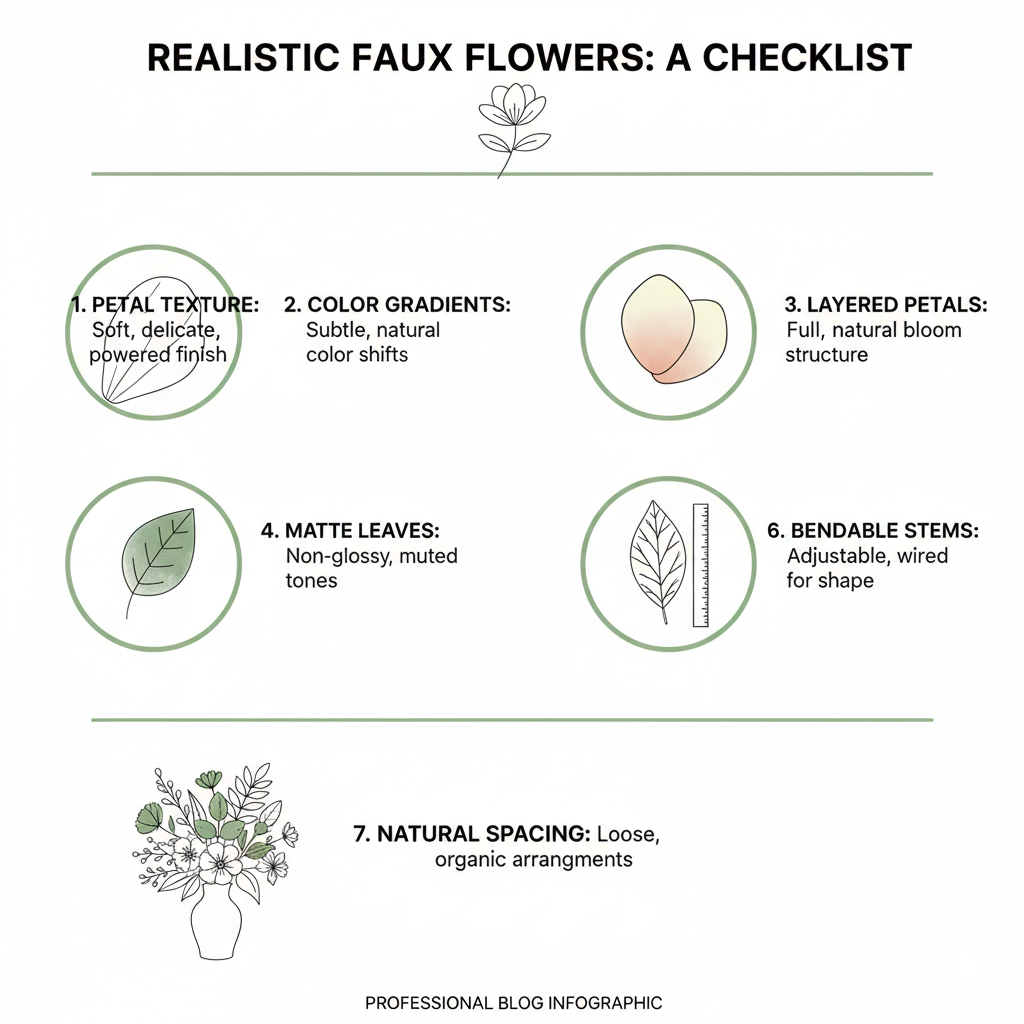
Use this checklist before you buy or when you’re styling at home:
If your faux flowers pass most of these tests, they’ll look realistic in real life—not just online.
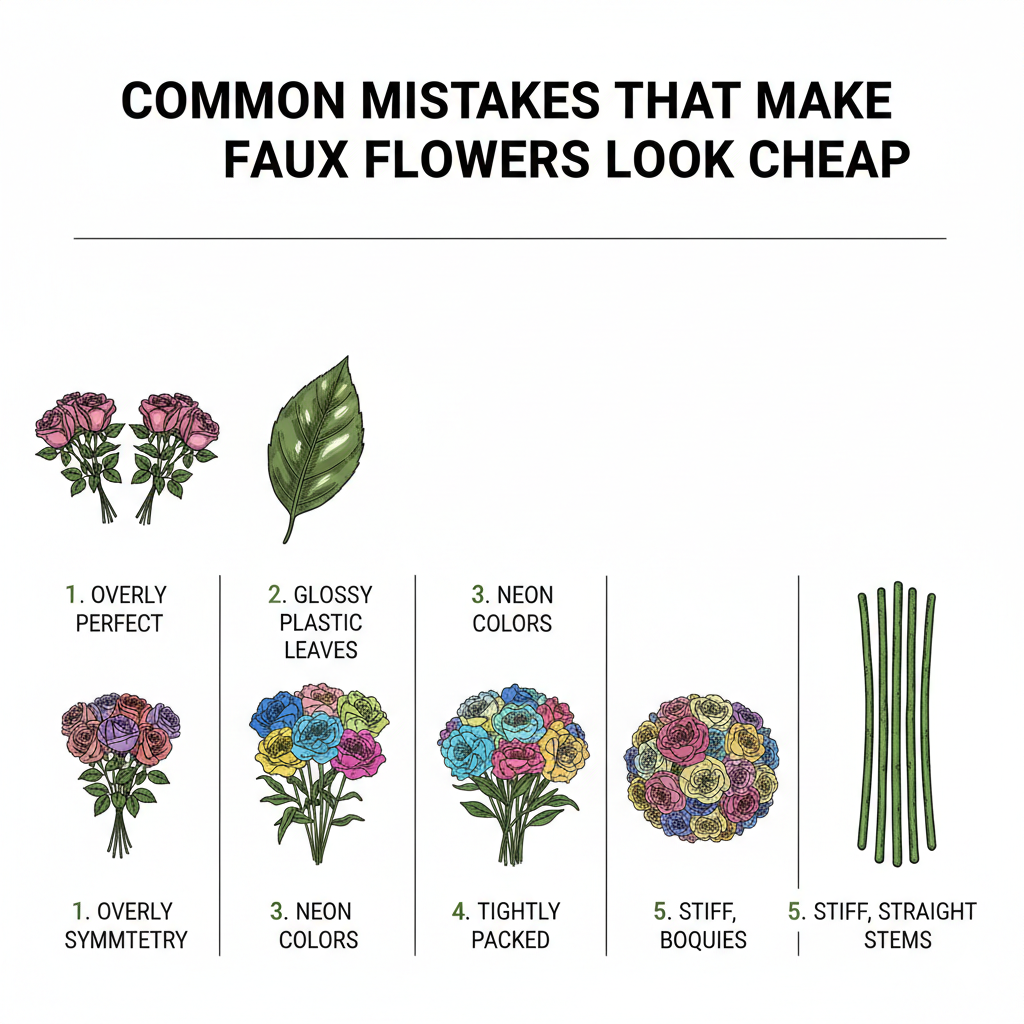
You can upgrade realism quickly with small styling moves:
In most home and event settings, roses, hydrangeas, peonies, and ranunculus tend to look the most realistic because their natural structure already has depth and layering.
If your flowers will be seen up close—like table centerpieces, weddings, or photo content—Real Touch / Soft-touch styles are often worth it because they hold up better to close inspection.
Keep them clean, avoid direct intense sunlight for long periods, and gently dust petals and leaves so they maintain their original finish.
They can, especially if placed in strong direct sun for long periods. Choosing appropriate placement and occasional cleaning helps them stay realistic longer.
The most realistic faux flowers aren’t defined by one single “best” material or one perfect bouquet. Realism comes from matching the flower type to your use case, choosing believable petal and leaf details, and styling stems with natural randomness.
If you shop with the checklist above and prioritize 1-foot realism when it matters, you’ll end up with faux flowers that look truly real—right up close, in real life, and in photos.
 Tips
Tips
 Tips
Tips
 Tips
Tips
 Tips
Tips
 Tips
Tips
 Tips
Tips